

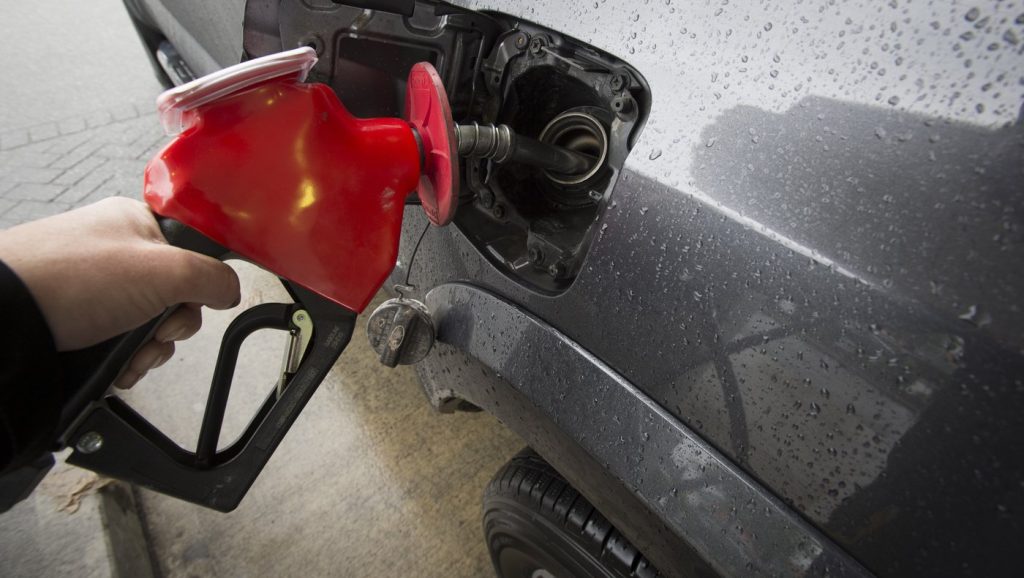
Relief at the fuel stations across Nova Scotia continues as President Donald Trump announced that an agreement concerning the crucial Strait of Hormuz is nearing completion. This development has significant implications for the global fuel supply, which has faced disruptions for several months.
The Nova Scotia Energy Board has responded to the easing fuel situation by reducing the price of gasoline by 9.7 cents, bringing it down to 170.5 cents per litre. A similar adjustment has been made for diesel, which has decreased by 9.8 cents, now priced at 220.0 cents per litre. These reductions follow a trend of decreasing fuel prices over the last week, following the board's decision to activate its interrupter clause on August 5, which resulted in significant price drops.
President Trump's announcement indicates that a deal regarding the reopening of the Strait of Hormuz could be finalized this week. The Strait, a vital maritime passage, has been under tension due to geopolitical issues, which have severely impacted fuel availability and prices worldwide.
The potential agreement to reopen the Strait could alleviate some of the economic pressure felt globally, particularly in relation to fuel prices. It is important to note, however, that the agreement is likely contingent upon the United States lifting its blockade on Iranian ports. The Trump administration has previously indicated that it would not support a deal that would allow Iran to maintain control over the Strait, as this could be perceived as a significant defeat for U.S. interests and a violation of established global norms.
Iran has asserted its position, insisting that it will not revert to the Strait being treated as an open international waterway, a status it held prior to the onset of conflict in the region. The closure of the Strait of Hormuz has had dramatic repercussions, accounting for a fifth of the world's traded oil and natural gas. This disruption has led to escalating fuel and basic commodity prices, creating turmoil in the global economy.
Moreover, there is mounting pressure on President Trump to bring an end to what has become an unpopular military engagement ahead of the upcoming U.S. congressional elections. The political landscape may heavily influence the decisions made regarding the Strait and U.S. foreign policy in the region.
In summary, the unfolding events surrounding the Strait of Hormuz potentially represent a pivotal moment for the international fuel market. The decisions taken in this context could have lasting implications, not only for fuel prices in regions like Nova Scotia but also for broader economic stability worldwide.








