

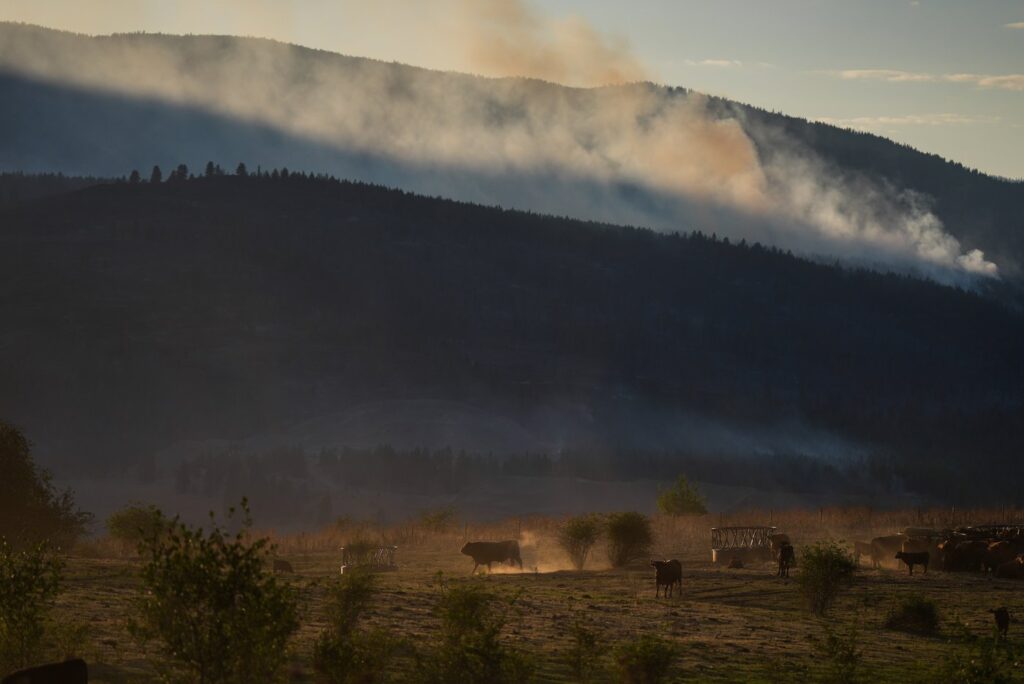
When Tom Davison's son-in-law invested in firefighting equipment for their orchard near Vernon, British Columbia, following the wildfire that caused smoke damage in 2021, Davison was skeptical about the likelihood of needing those hoses. He believed that experiencing such a devastating blaze would be a rare occurrence, perhaps a once-in-a-century event. However, as high winds propelled flames to the edge of Davison Orchards' property on August 1, he felt immense gratitude for his son-in-law's foresight, which played a crucial role in protecting the family-run orchard that has been in operation for five generations.
After evacuating the staff, Davison’s son and son-in-law remained on the property, using the hoses to combat the flames threatening their land. Their efforts not only safeguarded the orchard but also assisted a neighboring property where outbuildings were lost, although Davison's home was spared from the fire's wrath. Their experience reflects the situation of several farmers and ranchers in British Columbia who have defied wildfire evacuation orders to protect their long-standing homes and livelihoods.
As of Thursday, British Columbia’s Ministry of Agriculture reported that 221 registered agricultural premises were under evacuation orders due to ongoing wildfire activities. Kaylee Jameson was one of nine individuals who stayed behind at Sweet Pea Farms near Vernon, despite a similar evacuation order, to ensure the safety of over 100 animals, including pigs, ducks, horses, and dogs. The wildfire had previously engulfed the property in 2021, prompting the group to prioritize the protection of their animals this time around. Jameson emphasized that they attempted to evacuate the animals but ran out of time as conditions worsened with heavy winds and closed roads.
Multiple wildfires continued to rage in southern British Columbia, notably the Bradley Creek fire, which rapidly intensified around Okanagan Lake. Local officials have implored residents to respect evacuation orders, highlighting that these directives are vital for safety. The Central Okanagan emergency management center sternly communicated to residents in the Quilpituk Creek wildfire zone to heed the orders: “leave now.” Premier David Eby acknowledged the difficult decisions faced by farmers, emphasizing that human life remains the top priority during such emergencies.
To assist farmers at risk, a provincial program allows for the temporary relocation of animals to stockyards, feedlots, “buddy farms,” and rodeo grounds. Although the ministry does not track the number of relocated animals, it confirmed that some affected by the Bradley Creek fire had been moved to other communities in the Interior. However, this solution isn’t suitable for all livestock. Kevin Boon, general manager of the BC Cattlemen’s Association, noted that transporting cattle can be highly stressful, leading many ranchers to remain on their land as it facilitates easier large-scale movement of herds to safety.
Boon stated that ranchers often accept a different level of risk than the general populace and are generally better prepared to stay and fight during wildfires. They take precautions by maintaining trimmed grass and clearing trees away from structures. Many have the necessary equipment, such as excavators or water trucks, to manage fire threats effectively. They often extinguish small fires independently before they escalate and will leave when the danger becomes too significant.
Adrian Arts, executive director of the BC Fruit Growers’ Association, asserted that farmers have a right to protect their property during emergencies, provided it does not endanger others. With the gala apple harvest season approaching, he highlighted the long-term investment required for orchards. Trees take seven years to yield fruit after replanting, and the investment period can extend from 15 to 20 years. As a result, farmers are deeply invested in safeguarding their crops against potential wildfire damage.
While some farmers chose to stay and protect their properties, others who adhered to evacuation orders might return to find significant losses. Cherry farmers, in the critical harvesting phase, face the risk of losing their fruit if evacuation leads to delays in picking. At Sweet Pea Farms, Jameson and her team successfully set up sprinklers and cleared brush, and fortunately, the flames did not reach their property; yet, they remain under evacuation orders. Jameson, who works with the Okanagan Indian Band, expressed distress over the losses in her community, estimating that 230 homes were destroyed by a nearby fire.
As the situation continues to evolve, it is evident that the intense connection farmers and ranchers have to the land shapes their responses to wildfires. Arts pointed out that individuals not involved in farming may find it difficult to understand the emotional and financial ties farmers have to their land and animals. The choice to remain during such emergencies, while it may seem irrational to outsiders, reflects the deep-seated commitment and sense of responsibility that farmers feel towards their investments and livelihoods.








