

In the early hours of Saturday, U.S. senators concluded a lengthy standoff regarding President Donald Trump's insistence on passing a proof-of-citizenship voting bill prior to their summer recess. Despite some progress on various legislative priorities, the effort to advance Trump's SAVE America Act proved unsuccessful amidst intra-party tensions.
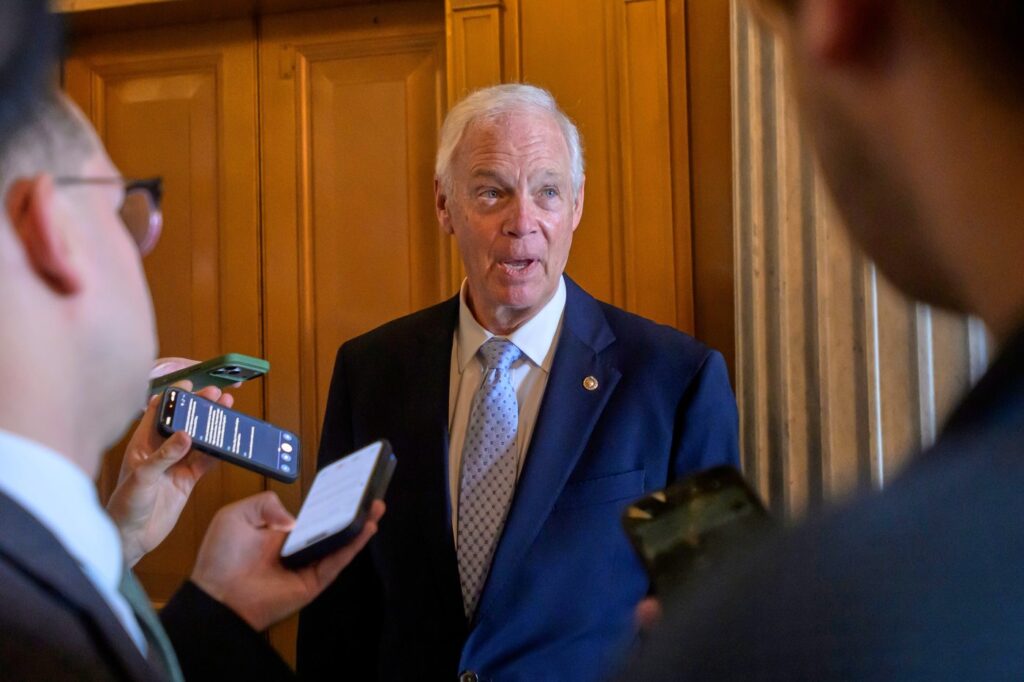
Instead of pushing through the contentious legislation, Republican senators proposed an alternative strategy to address voting bill elements in a larger GOP budget package, which aims to fund ongoing military operations in Iran and replenish the Pentagon's resources when Congress reconvenes in September. Senator Ron Johnson of Wisconsin, chair of the GOP budget committee, remarked after a call with Trump that “this is what he wants to do.”
The abrupt conclusion of the standoff showcased Trump's deep influence within Congress, illustrating his capacity to command the legislative agenda even as he encountered obstacles in moving the SAVE America Act forward. While Trump often takes on a role resembling a de facto speaker of the House, he also aims to exercise control over the Senate's proceedings.
Despite Trump's persistent encouragement for Senate Majority Leader John Thune to facilitate the passage of the SAVE America Act, the bill lacked adequate support not only from within the Republican majority but also from Democrats, whose cooperation was essential. Trump even called for an abandonment of filibuster rules to circumvent the typical 60-vote threshold required for legislative advancement, a prospect that Thune and most senators were unwilling to consider.
In an interview, Trump expressed optimism about Thune's efforts, emphasizing the potential disappointment if these efforts did not yield results. However, the political landscape within the Senate proved challenging enough that even Trump's pressures could not alter the dynamics at play.
Thune has been navigating the intricate balance between the president's expectations and the practical limitations posed by a narrow GOP majority in the Senate. With the prolonged absence of Senator Mitch McConnell of Kentucky, who is recuperating at home after his release from rehabilitation, the Republicans are effectively down one voting member.
As the Senate session dragged into lengthy discussions, Thune managed to secure the passage of several other priorities driven by Trump, including the confirmation of Todd Blanche as Attorney General and a significant sanctions package aimed at Russia to support Ukraine. Additionally, the Senate approved a bipartisan measure to temporarily fund government operations until December, a critical step toward averting a government shutdown.
Although Republicans attempted to advance a reduced voting bill mandating photo identification for federal elections, it was unsuccessful, primarily due to opposition from Democrats. The implications of these legislative failures reverberated as Trump's allies in Congress ramped up their support for his voting agenda, pushing for action on the SAVE America Act as a foundational priority.
The standoff culminated in a lengthy conference meeting convened by Thune, where Republican senators scrutinized the path forward regarding the president's demands. Despite their discussion, the legislative stalemate persisted until the decision to adjourn was made. When the Senate called for a vote, objections were raised by several senators, but ultimately the motion to adjourn passed, marking the end of an extensive debate and negotiation.








