

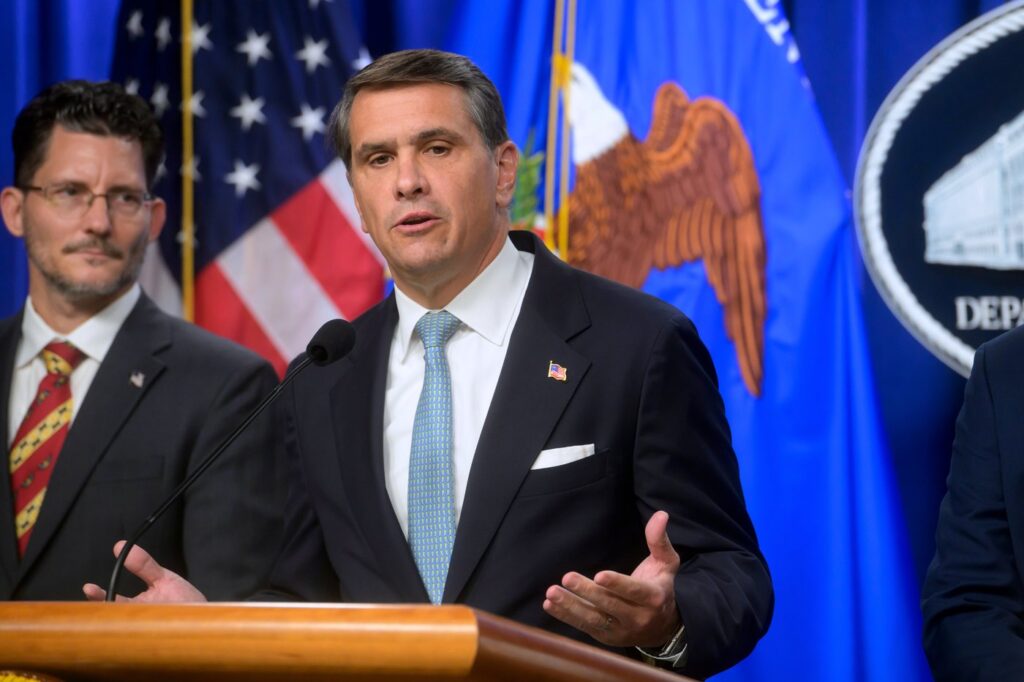
On Saturday morning, the Senate confirmed Todd Blanche as the Attorney General, marking a significant moment in President Donald Trump's administration. With a tight vote of 50-49, Blanche, who previously served as Trump's personal attorney, will now lead a Justice Department that Trump aims to shape for his political benefit. Although he was already serving in an acting capacity, his confirmation is expected to facilitate a more aggressive pursuit of Trump's agenda.
Blanche expressed his gratitude on social media, stating he was "deeply honored" by Trump's trust and thanked the senators for their efforts in securing his confirmation. The process was marked by a contentious confirmation battle that raised alarm both among Democrats and some Republicans regarding the implications of placing a close ally of Trump at the helm of a department traditionally known for its independence.
The opposition to Blanche's nomination included two Republican senators, Susan Collins of Maine and Lisa Murkowski of Alaska, along with all Democrats in the Senate. Concerns were particularly raised about a controversial settlement linked to Trump's lawsuit against the Internal Revenue Service (IRS). Faced with scrutiny, Blanche committed in writing to abandon the proposed $1.8 billion compensation fund, which was intended for Trump’s allies, some of whom were involved in the January 6, 2021 Capitol attack. He also promised to limit another aspect of the settlement that would have protected Trump and his family from IRS audits.
Senator Bill Cassidy of Louisiana cast his vote in favor of Blanche, suggesting that his loyalty to Trump could enable him to navigate the Justice Department more effectively than any other nominee. Cassidy emphasized that his support should not be interpreted as an endorsement of Trump himself, but rather as a recognition of Blanche's capabilities within the current context.
Senator Dick Durbin of Illinois expressed strong reservations, calling the confirmation a "serious mistake" and urging his colleagues to reflect on the need for an Attorney General who is free from any political influence, especially in today's climate. Durbin warned that this confirmation could have far-reaching consequences.
Blanche's loyalty to Trump was a focal point throughout the confirmation process. After Trump dismissed Pam Bondi as Attorney General, Blanche was appointed to the position in an acting capacity and moved quickly to further Trump's interests, leading to escalating investigations into perceived adversaries and proposing contentious reforms, such as the $1.8 billion "Anti-Weaponization Fund".
The initial backlash against Blanche's nomination was partially quelled after he rescinded the contentious fund under pressure from Republican senators. This concession played a crucial role in securing the necessary votes for his nomination to advance through the Senate Judiciary Committee.
Despite gaining some support, Blanche's nomination faced ongoing skepticism from Republican senators concerned about the fallout from the proposed fund and the immunity deal for Trump regarding tax audits. Murkowski reiterated her stance against the nomination, asserting the need for an Attorney General capable of constraining the administration's excesses.
Blanche's prior experience includes working as a federal prosecutor and representing Trump during critical legal battles, including issues surrounding campaign finances. This experience has shaped his perception of governmental actions as overly aggressive against Trump, a sentiment he has expressed publicly.
With his confirmation, Blanche's actions at the Justice Department will be closely scrutinized. He has already initiated high-profile investigations and has appointed Joseph diGenova to lead a probe into alleged conspiracies against Trump by various former law enforcement and intelligence officials. Still, it remains to be seen whether these efforts will yield any actionable outcomes.
In summary, Blanche's appointment as Attorney General highlights the ongoing intersection of law enforcement and political ambition within the Trump administration, raising critical questions about the future direction of the Justice Department under his leadership.








