

JOHANNESBURG – On Sunday, South Africa commemorated the 70th anniversary of the Women's March of 1956, which saw approximately 20,000 women of various races march to Pretoria to protest against apartheid laws that mandated Black women to carry passes restricting their movement. This significant event marked a powerful moment in the ongoing struggle against systemic oppression and white minority rule in the country.
However, even after seven decades of courageous activism, many women in South Africa contend that their fight for true freedom is far from over. They continue to face alarming levels of gender-based violence, poverty, and economic inequality. A United Nations Women-supported study in 2024 revealed that more than one in three South African women have suffered from physical or sexual violence during their lifetimes.
One octogenarian reflecting on the historical march is Ramnie Dinat, 84, who was just a teenager during the event. She reminisced about assisting her mother, Ama Naidoo, an anti-apartheid activist, in organizing women for the rally. According to Dinat, women of all backgrounds—Black, Indian, and even some white women—stood together on that day. "Black women were organizing, and Indian women couldn’t be silent," Dinat recalled, emphasizing the unexpected historical significance of their actions. "We were ordinary women who believed we could make a difference. We simply believed it was the right thing to do."
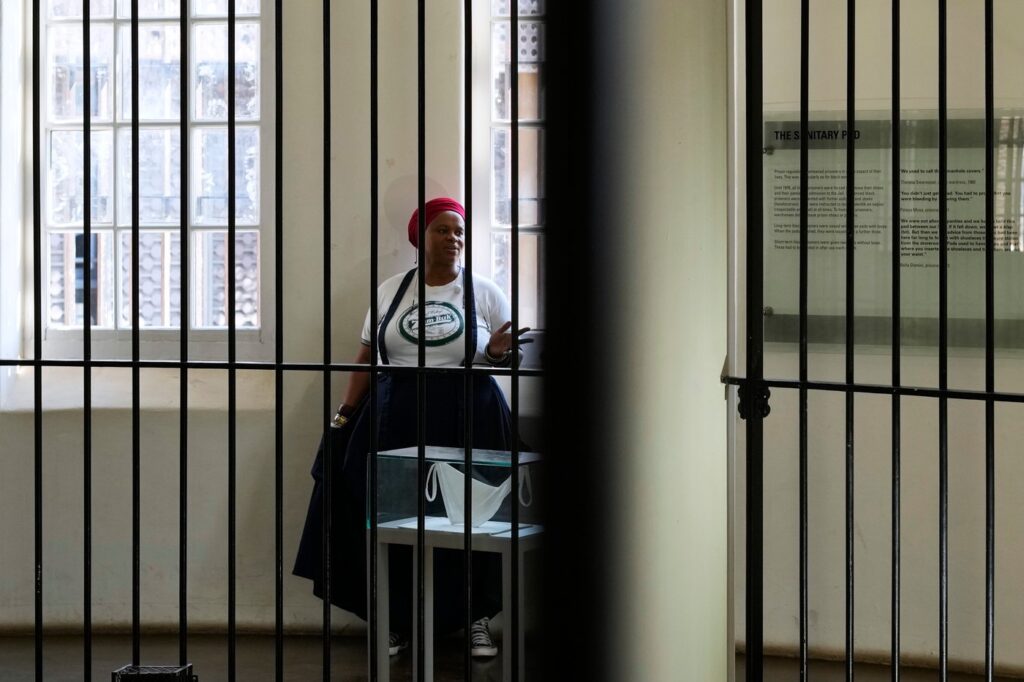
Today, the Women's Jail, a former emblem of South Africa’s apartheid prison system, has been transformed into a museum that serves as a historical reminder of the country’s journey from oppression to democracy. Located on a ridge overlooking central Johannesburg, the museum is situated close to the Constitutional Court. Many leaders and participants of the 1956 march found themselves imprisoned in this facility, which enforced racial segregation even among its female inmates.
Nolubabalo Memese, Visitors Services Manager at Constitution Hill, shared insights about the facility, describing it as designed to “break, humiliate, dehumanize.” She highlighted the harsh conditions that Black women endured, lacking basic necessities like underwear and proper sanitary products. The museum now honors famous anti-apartheid figures such as Winnie Madikizela-Mandela and Albertina Sisulu, as well as countless unnamed women whose contributions went largely unrecognized.
Kgothatso Montjane, a celebrated Paralympic wheelchair tennis champion, echoed Dinat’s sentiment regarding the historical impact of the women’s march. At 40, Montjane is recognized as one of South Africa's most successful para-athletes, having won the 2024 Wimbledon wheelchair doubles title. She believes that the fight undertaken by women 70 years ago has cleared a path for future generations. "Today I’m the first Black South African woman to compete in all four major tennis tournaments,” she noted.
Despite the end of apartheid in 1994, gender-based violence persists, limiting women's freedom to move and participate fully in society. Memese pointed out that this "different monster," as she termed it, continues to obstruct women's rights. She stated, "If you want to go jog at six o'clock and it's a bit dark, you'd rather not." The United Nations has characterized South Africa’s outrageously high rates of violence against women and girls as a crisis and a "national wound."
Moreover, economic disparity remains a significant barrier for South African women, as they are statistically more likely than men to be unemployed. Government data indicates that women also bear the brunt of unpaid care work and are markedly underrepresented in leadership roles. Montjane spoke to the structural inequalities still evident in sports, where financial constraints often dictate access to high-level competition, reinforcing the narrative that tennis is predominantly a "white sport."
Nevertheless, she believes that the groundwork laid by the women of 1956 remains vital for current and future generations. “The platform has been set,” she stated. The new museum built on the site of the old Women's Jail utilized some of the original bricks from the former prison, symbolically representing the journey from past oppression to building a hopeful future. Memese remarked, "We are using the bricks of the past to build our future." She highlighted the necessity of remembering history to avoid repeating past mistakes.
Dinat, who retains vivid memories of the 1956 march, articulated a timeless message: "Every generation has its own struggles, and every generation has to decide whether it will stand up for what is right."








