

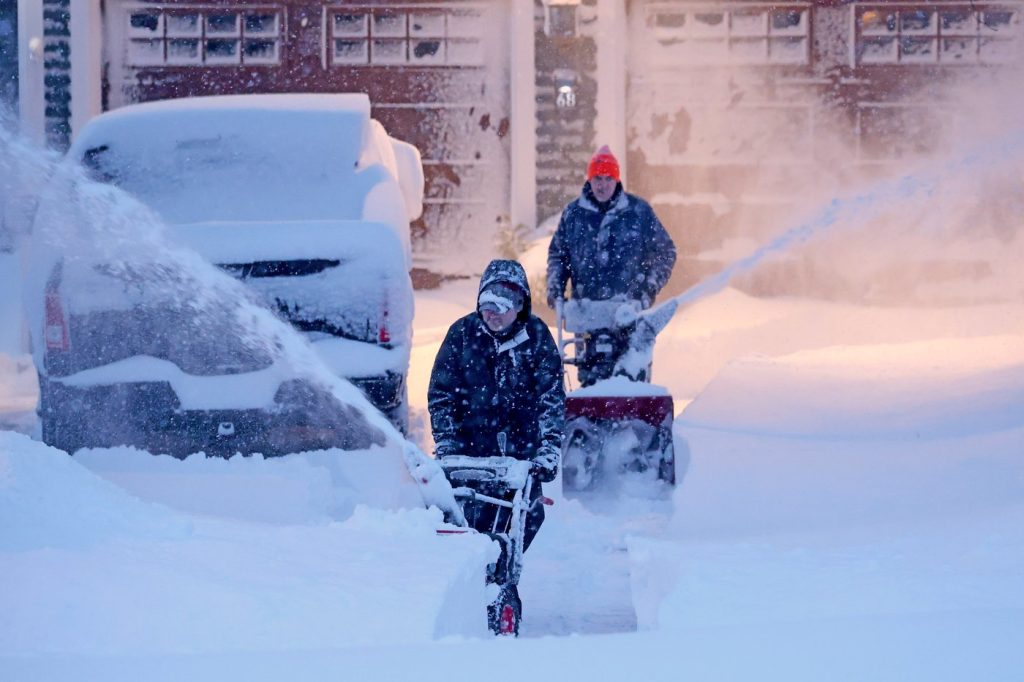
A record-setting snowstorm has led to The Boston Globe making an unprecedented decision to cancel the printing of its daily newspaper for the first time in its 153-year history. This historic move highlights how extreme weather events can significantly affect traditional media operations.
The cancellation was primarily due to heavy snow and strong winds that made it unsafe for staff to reach the printing plant. According to the National Weather Service, areas in Bristol County, Massachusetts, where the Globe's printing facility in Taunton is situated, experienced snowfall accumulations of up to 32 inches (81 centimeters) by Monday night. This extreme weather made it impossible to produce Tuesday's edition, as safety concerns took precedence over regular newspaper operations.
In today's digital age, the reliance on printed newspapers has drastically decreased. A 2025 survey conducted by the Pew Research Center illustrated this trend, revealing that only 7% of U.S. adults often seek news from printed newspapers or magazines. In contrast, a significant majority, 56%, reported that they typically acquire news through smartphones, computers, or tablets. This shift in media consumption reflects a broader transformation in how news is accessed and disseminated.
This incident marks a significant milestone for The Boston Globe, as it represents the first cancellation of daily production since the paper's founding in 1872. Although there were labor strikes in the 1950s and 1960s that interrupted publishing operations, this is the first instance where a snowstorm has led to such a closure. This emphasizes not only the unforeseen impacts of severe weather on operational logistics but also the changing landscape of media during challenging circumstances.
Historically, The Boston Globe has navigated through severe weather conditions, including another record-setting blizzard nearly five decades ago on February 7, 1978. During that event, the Globe managed to print a limited number of copies, but delivery was severely hampered due to snow accumulation, which prevented delivery trucks from reaching their destinations. This memory illustrates the challenges traditional media face during adverse weather events.
In addition to impacting The Boston Globe, Monday's blizzard also set new snowfall records in nearby Rhode Island. At T.F. Green International Airport in Warwick, the storm delivered nearly 38 inches (96.5 centimeters) of snow, surpassing a record set in 1978. Such extreme weather patterns raise questions about climate change and its effects on regional weather systems, impacting daily life and business operations.
Despite the disruption caused by the snowstorm, The Boston Globe has assured its print subscribers that they will receive Tuesday's edition delivered on Wednesday. This effort to provide continuity to subscribers showcases the paper's commitment to serving its audience, even in the face of significant operational hurdles.
This extraordinary weather event underscores the fragility of traditional newspaper operations, particularly as extreme weather becomes more commonplace. The Boston Globe's experience serves as a reflection of broader trends in media consumption, safety concerns in production, and the historical resilience of a media institution in the face of nature's unpredictability.








