

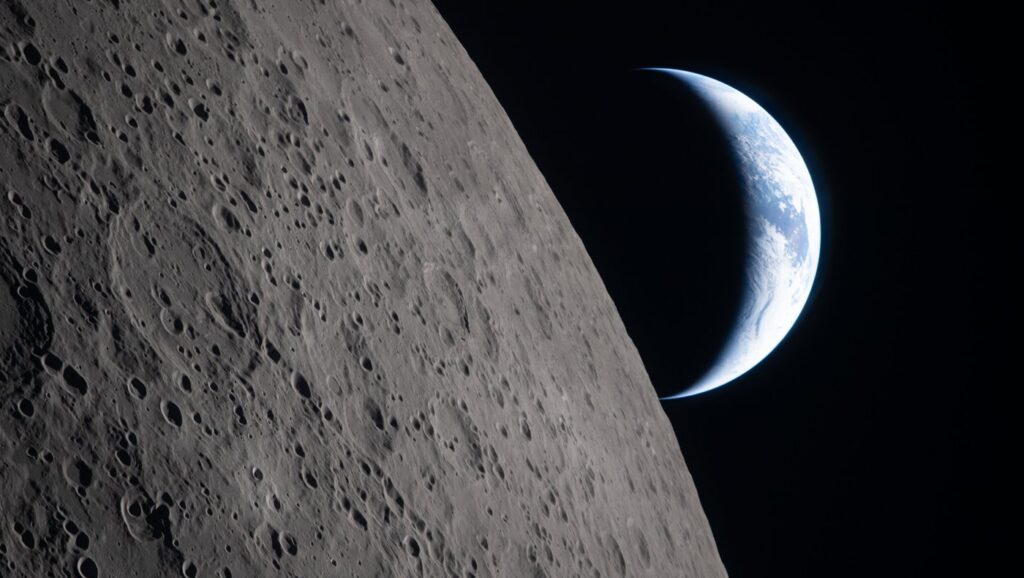
MONTREAL — The Artemis II mission has successfully returned to Earth, marking an important milestone in Canada's continued involvement in lunar exploration. The mission not only showcased Canada's participation but also set the stage for the nation’s future role in subsequent lunar missions.
As the focus transitions to Artemis IV, Canada is poised to play a pivotal role. Dr. Gordon Osinski, an Ontario-based planetary scientist, will contribute to guiding astronauts at the lunar south pole, a historically significant site that has not been visited by humans since 1972. His responsibilities will encompass critical scientific tasks, including mapping lunar routes, selecting samples for analysis, and shaping the overarching science agenda for activities conducted on the lunar surface.
In addition to scientific guidance, Canada is actively preparing to make a substantial material contribution to the upcoming lunar missions. By 2034, Canada aims to unveil a lunar rover designed to assist astronauts in their exploration of the Moon. This initiative signifies Canada's commitment not just to observe but to actively participate in the advancement of lunar exploration technologies.
Caroline-Emmanuelle Morisset, the senior scientist in lunar and planetary science at the Canadian Space Agency, emphasizes that Canada's involvement in future space missions goes beyond mere observation; it reflects a dedication to contributing to the shaping of these exploration efforts. Through collaboration and innovation, Canada aims to significantly influence the science and technology used in lunar exploration.
The recent success of Artemis II is a testament to international cooperation in space exploration, with Canada playing a crucial role. As the Artemis program progresses, the contributions of Canadian scientists and engineers will enhance the missions' scientific achievements and inspire future generations in the space industry.
This ongoing collaboration illustrates the importance of global partnerships in addressing the challenges of deep space exploration. With scientists like Dr. Osinski leading efforts at the Moon’s south pole and the development of innovative technologies such as lunar rovers, Canada is solidifying its position as a key player in the future of lunar exploration.
The Artemis program represents a renewed global interest in exploring the Moon, and Canada is strategically positioned to contribute its expertise and technological advancements. The country's ongoing commitment to lunar missions highlights a significant era of collaboration in space exploration.








