

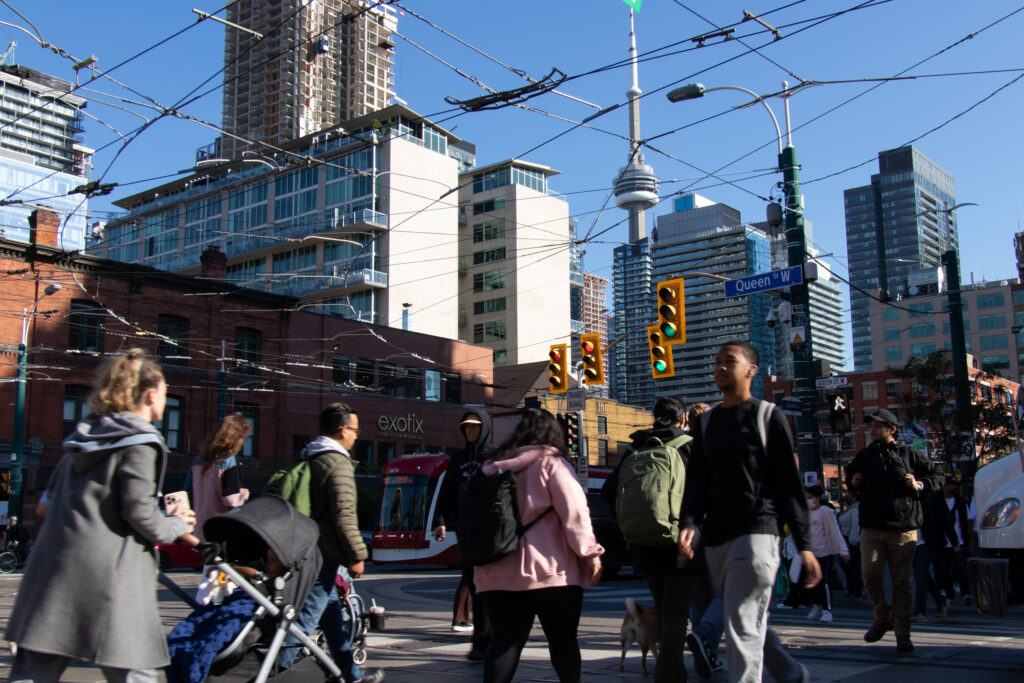
Toronto has garnered attention for experiencing the most significant safety-reputation penalty among major Canadian cities, as indicated by a recent national public-perception study. Despite official crime-severity statistics suggesting that the city is relatively safe, the reality in the eyes of many Canadians is starkly different. According to the study, 57 percent of Canadians consider Toronto to be somewhat or very unsafe, while only 39 percent believe it to be safe.
Out of all the cities analyzed, only Winnipeg scored lower than Toronto, with 59 percent of respondents deeming it unsafe. The survey results reveal that the negative perception of Toronto has been on the rise over the years, increasing from 52 percent in 2017.
A Widening Perception Gap
The study, conducted by Liaison Strategies, assessed 15 Canadian cities, revealing that Toronto ranks second-lowest on the net safety scale at minus-18, just ahead of Winnipeg at minus-28. This discrepancy signifies what researchers term Canada's largest reputational penalty—a notable difference between actual safety levels in a city and public perception of safety. Toronto's crime statistics do not align with its reputation, making this situation particularly striking.
According to Liaison Strategies, the implications of this perception gap are both politically and economically significant. Only a mere 12 percent of survey respondents indicated that crime statistics are the primary factor influencing their impressions of city safety. Instead, perceptions are shaped by various factors, including media coverage, personal experiences, word-of-mouth, and the national image of the city.
Negative safety perceptions are particularly concentrated among Canada's largest urban areas. The responses detailing how unsafe residents perceive these cities includes:
- Winnipeg – 59 percent unsafe
- Toronto – 57 percent unsafe
- Vancouver – 52 percent unsafe
- Edmonton – 50 percent unsafe
- Saskatoon – 45 percent unsafe
- Montreal – 41 percent unsafe
- Regina – 37 percent unsafe
- Calgary – 35 percent unsafe
Conversely, the cities perceived to be the safest include Quebec City (+57), Ottawa (+56), and Charlottetown (+51), indicating a clear divide in public perception when compared to larger urban centers like Toronto and Winnipeg.
David Valentin, Principal at Liaison Strategies, identifies the perception gap surrounding Toronto as a pivotal finding of the study. He emphasizes that Toronto's public safety reputation is problematic, as the city's perception is aligned with that of Winnipeg despite substantial differences in their respective crime severity data. The data suggests that while Winnipeg's perception aligns with its crime data, Toronto’s does not, leading to its notable reputational penalty.
Valentin further points out that the public’s response to cities is influenced by more than just police-reported crime statistics. The overall feel and ambiance of a city also plays a critical role in shaping perceptions among residents, visitors, investors, students, and businesses.








