
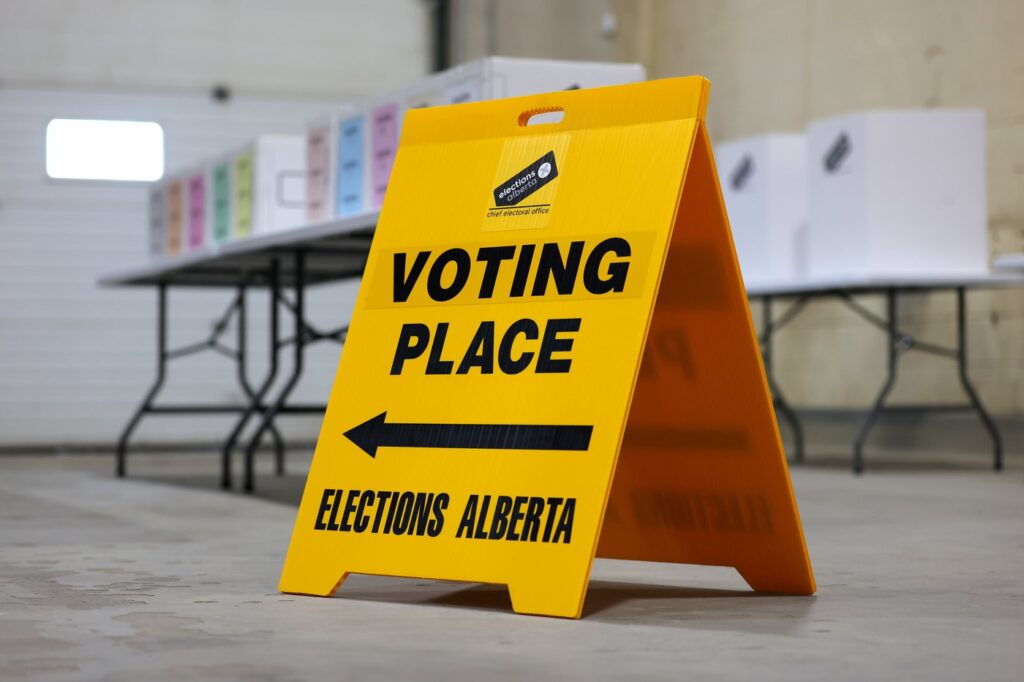
As Albertans prepare to vote in the province's referendum on Monday, leaders from the Chinese community are mobilizing efforts to help voters comprehend the intricacies of the ballot's 10 questions. Many citizens find the lengthy and complex ballot challenging, but there is a strong motivation among voters to participate in the historic vote.
Teresa Woo-Paw, chair of the ACCT Foundation, highlighted that the complexity is such that even English-speaking Canadians may struggle to grasp the content. "Even English-speaking Canadians, people born and raised here, many don’t fully understand these 10 questions, because altogether they’re over 400 words, and they’re not asked in a direct way,” she remarked.
The 10 questions in the referendum encompass a wide array of issues, including a query about Alberta's potential separation from Canada and other topics ranging from immigration to the constitutional division of powers. Steven Tsang, a member of Asian Canadian for United Canada, called the referendum "the largest and most complex vote in Canadian history."
In response to the information gap surrounding the ballot, former Alberta Member of the Legislative Assembly (MLA) Woo-Paw stated that community leaders have formed a cross-ethnic coalition since July. This coalition aims to provide clear information and resources for voters from various backgrounds, ensuring they can make informed decisions at the polls.
According to Woo-Paw and Tsang, the majority of Chinese voters seem to favor Alberta remaining part of Canada. “We believe that among ethnic communities, over 90 percent support Alberta remaining in Canada,” Woo-Paw conveyed, underscoring the prevalent sentiment within the community.
Voting as First-Generation Immigrants
Geopolitical commentator Sam Choi elaborated on the referendum's particular importance for first-generation immigrants in Alberta. He pointed out that while the government may not know how individual voters cast their ballots, it can track voting patterns based on certain demographics, including ethnicity. "The government doesn’t know who you voted for, but it knows whether you voted,” Woo-Paw stated. “If we don’t vote, we’re not important; when they make decisions on how to allocate resources.”
Choi emphasized that voting is also an educational opportunity for Chinese Canadians to gain a deeper understanding of Canada's political system. “For Chinese to come out and vote is a very good opportunity,” he stated. “It serves as a channel for the community to understand our federal system, the division of powers with the provinces, and how to further improve going forward.”
The results of the referendum, which will reveal the public’s stance on these pressing issues, will be announced in batches. However, the outcome regarding the question of whether to stay in Canada or leave is anticipated to be released early Tuesday morning.
```