

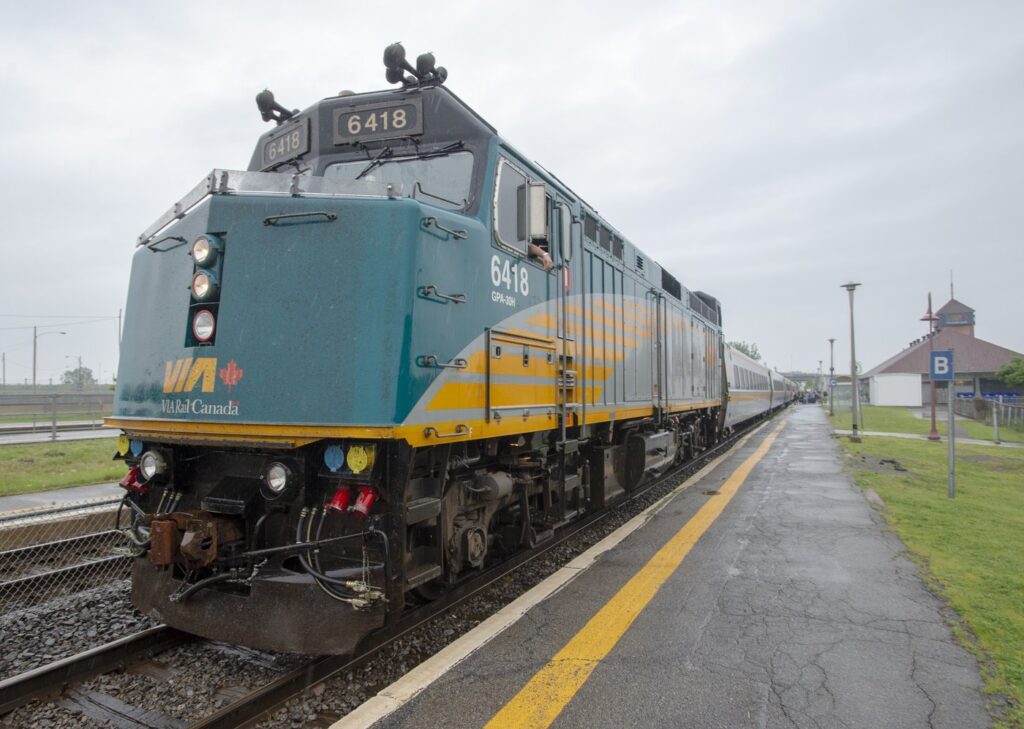
THUNDER BAY – On Thursday, Prime Minister Mark Carney announced a significant $4.7 billion contract for the production of 313 new passenger cars for Via Rail. This announcement took place at the Alstom plant located in Thunder Bay, Ontario, where the new cars are set to be manufactured.
During his address, Carney highlighted the obsolescence of the current rail cars, which he noted have been in use for more than 70 years. He made an analogy by referencing historical sports milestones, stating, “They were built when the NHL had six teams. Goalies wouldn’t wear masks. The Leafs would win the (Stanley) Cup.” Carney asserted that while these aging cars have served the nation well, they are now overdue for retirement, emphasizing the necessity to invest in new, domestically manufactured rail cars.
The Prime Minister placed particular importance on the fact that, for the first time in four decades, these new passenger cars will be produced, assembled, and maintained within Canada. He stated, “Cars that used to be built in the United States will be built right here in Thunder Bay at Alstom, by the best workers in the world.” This statement underscores a commitment to rejuvenating Canada’s manufacturing sector and supporting local jobs.
Transport Minister Steven MacKinnon also spoke at the event, labeling the new investment as the single largest in Via Rail’s history. He mentioned that the project will create approximately 700 new jobs, further enhancing the local economy. “This is a truly Canadian project. Canadian supply chains, workers, and it’s a renewed investment in that passenger rail service that connects us all,” MacKinnon remarked after the announcement.
The timeline for this ambitious project indicates that the first of the new passenger cars is expected to be delivered by the year 2031. This announcement follows previous government commitments earlier in July, where plans were unveiled to allocate $1.6 billion towards replacing 45 of Via Rail’s aging locomotives. Additionally, a budget of $357 million has been set aside for the construction of a new assembly plant and maintenance facility dedicated to supporting these modernized operations.
Both the new trains and locomotives under these initiatives are anticipated to be ready for service by 2031. This comprehensive approach reflects the government’s strategy to modernize Canada’s passenger rail service, ensuring safety, efficiency, and the potential for increased rail connectivity across the country.
The Canadian government’s investment marks a significant step towards enhancing public transportation infrastructure and fostering economic development in the region. As the project unfolds, it is expected to reinforce the vital role of rail transportation in connecting Canadian communities from coast to coast.








