
Leaders of the United States, China, and Russia are set to meet on Thursday during the upcoming Asia-Pacific Economic Cooperation (APEC) summit in Shenzhen, China, marking an unprecedented gathering of heads of state from the world's largest nuclear powers. The meeting is expected to symbolize a significant moment in international relations, although analysts predict that it will likely result in more symbolism than substantive agreements.
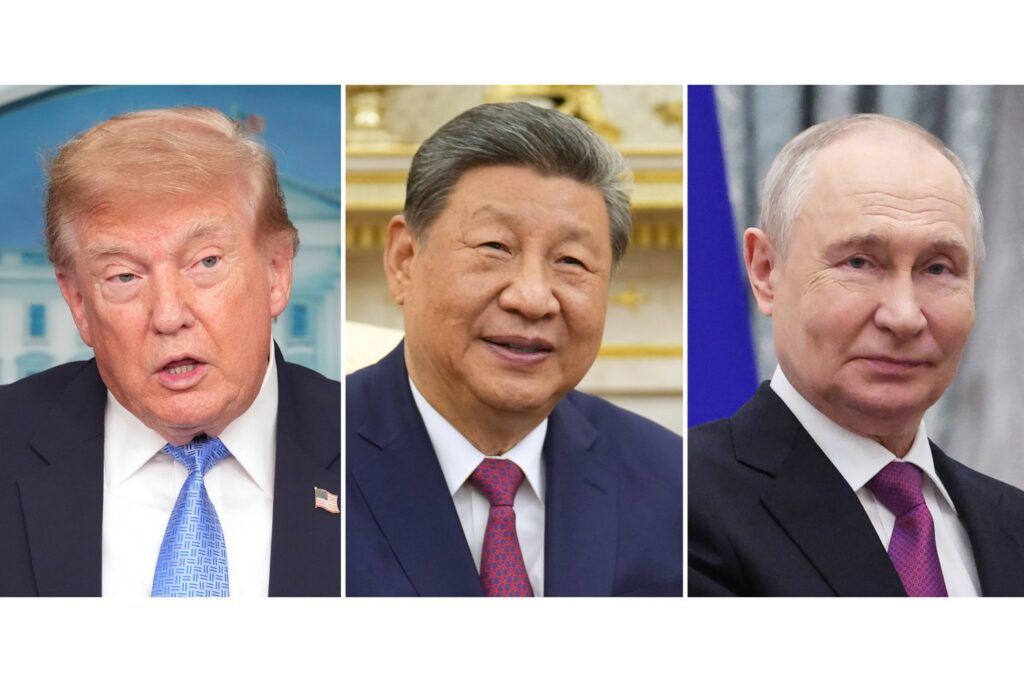
Confirmed by the White House on Friday, the summit will involve U.S. President Donald Trump, Chinese President Xi Jinping, and Russian President Vladimir Putin. The timing is particularly complicated, as relations among these three nations remain tense. Trump has cultivated a warmer relationship with Xi after ending a trade war last year and despite various disagreements over issues like the U.S. conflict with Iran and Russia's ongoing war with Ukraine.
Trump has also been working to strengthen ties with Putin amid the latter's prolonged conflict in Ukraine and an increasing military partnership with Iran. The U.S. president views the summit as an opportunity to discuss the Iran war and aims for a trilateral agreement regarding nuclear arms. However, discussions regarding Ukraine will be avoided, according to a senior U.S. official who spoke on the condition of anonymity.
The meeting is intended to initiate dialogue about nuclear disarmament, though no agreements are expected to be made. The nuclear arms issue is notably challenging for China, which has an arsenal of about 600 warheads compared to the 5,000 possessed by both the U.S. and Russia. Despite the disparity, the U.S. is urging China to take a more proactive role in discussions about nuclear arms.
XJ Jinping’s decision to host the summit may be an attempt to showcase China's rising influence on the global stage. For Russia, this meeting provides a platform to assert itself as a superpower alongside the U.S. and China. Analysts suggest that Russia's interest stems from its need to signify a willingness to engage in discussions that concern not just the U.S. and its allies but also the West's stance on Ukraine.
This trilateral summit could overshadow the APEC meeting, which will showcase China's rapid transformation into a leading global technological and economic hub. Observers point out that the gathering may complicate China's narrative that a Cold War mentality in the West contributed to the ongoing conflict in Ukraine, as well as raise questions about Beijing's stance on multilateralism during the summit.
Notably, the leaders have previously met in pairs, with Putin and Xi often referring to each other as "dear friends." Meanwhile, Trump and Putin have held seven face-to-face meetings, with their most recent encounter occurring in August 2025. The existing relationship between China and Russia has strengthened, particularly following the latter's military actions in Ukraine.
As the EU and Western nations attempted to isolate Russia economically, China increased its energy purchases from Russia and emerged as a key supplier of technology crucial to Russian military capacities. While China officially maintains a neutral stance on the Ukraine conflict, it has criticized Western countries for provoking Russia. Conversely, Russia has expressed support for China's policies concerning Taiwan.
Amid these developments, Ukrainian President Volodymyr Zelenskyy has voiced concerns that the upcoming summit could lead to discussions regarding Ukraine's future without Kyiv’s involvement. The planning of the trilateral meeting has been compared to the historical Yalta Conference of 1945, although Kremlin spokesman Dmitry Peskov has dismissed such comparisons, emphasizing that any agreements made will not be enforceable on other nations.
Peskov highlighted the significance of a meeting between the leaders of these powerful nations, acknowledging that a vision for a global order should be based on mutual benefit and respect, rather than any unilateral approach.