

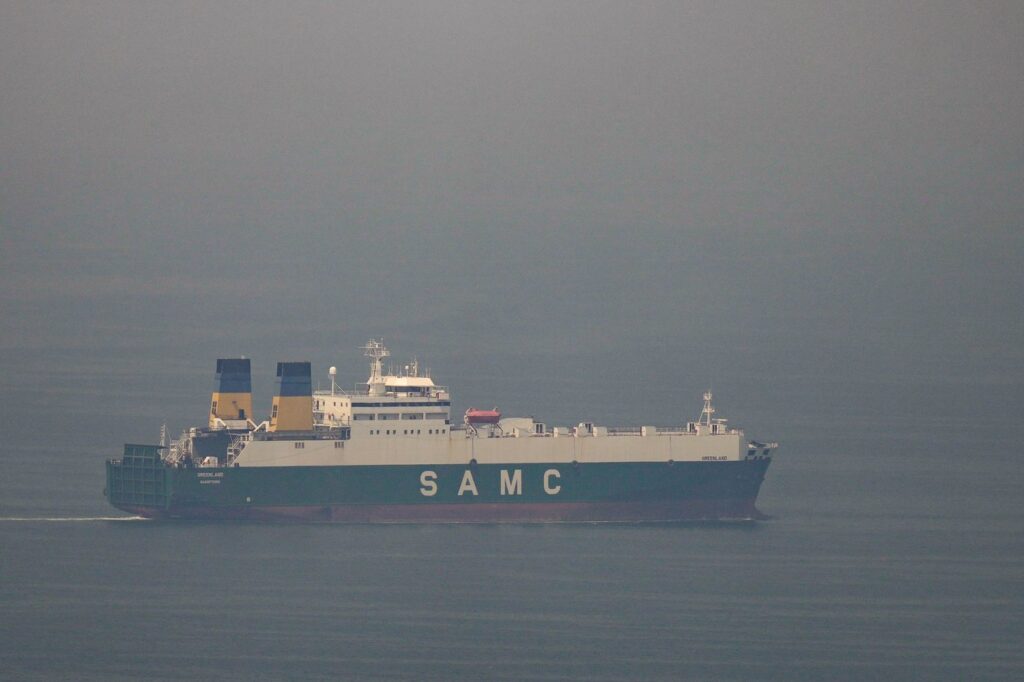
U.S. President Donald Trump has publicly announced that he has requested the assistance of approximately seven nations to dispatch warships to the Strait of Hormuz. This request comes as Iranian military activities have intensified, leading to strikes across Gulf countries. The Strait of Hormuz is a crucial maritime route where about one-fifth of the world's traded oil typically passes.
In a related event, operations at Dubai International Airport, regarded as the world's busiest airport, were temporarily halted after a drone attack struck a fuel tank, igniting a fire. Fortunately, the fire was contained swiftly, and authorities reported no injuries as a result of the incident.
In a statement, President Trump indicated that the U.S. is engaged in negotiations with oil-dependent countries in the Middle East to form a coalition aimed at securing the safety of maritime navigation in the critical waterway. However, he refrained from disclosing the names of these nations.
On another front, Israeli military actions have exacerbated the humanitarian crisis in Lebanon, with reports indicating that over 850 individuals have lost their lives and more than 850,000 people have been displaced due to ongoing conflicts.
Australian officials have announced that they will not be sending a warship to the Strait of Hormuz. Transport Minister Catherine King stated in a Monday interview with the Australian Broadcasting Corporation that she was not aware of any such request being made to Australia. "We won’t be sending a ship to the Strait of Hormuz. We know how incredibly important that is, but that’s not something that we’ve been asked or that we’re contributing to," King clarified.
Despite the refusal to send a warship, the Australian government has indicated its commitment to supporting the United Arab Emirates in defending against potential Iranian attacks. Last week, Australia pledged to supply the UAE with an air force surveillance jet and air-to-air missiles. However, a government statement emphasized that Australia is "not taking offensive action against Iran."
The evolving situation highlights the volatility in the region and the international community's efforts to navigate the complexities surrounding maritime security and geopolitical tensions. As the U.S. seeks to rally support from other nations, the implications of these developments continue to unfold.








