

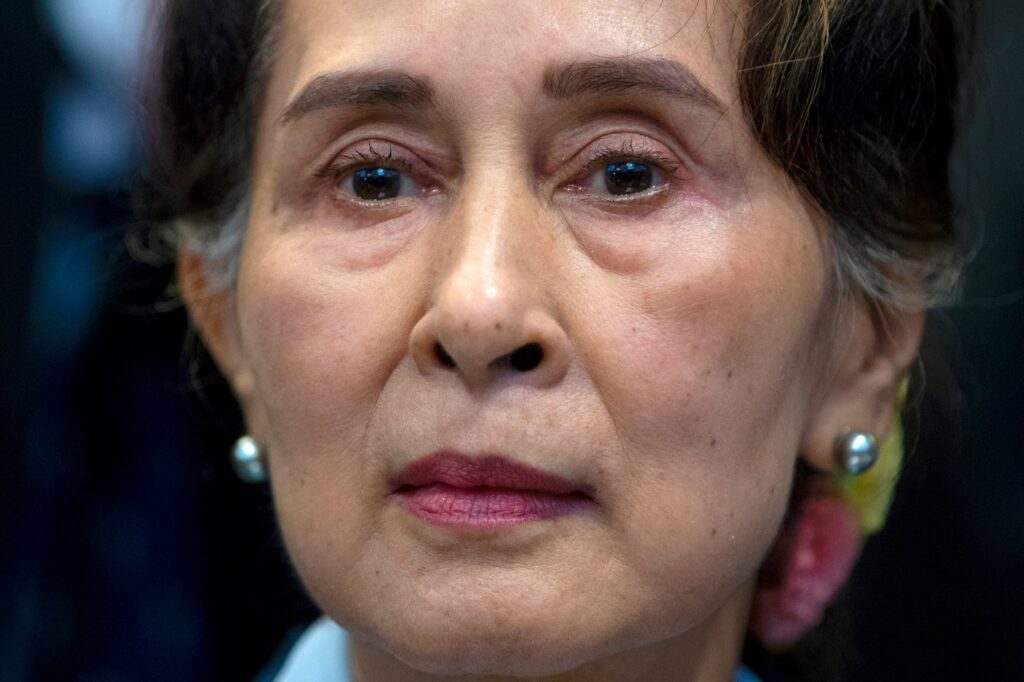
BANGKOK (AP) — Myanmar's military-backed government has shortened the prison sentence of ousted leader Aung San Suu Kyi in a recent amnesty tied to a Buddhist religious holiday. This development was reported on Thursday by legal officials and state media. The move marks the second amnesty in two weeks, following a previous one on April 17 that resulted in the release of over 4,500 prisoners.
The specifics of Thursday's prisoner amnesty have not been fully disclosed, including the number of political prisoners who were affected. However, two unnamed legal officials indicated that Suu Kyi’s sentence has been reduced by one-sixth, although the exact remaining term has not been provided. Based on earlier reductions, it is estimated that the Nobel Peace Prize laureate, who is now 80 years old, may still have over 13 years left to serve in her sentence.
State media reported that on this occasion, amnesty was granted to 1,519 prisoners, including 11 foreigners, and the sentences of all other convicted prisoners were similarly reduced by one-sixth to commemorate the Full Moon day of "Kason," recognized as Buddha’s Birthday and Demise. These pardons were announced shortly after Senior General Min Aung Hlaing was inaugurated as president on April 10, amid criticisms of an election that many labeled as neither free nor fair, which many believe was designed to solidify the military's control over the country.
During his inaugural speech, Min Aung Hlaing pledged to pursue amnesties that would foster societal reconciliation, justice, and peace. Aung San Suu Kyi was detained on February 1, 2021, when the military seized power from her elected government. Initially imprisoned with a sentence of 33 years in late 2022, she faced multiple charges that her supporters and human rights organizations describe as politically motivated efforts to diminish her reputation, validate the coup, and obstruct her potential return to political life.
In August 2023, her sentence was reduced to 27 years, further shortened by over four years during the previous amnesty on April 17. Suu Kyi is currently serving her sentence at an undisclosed location in the capital, Naypyitaw. There have been unconfirmed reports suggesting that she may be moved to house arrest as part of this clemency, but the government has yet to provide any official confirmation.
The information concerning her well-being remains tightly controlled. Reports from early 2024 and 2025 indicated that Suu Kyi's health had been declining, with issues such as low blood pressure, dizziness, and heart problems, although these claims could not be independently verified. Notably, her legal team has not been granted in-person meetings with her since December 2022.
The military takeover in 2021 has led to widespread public resistance, which was violently suppressed, resulting in a bloody civil conflict that has claimed thousands of lives. According to the Assistance Association for Political Prisoners, a human rights monitoring group, there have been 22,047 individuals detained in Myanmar since the military seizure of power.
Aung San Suu Kyi, the daughter of the esteemed independence hero Gen. Aung San, previously endured nearly 15 years under house arrest between 1989 and 2010. Her resolute opposition to military rule turned her into an iconic symbol of nonviolent struggle for democracy, culminating in her 1991 Nobel Peace Prize award.








