

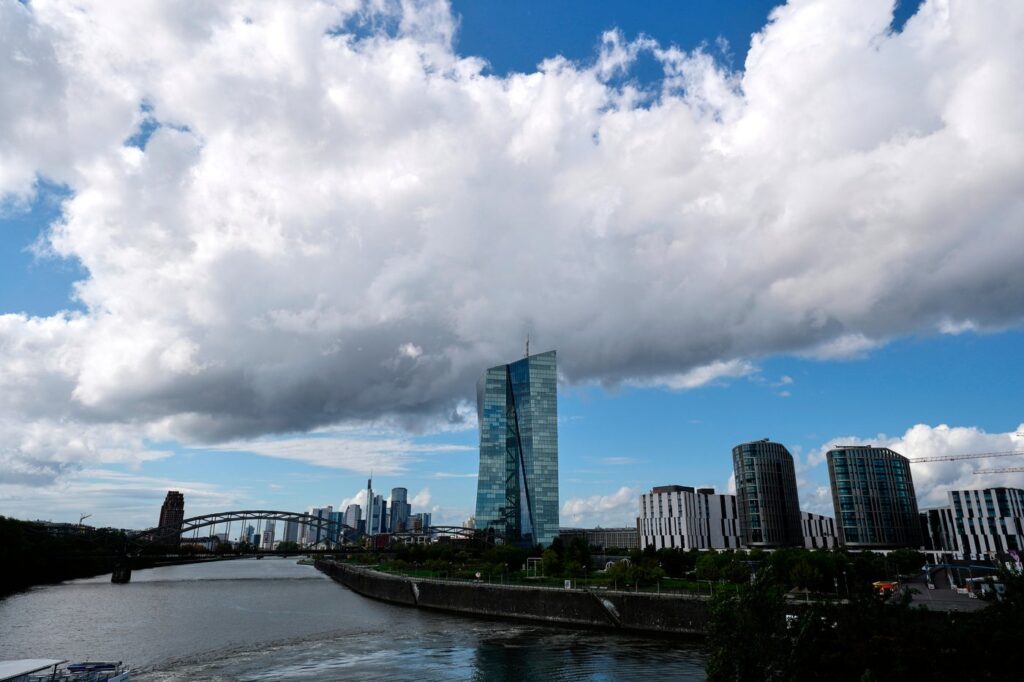
FRANKFURT, Germany (AP) - The ongoing conflict in Iran has caused a significant rise in oil prices, subsequently driving inflation higher in Europe as reported in April. This combination of rising costs and sluggish growth poses challenges for both consumers and the European Central Bank (ECB) policymakers. According to Eurostat, the annual inflation rate in the 21 eurozone countries has increased to 3.0% in April, up from 2.6% in March. This inflationary pressure is largely attributed to a 10.9% surge in energy prices, resulting from crude oil trading above $120 per barrel, a substantial increase from approximately $73 prior to the outbreak of the war on February 28.
In addition to rising inflation, economic growth within the euro area for the first quarter of the year has disappointed, registering only a marginal increase of 0.1% compared to the previous quarter. This dual challenge of slow growth coupled with high inflation, commonly referred to as stagflation, is becoming a critical concern for the ECB. Economists expect that the central bank will maintain its benchmark interest rate at 2% during its upcoming meeting, despite inflation figures exceeding the ECB's target of 2%.
The conflict has created a significant shock for the global economy by blocking the Strait of Hormuz, a vital waterway through which about 20% of the world's oil traditionally passes. This blockage has led to rapidly increasing oil prices, which have been reflected at gas stations and in the rising costs of jet fuel. The persistence of high inflation during a period of weak economic growth puts the ECB in a difficult position, as traditional measures to control inflation typically involve increasing interest rates, a move that can further inhibit growth by increasing borrowing costs.
If inflation is believed to be a temporary issue, the usual strategy is to overlook it, since adjustments to interest rates take time to influence the broader economy. However, if the ECB delays action until inflation becomes entrenched—reflected in higher prices for goods and increased wage demands—it may encounter challenges in reducing inflation without implementing painful interest rate hikes later on.
Central banks worldwide, such as The Bank of Japan and the U.S. Federal Reserve, also chose to keep their rates unchanged during meetings this week. The Bank of England is similarly expected to maintain its current rate. Consequently, the ECB and other monetary authorities are currently in a state of caution, closely monitoring the inflationary trends affecting the economy while refraining from making any rate increases or cuts. The ECB's benchmark rate has remained steady at 2% since June 2025.
In summary, the European economy is grappling with elevated inflation driven by increased energy prices from the Iran war and lackluster economic growth. The European Central Bank faces a challenging environment as it must navigate these issues without resorting to measures that could further hinder growth, highlighting the complexities of managing monetary policy in a time of geopolitical upheaval and economic uncertainty.








