

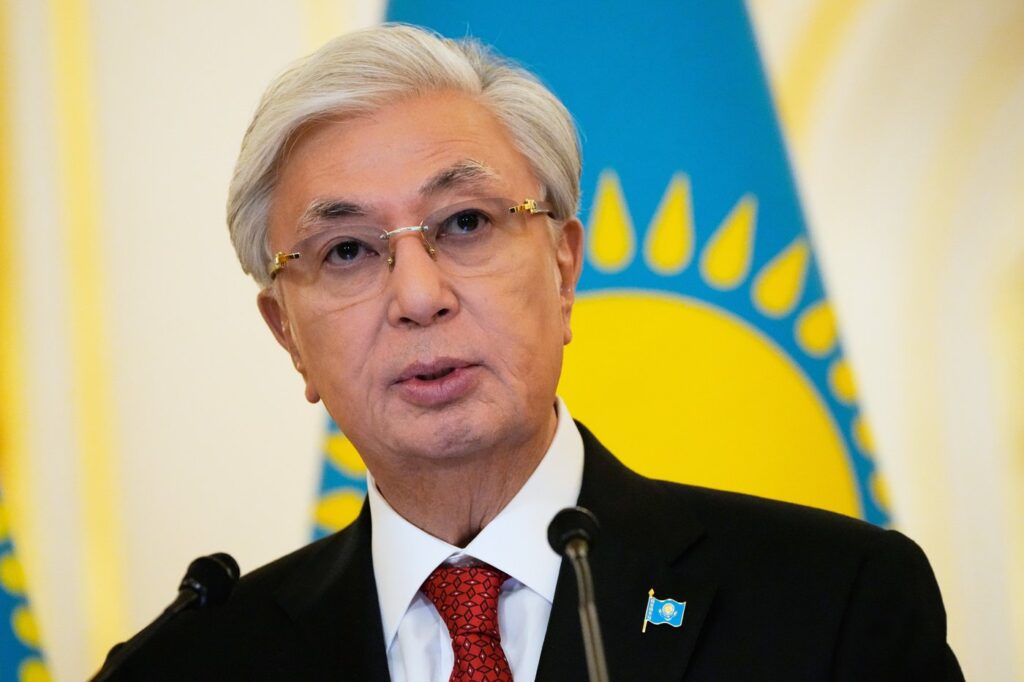
A new constitution aimed at consolidating President Kassym-Jomart Tokayev's power has received significant approval in a recent referendum held in Kazakhstan, the largest country in Central Asia. According to preliminary results from the Central Election Commission, more than 87% of voters supported the proposed constitutional changes during the referendum conducted on a Sunday. Notably, the voter turnout surpassed 73%.
The proposed constitutional amendments include the merging of the Kazakhstani parliament's two chambers into a single entity and granting President Tokayev the authority to appoint key government officials, including a vice president, with parliament's consent. In addition, a newly established body known as the People’s Council will be created, which will have the power to initiate legislation and referendums. All members of this council will be appointed by the president, further centralizing power in Tokayev's hands.
This is the second time significant constitutional changes have been initiated under Tokayev's administration in just four years. Observers have noted that this move may allow Tokayev to retain power beyond his current seven-year term limit, which is set to expire in 2029. Analysts speculate that he could potentially leverage this referendum to revise presidential term limits. This trend of amending constitutions to facilitate longer tenures has been observed among leaders of various former Soviet republics, such as Russia, Belarus, Uzbekistan, and Tajikistan.
Additionally, the new constitution revises the definition of marriage, stipulating that it must be a union between a man and a woman. This change is viewed by analysts as a direct response to a recent law prohibiting what authorities classify as "propaganda" of LGBTQ+ relations.
Throughout his presidency, Tokayev has attempted to maintain a delicate balance between Russia and Western nations amid ongoing geopolitical tensions, particularly following the imposition of sanctions against Russia due to its invasion of Ukraine. He has characterized the constitutional changes as necessary for facilitating swift decision-making in an increasingly volatile global landscape. “This step is of exceptional importance, especially in the current period when the geopolitical situation is unstable and challenges and threats to national security are becoming increasingly tangible,” Tokayev stated last week.
The political climate in Kazakhstan remains challenging, especially given the absence of a representative opposition in the government. In the month leading up to the referendum, opposition factions have struggled to sway public opinion. Concurrently, Kazakhstan is grappling with significant economic issues, as inflation soared to 11.7% in February, and tax hikes have sparked public dissatisfaction. Analysts are wary that these economic challenges could ignite a fresh wave of public protests reminiscent of the nationwide unrest in 2022, which was triggered by soaring fuel prices and resulted in numerous fatalities among both protesters and police. Such unrest is a key concern for Tokayev as he seeks to fortify his grip on power.








