

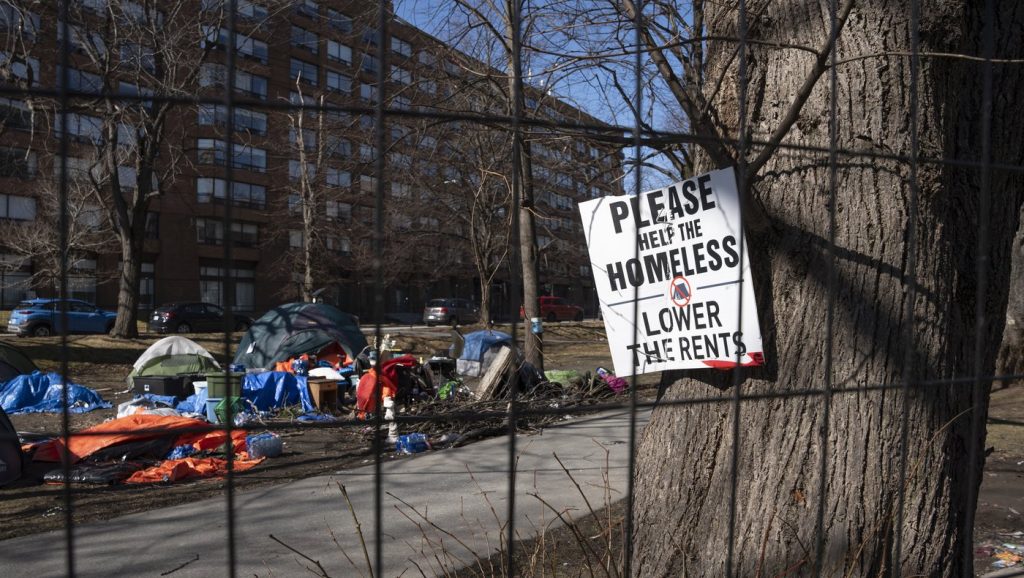
HALIFAX — The government of Nova Scotia has enacted changes to its income assistance regulations, specifically excluding homeless individuals living in tents from eligibility for enhanced financial support. This decision follows a ruling from Nova Scotia’s Court of Appeal on August 5, which determined that people living in tents were entitled to enhanced support, while overturning a prior Supreme Court decision that denied this eligibility based on living arrangements.
Bradley Lowe, a homeless man who was living in an ice-fishing tent in Victoria Park, Halifax, when he applied for income assistance in 2023, is central to this issue. His family, after his death in late 2023, instructed lawyer Vince Calderhead to continue the legal battle posthumously. Calderhead criticized the provincial government's move, suggesting that it effectively nullifies the Court of Appeal's ruling. “It’s a very cruel policy decision by the province,” Calderhead stated, emphasizing the negative impact on vulnerable individuals.
The regulatory amendments were introduced through an order-in-council filed on Tuesday, based on recommendations from Susan Corkum-Greek, the minister of opportunities and social development. The revised regulations replace the term "accommodation" with "lives in a home" and redefine "home" as a self-contained unit that someone either rents or owns, including rooms in lodging houses or single-occupancy rooms in buildings. This change aims to clarify how various living situations are evaluated when determining income assistance eligibility.
The province's Department of Opportunities and Social Development released a statement asserting that the changes provide clearer guidance on eligibility criteria, thereby allowing for consistent administration of the income assistance program statewide. They emphasized that individuals experiencing homelessness would still have access to income assistance and other qualifying supports, pledging ongoing investments in homelessness support, including shelters and housing services.
Calderhead voiced concern that the recent changes to income assistance regulations undermine hope for many Nova Scotians living in tents during warmer months. He estimated that there are several hundred individuals in such situations, and the August ruling had previously instilled a sense of optimism among them. The government’s decision, according to Calderhead, reflects indifference towards the plight of those experiencing homelessness.
Lowe’s journey highlighted the challenges facing impoverished individuals in Nova Scotia. Initially approved for a basic assistance rate of $380 per month, he sought enhanced support of $974 due to medical proof of his disability and ownership of his tent. However, the provincial government denied his request on the basis that he was considered unhoused. Lowe's ongoing battle for enhanced support escalated through the assistance appeal board and ultimately reached the Nova Scotia Supreme Court, where a decision aligned with the government's stance was upheld.
The Court of Appeal’s ruling earlier this month declared this interpretation incorrect, ordering the province and the assistance appeal board to pay Lowe’s estate $3,000. Emma Halpern, the executive director of the Elizabeth Fry Society of Mainland Nova Scotia, described the ruling as a significant acknowledgment of the dignity of vulnerable individuals in society. She remarked, “I feel like this is a win for all Canadians,” underscoring the belief that the health of a society is measured by how it treats its most vulnerable members.
This report sheds light on a significant policy shift that may exacerbate hardships for homeless individuals in Nova Scotia, raising critical questions about the government's commitment to supporting the most economically disadvantaged members of society.








