

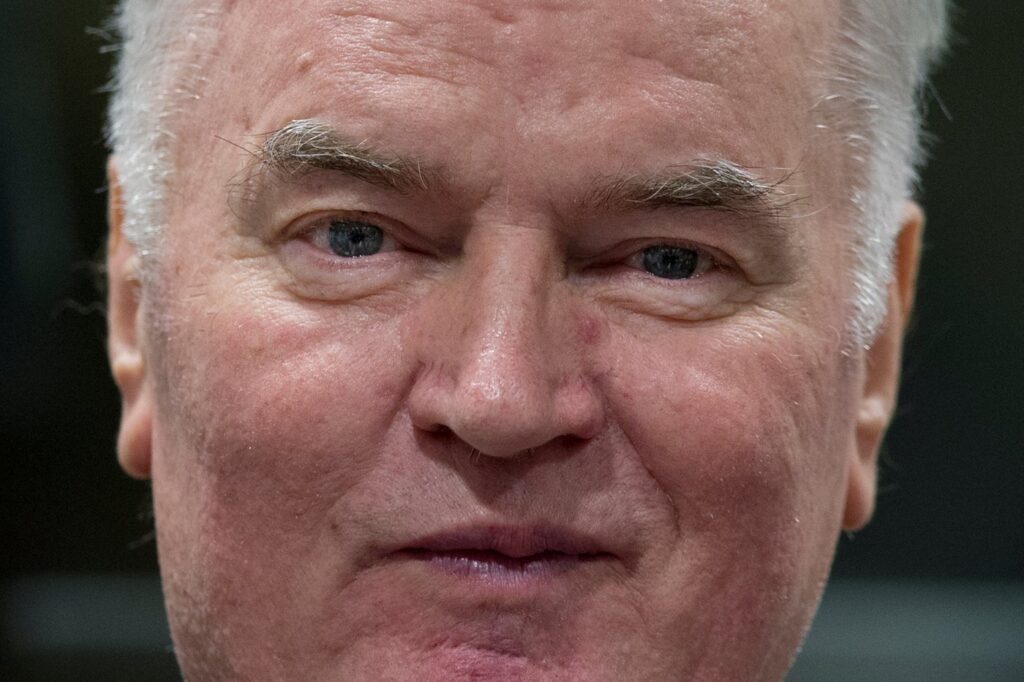
Ratko Mladic, the notorious Bosnian Serb general responsible for war crimes during the Bosnian War in the 1990s, has died in prison at the age of 84. This information was reported by Serbian state RTS television and the official Bosnian Serb television. According to sources, Mladic passed away in a U.N. prison hospital located in The Hague, Netherlands. A family member, who requested anonymity due to the sensitive nature of the situation, confirmed his death to the Associated Press (AP) and informed that Mladic's son, Darko Mladic, was en route to The Hague.
U.N. court officials stated that they were unable to immediately verify the reports regarding Mladic's death. The former general was sentenced to life imprisonment by the U.N. tribunal for war crimes related to the Yugoslav Wars in 2017, marking a significant step toward delivering justice for the victims of the conflict. Mladic had been in custody since 2011 after evading capture for several years.
Mladic, who was a blue-eyed former communist officer turned nationalist warlord, became one of the most infamous figures during the bloody conflict that resulted in over 100,000 deaths and more than 1 million people rendered homeless. As commander of the Bosnian Serb army, he led troops that engaged in numerous atrocities, including the infamous siege of Sarajevo, where civilians faced sniper fire while being trapped in the besieged city. In 1995, he orchestrated the mass execution of over 8,000 Muslim men and boys in Srebrenica, which is recognized as the only case of genocide in Europe post-World War II.
Throughout his life, Ratko Mladic never exhibited remorse for his actions, and many of his supporters viewed him as a patriot defending the Serbian cause. During his trial, Mladic exhibited a defiant demeanor, even shouting at judges when receiving his life sentence. Born on March 12, 1942, in the small Bosnian village of Bozinovici, located 40 kilometers (25 miles) south of Sarajevo, Mladic's early influences included the traumatic experiences of his family during World War II, particularly the killing of his father by Croats.
As Yugoslavia began to crumble, Mladic emerged as a leading figure in the Serb insurgency, first in Croatia before taking command of the Bosnian Serb army. His forces were backed by Serbia and then-President Slobodan Milosevic, who also faced trial in The Hague for similar crimes before dying in custody in 2006. Mladic was known for his obsession with Serbian history and often framed the Bosnian War as an opportunity for retribution against the historical Ottoman occupation of Serbia that lasted for 500 years.
Throughout his military campaign, Mladic referred to Bosnian Muslims in derogatory terms and expressed a desire for revenge, particularly highlighted during the capture of Srebrenica in 1995. His actions and ideologies solidified his place as one of the central figures in the tragic history of the Bosnian War, leaving a legacy marked by violence and a deep-seated ethnic conflict.








