

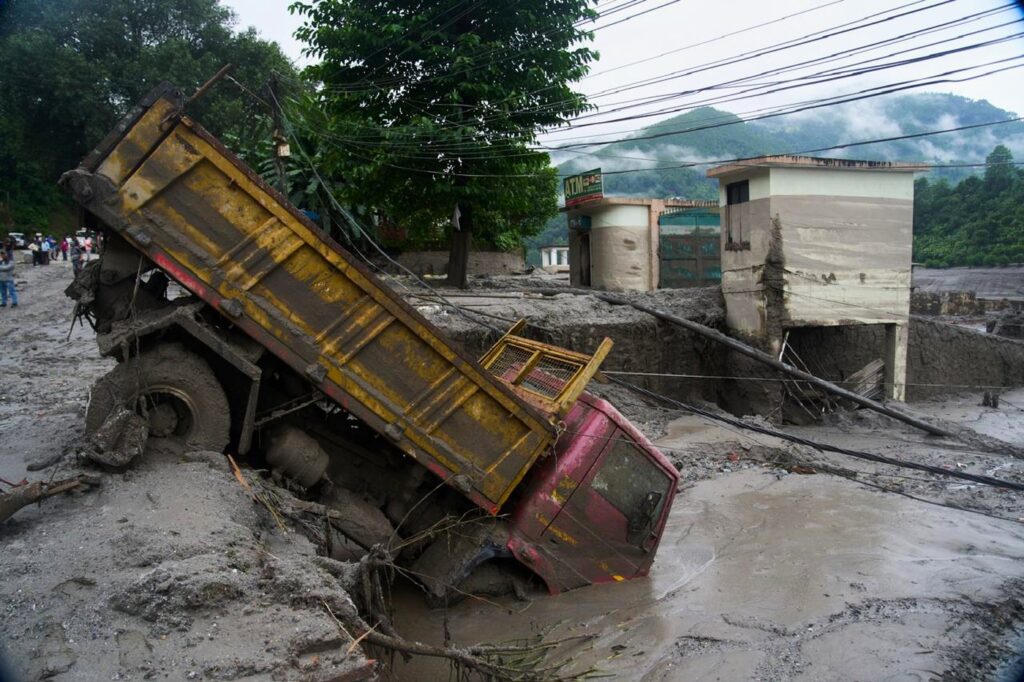
The recent flash flood in Nepal, which resulted in at least 273 fatalities and left over 1,300 individuals missing, is believed to have been triggered by a massive glacier collapse. Preliminary investigations suggest that a large portion of a glacier broke off and temporarily dammed a river, causing a violent rush of water downstream a few hours later.
Scientists are currently analyzing data from both satellite imagery and ground measurements to determine the exact causes of the disaster. The U.S. Geological Survey has confirmed the glacier collapse registered as a magnitude 5.2 event, which sent debris rushing downstream, causing catastrophic impacts on local communities.
Jakob Steiner, a geoscientist from the University of Graz in Austria, described the glacier's descent as if it were sliced off with a giant knife, emphasizing the explosive force of such a large mass of glacial ice hitting the ground. While researchers are cautious about linking this specific event directly to global warming, they acknowledge that rising temperatures due to climate change heighten the likelihood of such disasters, particularly in the rapidly warming Hindu Kush Himalaya region.
Experts emphasize the importance of not hastily attributing the flooding to climate change; however, they agree that melting glaciers and changing temperatures are increasingly affecting the dynamics of the Himalayan ecosystem. Saswat Sanyal, a disaster risk reduction specialist, noted that the sudden rise in water levels—up to 9 meters (29.5 feet) in just 30 minutes—left little time for residents to escape.
The devastating floods caused extensive damage to infrastructure, including hydropower dams, roads, buildings, and bridges across the affected regions. Preliminary findings indicate that a large volume of ice and rock fell into the Lhende Khola, a tributary of the Bhote Koshi River, displacing water and creating a powerful surge downstream. Researchers are also exploring whether debris temporarily dammed the river before it ultimately burst through, exacerbating the flooding.
Steiner highlighted the dangerous history of the area regarding mountain hazards, referencing previous disasters like glacial lake floods in 2025 and avalanches triggered by the 2015 Nepal earthquake. Climate assessments reveal that the Hindu Kush Himalaya region is warming significantly, leading to substantial transformations in glaciers and mountain landscapes that threaten livelihoods for billions dependent on the region's water and food resources.
The last decade has marked a record-breaking increase in global temperatures, with concerning projections that estimate glacier loss could reach 50% by 2100 without significant global climate mitigation efforts. The rapid melting of glaciers not only contributes to larger glacial lakes but also increases the likelihood of floods originating from these lakes as they grow and become unstable.
Furthermore, as glaciers retreat, the previously stable mountain rocks become vulnerable to elements such as temperature changes and rainfall, potentially leading to avalanches or other cascading disasters. Enhanced early warning systems and better monitoring of this dynamic environment are essential, as the challenges of predicting such events remain formidable due to the complexity of the landscape.
Steiner pointed out that approximately 10% of Nepal’s power generation is sourced from the valley affected by the recent catastrophe. This has led to questions regarding the adequacy of disaster preparedness and warning systems for locals and tourists alike. With the continued growth in tourism, which sees over a million visitors annually, it is crucial for authorities to implement more robust safety measures aimed at mitigating the risks faced by communities in the region.
Scientists agree that as temperatures climb, establishing stronger monitoring and early warning systems for glacial activity is paramount for community safety. However, they recognize that when disasters are triggered, communities may have mere minutes to respond, underscoring the urgency of addressing climate-related risks in the Himalayan region.








