

Prime Minister Mark Carney has reaffirmed that Lake Ontario will always retain its original name, following U.S. President Donald Trump's decision to sign an executive order aimed at renaming it to Lake America. This announcement occurred on August 27, 2026, when Trump signed the order, generating significant backlash from Canadian leaders.
In a social media post, Carney emphasized the historical significance of the lake's name, stating that it has been known as Ontario for over 400 years. He pointed out that the name predates both the Confederation of Canada and the Declaration of Independence in the United States. Carney elaborated that Ontario is derived from a Wendat word meaning "the lake is beautiful, the lake is big," underscoring the cultural importance attached to the original name.
Carney's remarks included a strong assertion: "Canadians also know that naming reality means calling it Lake Ontario – then, now, and always." This statement highlights the firm stance of Canadian officials in preserving the historical identity of the region amidst Trump's controversial executive action.
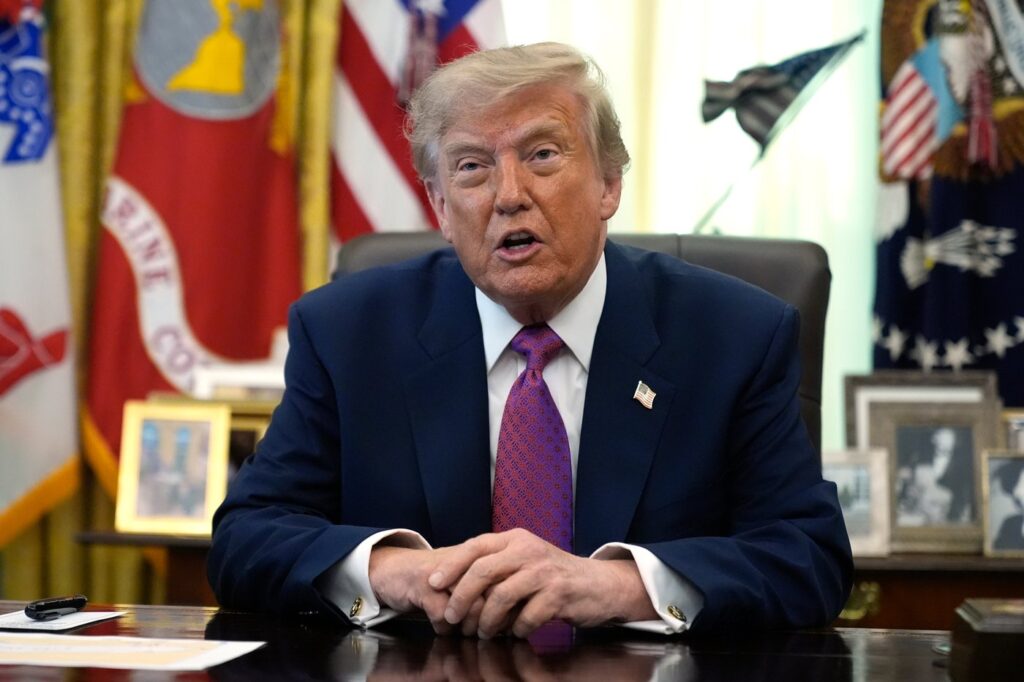
In the Oval Office, Trump stated that his executive order directs Secretary Doug Burgum and the Department of the Interior to update the Geographic Names Information Service, which is responsible for naming natural features in the U.S. He claimed that all necessary procedures had been followed, rendering the name change official. Trump previously threatened to alter the lake's designation during a week of escalating tensions with Ontario Premier Doug Ford, whom he accused of not treating the U.S. well.
In response to Trump's announcement, Toronto Mayor Olivia Chow expressed on X that "Donald Trump’s antics won’t weaken our resolve as Canadians." Manitoba Premier Wab Kinew also contributed to the dialogue, likening Trump's actions to a washed-up rock band trying to revive old hits, and asserted that the appeal of the name change was outdated and "a little sad." Additionally, New York State Governor Kathy Hochul, a Democrat, made it clear over social media that "New York won’t be calling it that," indicating a regional rejection of the proposed name change.
Trump's attempt to rename Lake Ontario draws parallels to an earlier move where he sought to rename the Gulf of Mexico to the Gulf of America. He noted in jest that with one lake and one gulf altered, the next steps might involve renaming the Atlantic and Pacific Oceans, further showcasing his erratic approach to geographical naming conventions.
Despite the executive order, experts pointed out that Trump cannot unilaterally rename the bi-national lake, as its governance is shared between Canada and the U.S. The name "Lake Ontario" is recognized internationally and is embedded in federal laws and treaties on both sides of the border, maintaining its historical significance. The very naming of the Province of Ontario was based on the lake itself, established during the Confederation in 1867, predating both the United States and European settlement.
The controversy surrounding Trump's directive comes amid heightened tensions between the two nations, especially after trade negotiations faltered, resulting in 50% tariffs on billions of dollars of Canadian exports becoming effective. Carney accused the U.S. of attempting to insert last-minute demands that would restrict Canada's autonomy in making trade agreements, thus impacting its cultural identity and sovereignty. The verbal exchanges intensified when Doug Ford publicly criticized Trump, leading to a series of derogatory remarks exchanged between the two.
In light of these developments, Canada has planned to impose dollar-for-dollar retaliatory tariffs, which are set to come into effect on September 8, as a means of counteracting the recent U.S. tariffs. This entire episode showcases the ongoing tensions and complexities in Canada-U.S. relations, particularly in the wake of Trump's controversial presidency.








