

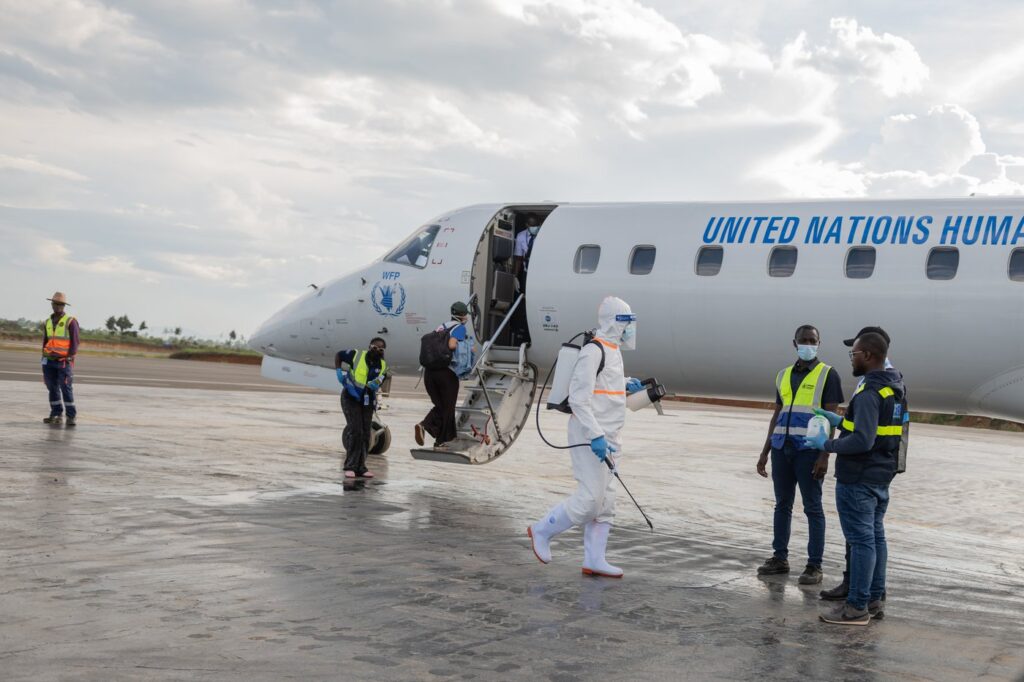
Government officials in Canada have announced an extension of the ban on entry for individuals from Ebola-affected countries for an additional 30 days, impacting tens of thousands who have had their residency applications suspended since May. This extension keeps immigration and visa applications from the Democratic Republic of Congo, Uganda, and South Sudan on hold until September 28. People from these countries holding valid visas are also prohibited from entering Canada.
While the Canadian government asserts that the risk of Ebola in the country remains low, these measures are deemed precautionary due to the inherent severity of the disease. Additionally, a 21-day quarantine continues to be enforced for anyone returning from the aforementioned countries, a move that aid agencies argue complicates their efforts to send humanitarians to the region. Foreign nationals who have traveled to the DRC within the past 21 days are similarly barred from flying into Canada.
Recent developments from the Africa Centres for Disease Control and Prevention and the World Health Organization confirmed the outbreak in Uganda has been declared over, with no new cases reported in South Sudan. However, the situation in the neighboring DRC remains concerning, with 2,786 fatalities among 5,794 reported infections, marking it as the fastest-growing and potentially deadliest Ebola outbreak on record.
Ebola spreads through bodily fluids such as blood, vomit, and semen, rendering individuals infectious only when symptomatic. Public health experts regard the risk of an imported case to Canada as low and manageable, but emphasize the challenges faced by the DRC, which include significant barriers to healthcare access and clean water, compounded by threats from rebel groups.
Carolyn Nicol, a Canadian living in Kampala, Uganda, expressed her frustration over the ban affecting her husband, who is among approximately 67,000 individuals with suspended visa applications. Nicol had hoped for her husband to meet her family in Canada, but the extended ban intensifies their separation. Immigration officials reported that as of August 12, 31,693 permanent residency applications and 10,465 temporary residency applications have been halted, affecting thousands of individuals who are outside of Canada.
Nicol spent over seven weeks apart from her husband, who is awaiting decisions on his spousal sponsorship and visitor visa, initially intended to facilitate attendance at two weddings this summer. Due to the onset of border restrictions in May, Nicol faced the challenge of choosing to leave Uganda promptly to ensure she could quarantine in Canada and attend the events.
Critically, Nicol voiced her disbelief regarding the rationale behind the differing treatment: “Show me the science that says a Canadian can go to Canada and quarantine, but a Ugandan can’t come at all. That’s just discrimination, plain and simple.” Following the initial announcement of border measures, COVID-19 cases in Uganda were low, rising to 20 with two deaths; however, no new cases have been reported in the 42 days since July 16.
Roojin Habibi, a global health law researcher, questioned the consistency of applying different quarantine rules based on last places of residence. Critics argue that Canada's approach could prioritize optics over effectiveness, especially since organizations such as the WHO have condemned such blanket travel restrictions, advocating against suspending flights and denying entry to travelers.
The Canadian government maintains that these border measures, initially announced as preventative for the FIFA World Cup, were enacted to reinforce safety aligned with the United States and Mexico. The notion of maintaining close cooperation with these nations amid ongoing changes in trade relations raises questions about Canada’s independent public health strategy.
Experts like Dr. Joanne Liu, director at McGill University, have suggested that such travel restrictions may serve cosmetic purposes rather than genuine public health protection. Meanwhile, Nakate Flavia Priscilla, a Ugandan dance troupe leader scheduled to perform in Canada, voiced concerns about the emotional toll the ban imposes on performers and students who returned to rural areas during the summer.
As events unfold, many are left hoping for a prompt resolution, with emotional and professional implications hanging in the balance. The ongoing situation underscores not only public health challenges presented by the Ebola outbreak but also the significant human costs associated with geopolitical responses to health crises.








