

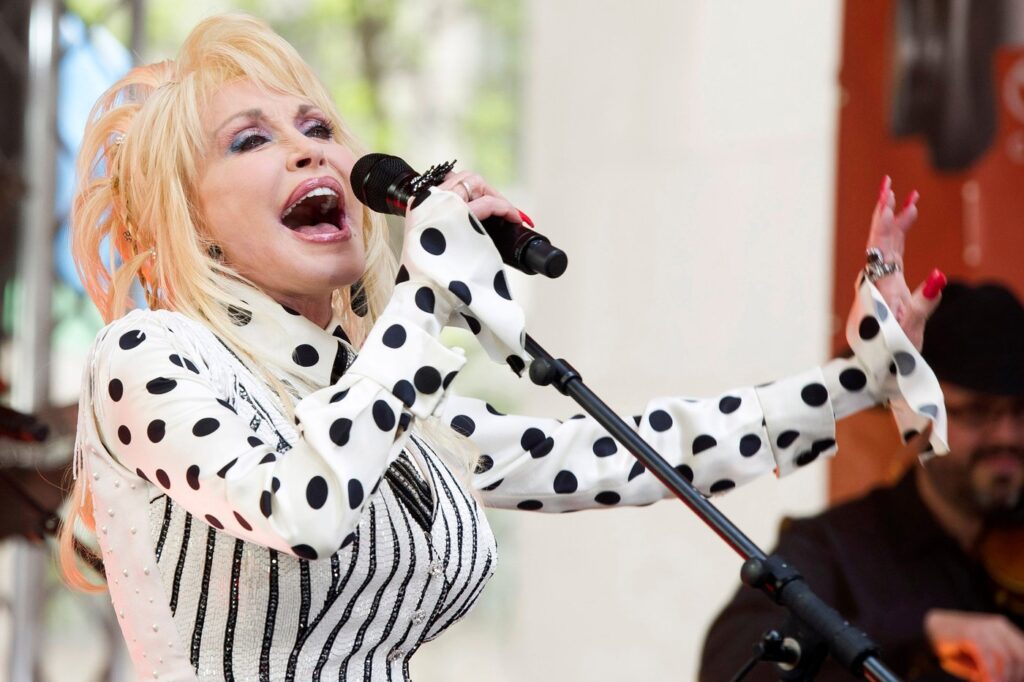
On the January 1987 cover of Ms. magazine, co-founded by Gloria Steinem, the celebrated country star Dolly Parton is featured among the 12 Women of the Year. Despite her immense popularity, Parton, who recently passed away at the age of 80, was known for shunning the feminist label, often sidestepping political identifiers as well. Nonetheless, her impactful life choices, accomplishments, and songwriting have resonated with a multitude of feminist fans who recognize her contributions to women's rights, even if she did not explicitly label herself as a feminist.
Fans such as Lynn Melnick, who authored a book examining the influence of Parton’s music on her recovery from trauma, have sought moments in which Parton identified as a feminist. Melnick asserts, "She didn’t tell us she was a feminist; she showed us," highlighting the power of Parton's actions, words, and lyrical messages. This sentiment echoes the joy expressed by audiences during Parton’s performance in 2019 at the Newport Folk Festival, where she stirred excitement by singing the lyric, “My mistakes are no worse than yours, just because I’m a woman,” from her song “Just Because I’m a Woman.”
Parton’s commentary on societal double standards illustrated her relatability, as she humorously addressed the expectations placed on women regarding purity in relationships. Her ability to connect with fans across various political beliefs adds to her enduring appeal, as Melnick notes: "No matter what side of the political spectrum you’re on, you think she’s with you.” Parton’s success stems not only from her musical talent but also from her capacity to convey feminist messages subtly embedded in her work.
Gloria Steinem, a prominent figure in the feminist movement, acknowledged Parton’s influence in the same 1987 Ms. magazine issue. She emphasized that Parton utilized her business acumen to uplift other women and marginalized individuals while embracing her flamboyant style to redefine traditional symbols associated with femininity. Steinem articulated that if feminism is about recognizing one’s unique power and aiding other women in doing the same, then Parton exemplifies both ideals.
Evelyn McDonnell, editor of the music anthology “Women Who Rock,” noted how Parton’s glamorous exterior served as an unconventional shield, allowing her to express progressive views without significant backlash. According to McDonnell, Parton embraced the objectification often tied to being a pop star, using it as a platform to vocalize feminist perspectives while making her message accessible to a broad audience.
Parton’s lyrics often addressed themes of equal pay, reproductive rights, and the societal pressure surrounding female sexuality. In songs like “9 to 5,” which features a narrative centered on women in the workplace, she highlighted challenges women face, emphasizing economic empowerment and unity. Additionally, songs such as “The Bargain Store” and “Down from Dover” tackle nuanced issues of self-worth and unwed motherhood, respectively, reflecting candid perspectives that were not mainstream at the time.
As noted by Melnick, Parton may be seen as a precursor to what would become known as third-wave feminism, a movement emphasizing personal choice and empowerment. Parton’s playful embrace of her appearance and self-expression were articulated in a 1977 interview with Barbara Walters, where she confidently addressed personal questions and affirmed her self-awareness. By saying, “I know exactly what I am doing and I can change it at any time,” she demonstrated a level of self-respect and agency that aligns with feminist principles.
Ultimately, Dolly Parton’s legacy lives on not only in her music but also in the values reflected throughout her life and art. Her unapologetic individuality and ability to engage with relevant feminist issues—whether explicitly or implicitly—ensured her place in the hearts of fans who identify with her narrative and appreciate her unique perspective on womanhood.








