

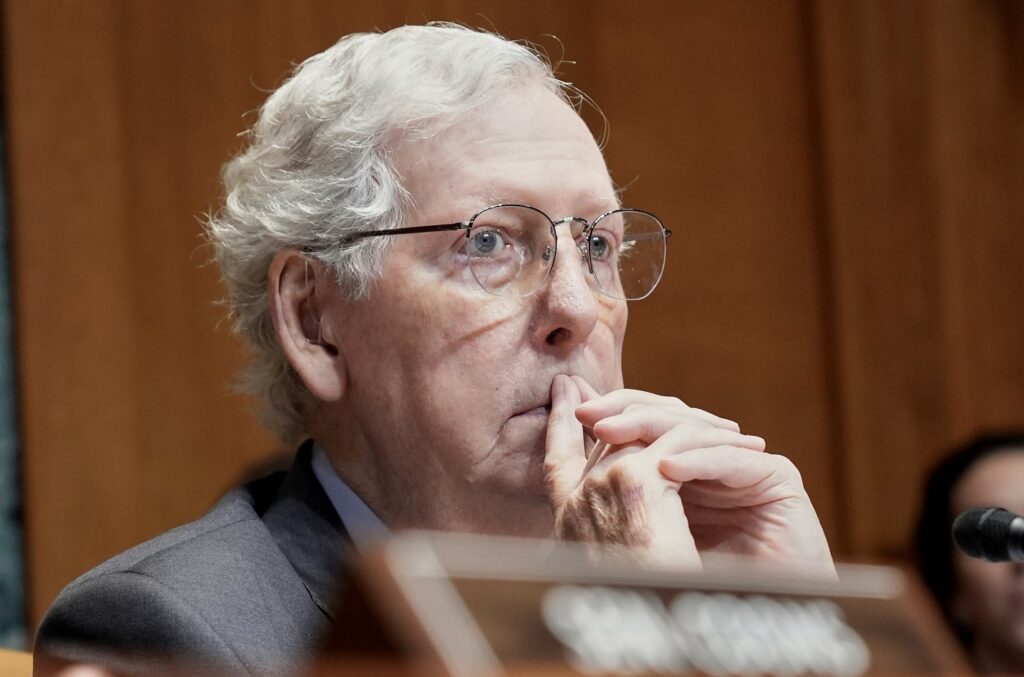
U.S. Senator Mitch McConnell has been notably absent from public appearances for approximately 12 weeks. His last confirmed in-person appearance occurred on June 11, 2023, in Washington, D.C. Following this, there was a brief update in mid-July when he shared a proof-of-life photograph from a rehabilitation center. Although he has since been discharged from the facility, uncertainty remains regarding his current whereabouts and when he will return to the Senate.
In a recent discussion, host Caryn Ceolin engaged with New York Times chief Washington correspondent, Carl Hulse, to delve into the ongoing conversation surrounding Senator McConnell's absence. The discussion highlighted how the senator's prolonged silence has sparked concerns and speculation about his health and capabilities to fulfill his role as a public servant. Various members of the public and political commentators have voiced their worries over transparency regarding a prominent leader’s well-being, as McConnell's absence could have implications for Senate proceedings.
Additionally, Ceolin spoke with Wendy Parmet, a law professor at Northeastern University, to explore the ethical considerations surrounding the disclosure of health-related information about public figures. Parmet examined the balance between a public official’s right to privacy and the public's interest in understanding the health of their elected representatives. She emphasized that while officials are entitled to some level of privacy, transparency is vital in maintaining public trust, especially when the health status of a senior politician could influence governance.
The discourse surrounding McConnell's situation raises broader questions about accountability and communication in political roles. As one of the highest-ranking officials in the U.S. Senate, the senator’s health and ability to carry out his duties directly affect legislative processes and public policy. The lack of concrete information regarding his status has left constituents and fellow lawmakers in a position of uncertainty.
As the weeks go by without further updates or public statements from Senator McConnell, the calls for clarity are likely to intensify. Observers and constituents alike are looking for assurance that their elected representative is capable of effectively fulfilling his responsibilities. Ultimately, the dialogue surrounding McConnell's absence underscores the necessity for transparency within public offices, ensuring that the public remains informed about the well-being of their leaders.








