

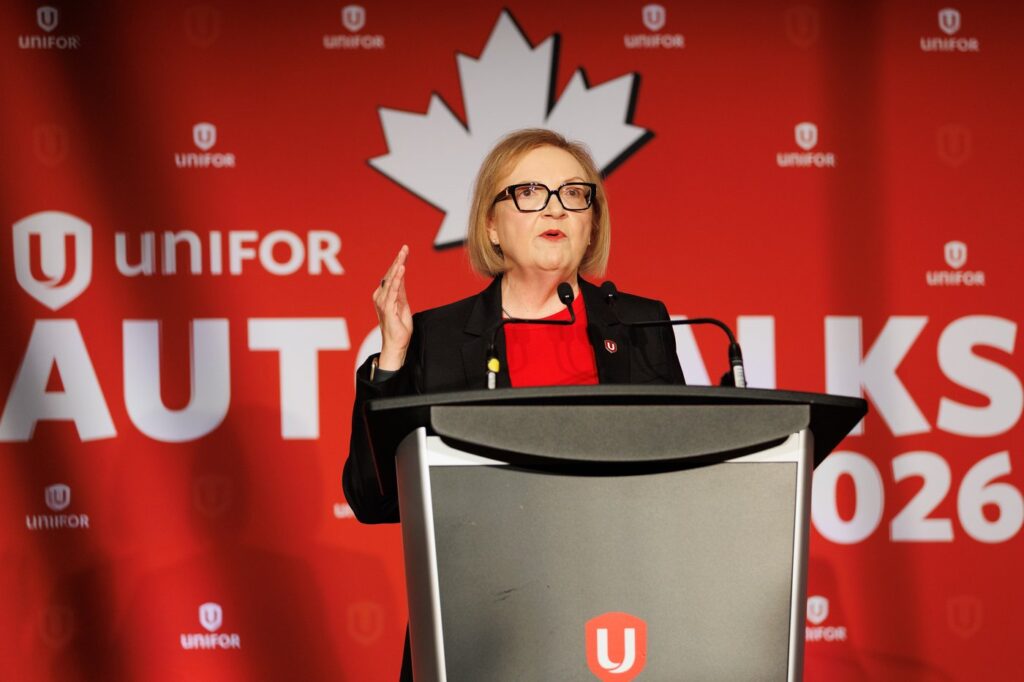
The union representing approximately 19,000 Canadian auto workers, Unifor, has commenced contract negotiations with Stellantis, marking a crucial phase in its bargaining efforts with the Detroit Three automakers. This follows Unifor's success in ratifying new collective agreements with both Ford Motor Co. and General Motors during the summer of 2026.
Unifor employs a strategy known as pattern bargaining in its negotiations within the automobile sector. This approach aims to establish terms and conditions that can be extended to other automakers in subsequent talks. Recently, the union disclosed that it had received notifications from Stellantis regarding potential plans to close and sell the Brampton, Ontario assembly plant. This facility has been idled since 2023.
The Brampton plant was originally set to be reconfigured for Jeep production, with retooling efforts that began early in 2024. However, the company halted these plans in early 2025, subsequently announcing the relocation of Jeep Compass production to the United States. This left the Brampton facility inactive indefinitely, raising concerns among workers and union leaders.
Lana Payne, the national president of Unifor, stated that the union was made aware of Stellantis's intentions to “open discussions with another firm about the potential sale of the plant.” Stellantis, when approached for clarification, neither confirmed nor denied these rumors regarding the plant's future. Trevor Longley, the president of Stellantis Canada, expressed a commitment to engaging in respectful and good-faith bargaining, recognizing the contributions of employees while emphasizing the need for competitive operations in Canada.
The ongoing contract negotiations unfold amidst the backdrop of challenging economic and regulatory pressures, particularly in light of U.S. tariffs that are impacting local automakers. A current 25 percent tariff on all vehicles and trucks not manufactured in the U.S. remains enforced, with specific exemptions under the Canada-United States-Mexico Agreement.
Additionally, U.S. President Donald Trump raised concerns about potential tariff hikes to 50 percent on vehicles, auto parts, and steel imported from Canada starting January 1, further complicating the situation for the Canadian auto industry. Larry Savage, a professor of labor studies at Brock University, remarked that Unifor's efforts represent a dual battle, with negotiations focused on retaining vehicle production in Canada while simultaneously advocating with the federal government against new trade agreements that could jeopardize the industry.
Professor Savage emphasized that the current negotiations are significant beyond just Stellantis. He highlighted that securing a pattern agreement would be moot if the federal government ultimately undermines the Canadian auto industry in its dealings with the Trump administration. In a recent development, Unifor announced that its members at General Motors voted overwhelmingly in favor of the new contracts, with an approval rate of 80.5 percent from members in Oshawa, St. Catharines, and Woodstock, while Ingersoll members voted 96.5 percent in support.
The newly ratified three-year collective agreements include wage increases for full-rate production members, bringing their pay to $50.20 per hour, and skilled trades workers to $62.71 per hour. These agreements with GM align with the three percent annual wage increases negotiated with Ford, which was the initial focus of Unifor's pattern bargaining strategy in the industry.








