

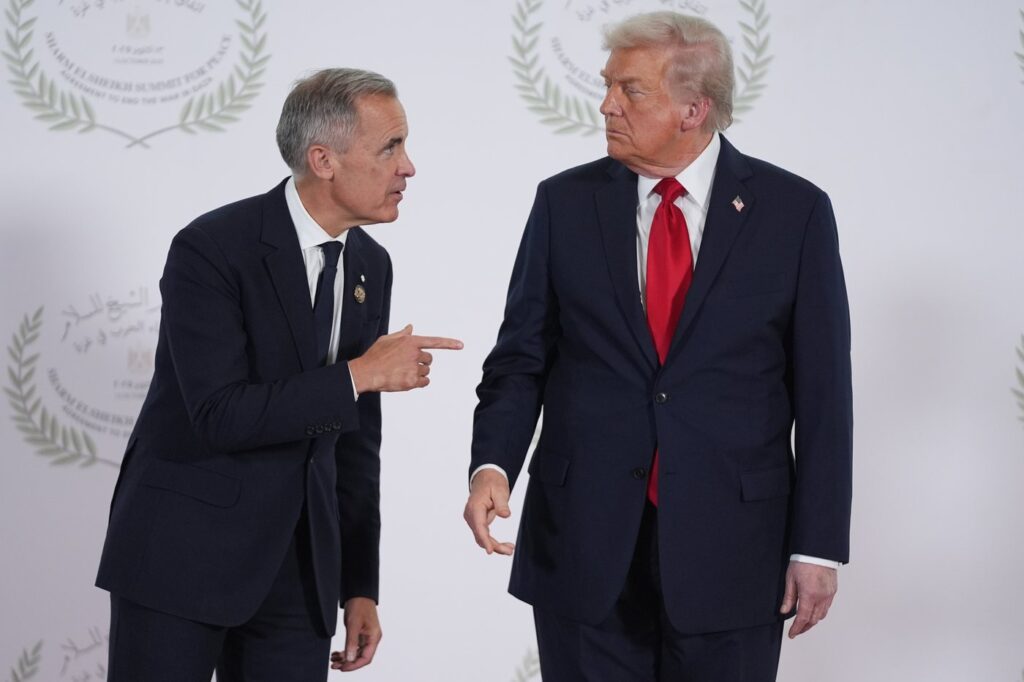
Prime Minister Mark Carney expressed optimism that a "mutually beneficial" trade deal can still be achieved between the United States and Canada. However, he emphasized that President Donald Trump and his administration need to treat Canadians with respect and engage seriously in negotiations. This statement was made during a press conference held in Ottawa.
The trade discussions have faced significant challenges, particularly after they fell apart recently. In response, President Trump has imposed additional tariffs on Canada, alongside his typical social media attacks aimed at the country. Trump has publicly stated his opinion that Canada has taken advantage of the U.S. in trade matters.
Adding to the tension, Trump controversially suggested renaming Lake Ontario to "Lake America" in a handwritten note. He has also claimed that Canada lacks any goods or services that the U.S. needs. Moreover, U.S. Department of Defense Secretary Pete Hegseth further aggravated the situation with a social media post that mocked female cadets in Canada, which was defended by Pentagon deputy press secretary Jacob Bliss as something that "speaks for itself."
During the press conference, Prime Minister Carney described Hegseth's comments as "beneath their office," indicative of a lack of seriousness regarding both Canada and the ongoing trade situation. Carney reiterated the necessity for the U.S. to stop engaging in "memes" and "throwing shade," emphasizing that constructive trade discussions can only occur when the U.S. government approaches the situation seriously.
While Carney voiced hope for a positive outcome, he acknowledged that not all Canadian politicians have refrained from harsh rhetoric during this cross-border dispute. For instance, Ontario Premier Doug Ford referred to Trump as "a loser" and mocked his history of bankruptcies, although he later moderated his comments, admitting he may have become overly agitated.
Despite the back-and-forth exchanges, Carney assured that Ford's comments did not contribute to the breakdown of trade negotiations. He articulated the significant role that premiers play in this process, but reiterated that ultimate decisions regarding trade rest with the Government of Canada, of which he is the Prime Minister and key decision-maker.
Reflecting on Canada's position, Carney defended the decision to withdraw from negotiations that jeopardized Canadian sovereignty. He stated that the stance taken by the United States suggested that key Canadian industries could become mere subsidiaries of U.S. industries or be eliminated entirely. Canada will not accept terms that threaten its fundamental industries and economic independence.
In response to U.S. tariffs, Canada has initiated counter-tariffs. Yet, Prime Minister Carney remains hopeful that rationality will eventually prevail, allowing for negotiations to resume. He noted that there were elements of a mutually beneficial deal that could have progressed, but the discussions diverged significantly by the end. He expressed optimism that, at some point, those discussions might converge again under better circumstances.








