

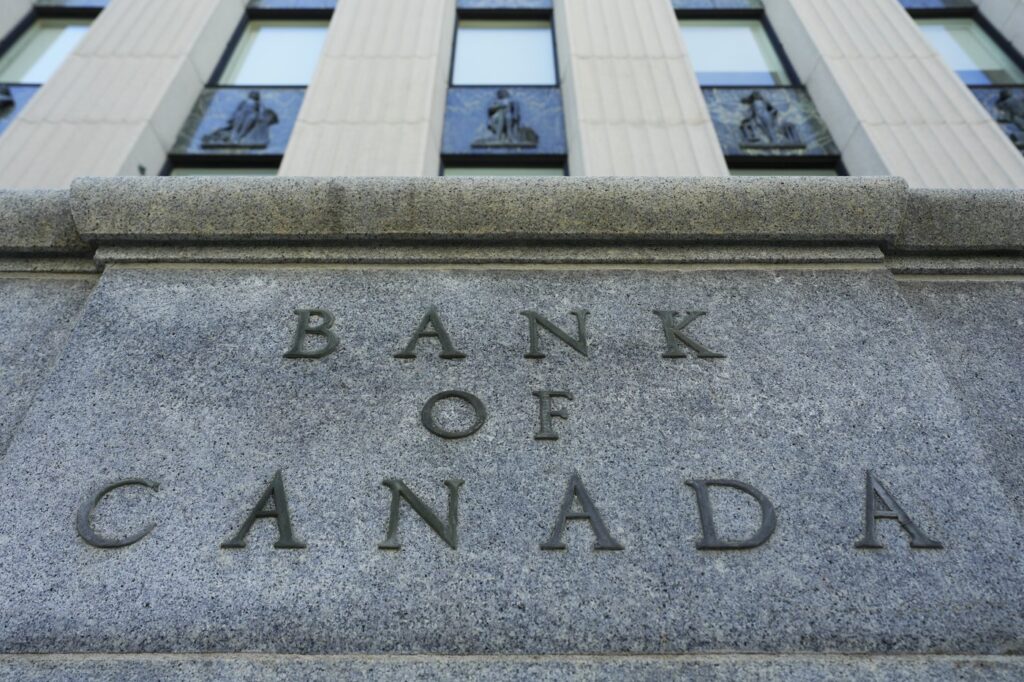
The Bank of Canada opted to maintain its benchmark interest rate at 2.25 percent on Wednesday, marking the seventh consecutive hold. This decision comes amidst growing concerns stemming from new tariffs imposed by the United States and the ongoing conflict in Iran, which together cast a shadow over the central bank's economic outlook. Economists largely anticipated this move, citing economic conditions broadly aligning with the bank’s forecasts.
In a statement, Bank of Canada Governor Tiff Macklem noted that the prolonged conflict in the Middle East has heightened inflationary risks, especially as global energy prices rise. Additionally, tensions from the U.S.-Canada trade relations could potentially stymie Canada’s economic recovery, with businesses possibly postponing investment and hiring decisions until there is more clarity on trade issues. Macklem emphasized that monetary policy cannot mitigate the impacts of tariffs or influence global energy prices, but the central bank aims to safeguard Canada’s price stability amidst these developments.
The central bank's primary objective is to manage inflation and foster economic growth, especially when price levels remain stable. In his discussions with the media following the rate decision, Macklem refrained from explicitly stating whether he was more concerned about inflation or growth risks given the current uncertain economic climate. He mentioned that “the risks are shifting” and indicated the bank's readiness to adjust monetary policy as necessary.
Inflation rates have been concerning, hitting three percent in July, which is one full percentage point above the Bank of Canada’s target of two percent. The volatile fluctuations in gas prices, driven by the conflict in Iran, have exacerbated this situation. According to Macklem, the current inflationary rate is too high for the bank’s comfort, and the upcoming rate announcement on October 28 will provide an updated inflation forecast.
Economic growth has shown signs of recovery after a period of stagnation, with a reported annualized growth of 3.3 percent in the second quarter. However, analysts caution that such growth is unlikely to persist into the current quarter. The recent imposition of significant tariffs by the United States, particularly a 50 percent tariff on various Canadian goods announced on August 22, is anticipated to have an adverse effect on the Canadian economy going forward. Although Macklem characterized the expected direct impact of these tariffs as “large,” he acknowledged that targeted sectors may experience acute challenges.
Furthermore, Canada is in the process of implementing retaliatory tariffs on U.S. goods starting September 8. Macklem assessed that while these counter-tariffs pose “fairly modest” inflationary risks, the shock from global energy prices still remains a major factor influencing higher prices in Canada. Prior to the new tariffs, there were signs of rising exports, and while the uncertainty surrounding trade practices could impact business confidence, Macklem expressed cautious optimism about the ability of firms to adapt in these circumstances.
He reiterated that strategies to insulate the economy from tariff threats, such as diversifying Canadian exports to different markets, are typically outside the jurisdiction of the Bank of Canada, necessitating action from governmental and private sector entities. Following the rate decision, some economists interpret Macklem's focus on the rising inflationary risks as indicative of a potential bias towards rate hikes rather than cuts. Stephen Brown, chief North America economist at Capital Economics, noted that further improvements in unemployment or growth would likely be needed before the central bank considers raising its policy rate.
In contrast, KPMG chief economist Ali Jaffery anticipated less concern regarding inflation due to prominent risks to economic growth from escalating tariffs, predicting that the Bank of Canada would maintain its current rate through the end of 2027. CIBC chief economist Avery Shenfeld also found the decision to leave the key rate unchanged unsurprising, particularly amidst the complexities of an ongoing trade war. Ultimately, financial markets had factored in expectations of three quarter-point rate hikes by mid-2027 as of Wednesday, with odds of maintaining the current rate at the next decision in October exceeding 94 percent.








