
OTTAWA — Canada’s aid sector has expressed significant dismay following the first federal budget in over 15 years that made no mention of foreign aid. Advocacy groups are now calling upon Ottawa to articulate its vision for international assistance in an upcoming foreign policy review.
Kate Higgins, head of Co-operation Canada, a coalition of many Canadian aid organizations, criticized the budget for being "largely silent on issues of international development co-operation and humanitarian action." She articulated the urgency of addressing these issues in a global context where challenges remain high.
The budget, presented by Prime Minister Mark Carney, notably lacks any references to international assistance, foreign aid, or international development. A review of budgets since 2010 revealed that all past budgets included mentions of these terms.
On the topic of foreign affairs, the current budget touches upon Ukraine only in the context of drone production, and only briefly acknowledges aid workers in relation to a permit program for organizations operating in areas controlled by groups designated as terrorist entities by Canada.
Higgins indicated that the sector is bracing for the government's previously announced plan to cut $2.7 billion in foreign aid over four years. While she expressed relief that no additional cuts were announced in this budget, she emphasized the importance of recognizing development funding as crucial in responding to international crises, including the humanitarian situation in Gaza and the Ebola outbreak in the Democratic Republic of Congo.
“International development co-operation addresses the very challenges that the government is seeking to prioritize around defence, stability, diplomacy, economic partnerships, trade diversification, and upholding democracy and human rights,” Higgins stated. She hopes the upcoming foreign policy review will provide more clarity on Canada’s plans for "international development assistance and humanitarian action."
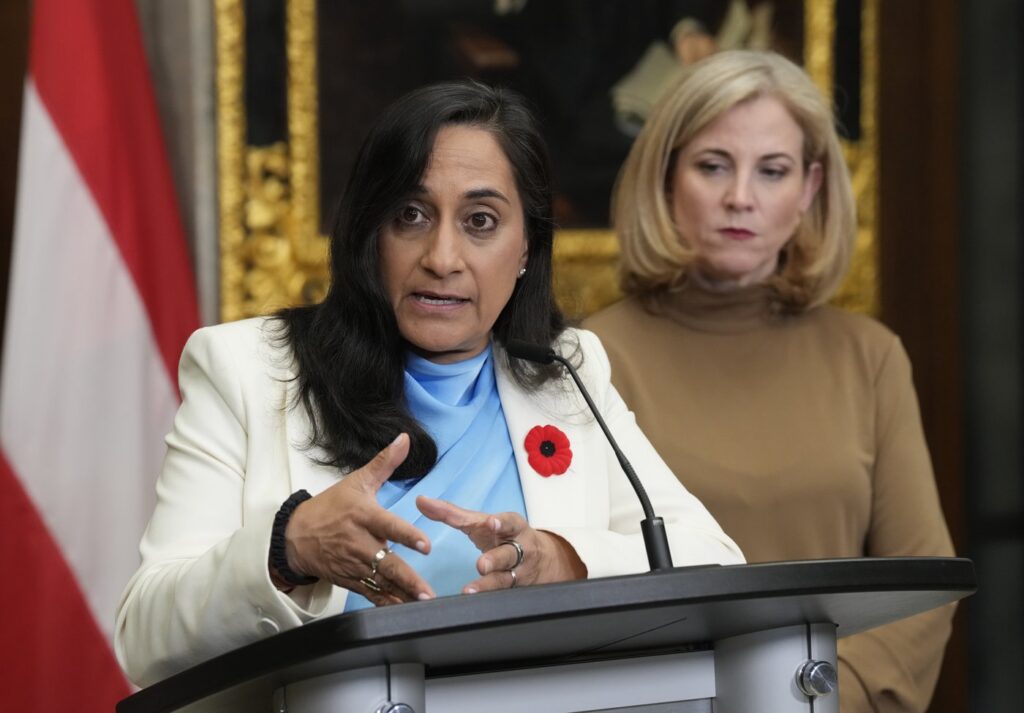
In a news conference following the budget release, Foreign Affairs Minister Anita Anand assured that development assistance remains a priority for Global Affairs Canada, highlighting humanitarian assistance provided this year to countries such as Cuba, Lebanon, Gaza, and Sudan.
Only days before the budget was tabled, Tom Fletcher, the UN's global head of humanitarian issues, recognized Canada as a "humanitarian superpower" for its contributions to the world's most vulnerable populations. He expressed hope that Canada would maintain this commitment.
Following the budget announcement, Results Canada, an anti-poverty advocacy group, shared a photo of a deflated balloon in social media as a symbol of disappointment. Policy Director Lindsay Sheridan indicated that none of the critical terms like "international assistance," "foreign aid," “vaccines,” or even references to global famines were found in the budget. She lamented that this was an opportunity for the government to provide context and direction for future aid initiatives.
UNICEF Canada echoed the disappointment, stating that Ottawa should reference international development when discussing responses to global threats and instability. They noted that international assistance plays a vital role in the survival and thriving of children, as well as strengthening health, education, and protection systems essential for peaceful societies.
The One Campaign, advocating for partnerships in Africa, urged Ottawa to commit to spending $5.5 billion annually on development. They emphasized the need for coordinated development, trade, and investment initiatives to foster mutually beneficial partnerships with African nations.
The House of Commons finance committee had previously recommended using the budget to enhance transparency regarding Canada’s aid expenditures and to concentrate funding on the most vulnerable populations globally. Critics assert that the Carney government should outline clearer priorities for aid spending and collaborate with peer nations on global initiatives.
Overall, this latest budget is perceived as a considerable missed opportunity for the Canadian government to establish a more comprehensive and robust international aid strategy, leaving many stakeholders confused and concerned about the future of foreign aid in Canada.