
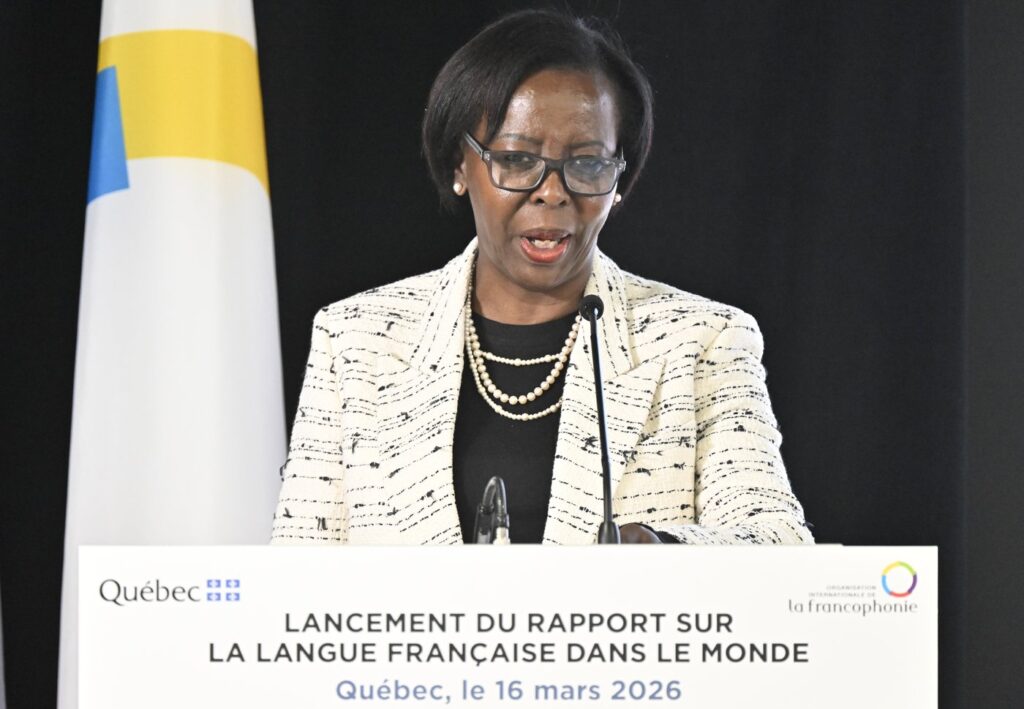
The newly elected Parti Québécois government in Quebec City is preparing to play a significant role in choosing the next leader of the Organisation internationale de la Francophonie (OIF). This decision comes ahead of the announcement of the new secretary-general, which is scheduled for November 16, 2026, during the 20th Francophonie Summit taking place in Phnom Penh, Cambodia.
Canada has been a founding member of the OIF since its establishment in 1970. Quebec became a full member in 1971, followed by New Brunswick in 1977. Quebec Premier Paul St-Pierre Plamondon is placing a particular emphasis on international relations and is set to attend the summit, where discussions will revolve around the future leadership of the organization.
In the upcoming election, four candidates are competing for the post of secretary-general: three African women—Rwandan Louise Mushikiwabo, Congolese Juliana Amato Lumumba, and Mauritanian Coumba Bâ—and one European man, former Romanian Prime Minister Dacian Ciolos. The OIF, which consists of 90 member countries, aims to promote the French language, cultural diversity, education, peace, democracy, and human rights.
The Premier's office has indicated that Quebec has not yet made a decision on who to support in the election. According to Camille Jobin, a spokesperson for the Ministry of International Relations, Quebec "hopes that the person elected will bring strong influence and unity to the Francophonie and be receptive to Quebec’s priorities and interests."
The secretary-general of the OIF plays a crucial role in representing the world’s key francophone entities and manages an annual budget of approximately $116 million. Canada has contributed $43 million to the organization in 2025, making it the second-largest contributor after France.
The context for this year's election is marked by geopolitical and military tensions in the region, particularly between Rwanda and the Democratic Republic of Congo. Louise Mushikiwabo, the Rwandan candidate and incumbent, is seeking a third term as head of the organization. Her tenure has seen the opening of three new offices in Beirut, Tunis, and Quebec City, and the acceptance of seven new members into the OIF. However, three other countries—Burkina Faso, Mali, and Niger—have withdrawn from the organization during her leadership.
The OIF was established in 1970 through the efforts of influential leaders, including Senegalese President Léopold Sédar Senghor and Cambodian Prince Norodom Sihanouk. While Ontario and Nova Scotia currently hold observer status within the OIF, Manitoba has expressed interest in seeking membership.
Since the creation of the secretary-general position in 1997, all individuals who have held the office have been of African descent, with the exception of Michaëlle Jean from Canada. The upcoming election is poised to have significant implications for the future direction of the organization.