
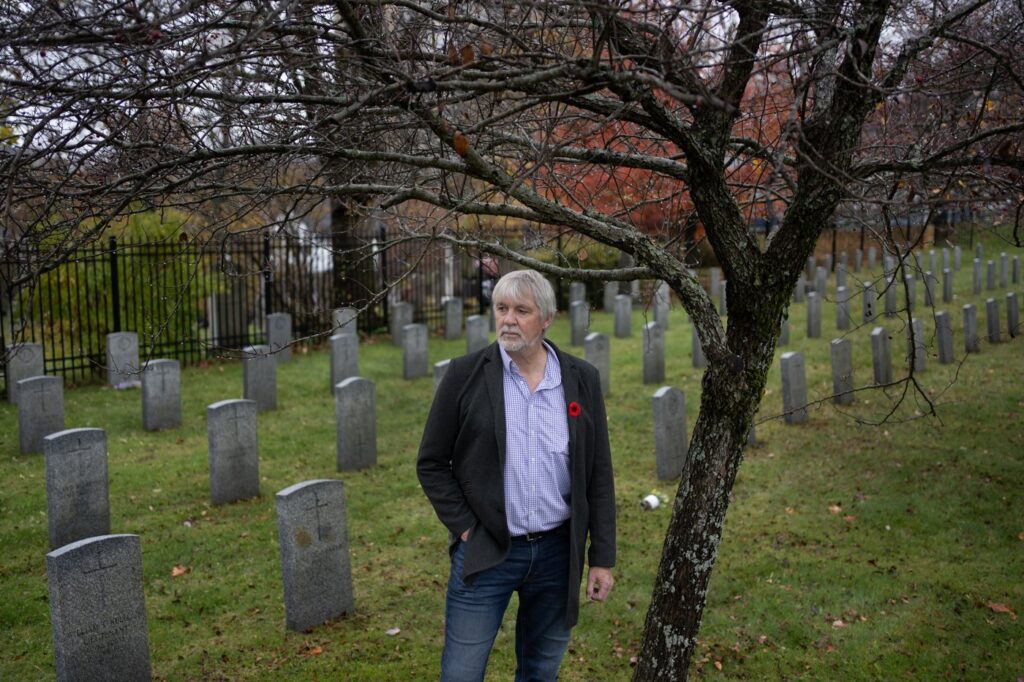
HALIFAX – Nova Scotia author and photographer Len Wagg had a transformative experience 30 years ago while on assignment for the Halifax Chronicle Herald in Italy. During his day off, he visited the small Sicilian town of Agira, where he discovered the profound and emotional impact of a war cemetery. This visit led Wagg to explore the Agira Canadian War Cemetery, notable for its meticulously maintained lawns and pine trees, housing numerous headstones dedicated to Canadians who fought in the Second World War.
Wagg's story about the cemetery resonated deeply, eliciting responses from people across Nova Scotia and the United States. Many shared how they had previously known about a family member's death overseas but were unaware of the specific location. The poignant imagery of the headstones served as a meaningful connection to their lost relatives.
Over the last five years, Wagg embarked on a journey across Canada and Europe to photograph war graves, monuments, and other significant sites for his upcoming book titled “At Home and Beyond: Honouring Canada’s War Dead.” The book features iconic locations like Vimy Ridge, Juno Beach, and the grave of John McCrae, the poet of “In Flanders Fields.” More than just a visual record, Wagg aimed to highlight the stories of the individuals who maintain these memorials and honor Canada's war dead.
Wagg points out that over 110,000 Canadians are buried overseas in more than 5,800 locations, with another 27,000 service members remaining unaccounted for after disappearing during battles. He clarifies that he does not consider himself a historian and intentionally focuses on the human aspect related to the monuments rather than solely their historical significance.
The book includes compelling narratives about Canadian war nurses, the volunteers behind new memorial efforts like the Last Steps memorial, and individual soldiers, including Pte. George Lawrence Price from Port Williams, Nova Scotia. Price was the last Commonwealth soldier to die in the First World War, shot by a German sniper just two minutes before the armistice came into effect on November 11, 1918.
Interestingly, Price’s grave is located near that of Pte. John Parr, the first Commonwealth soldier to be killed in the First World War, highlighting the tragic juxtaposition of war's beginning and end. Wagg also spotlights the efforts of Sarah Lockyer and her team at the Department of National Defence’s casualty identification unit in Ottawa. This dedicated group employs various methods, including DNA analysis, to identify Canadians whose unmarked graves have recently been discovered in Europe. Identified soldiers are then given proper military funerals in France, reinforcing the respect and gratitude for their sacrifices.
Wagg found one of Lockyer's quotes particularly compelling: “They gave their lives for the country. It’s the least we can do to give them back their names.” This sentiment underscores the importance of remembering and honoring those who served.
The foreword of Wagg's book is penned by Warren (Whitey) Bernard, a 91-year-old resident of Tofino, B.C., and the subject of the famous photo “Wait for Me Daddy.” This iconic image from 1940 depicts a young Bernard reaching for his father’s hand as he departs for war, a moment captured in a photograph that has inspired a bronze statue and other memorials.
Wagg expressed that discovering Bernard's story was one of the highlights of his career. Bernard appreciated Wagg's dedication to deeply exploring these narratives, highlighting the difference between casual inquiries and meaningful storytelling.
Wagg believes that Canada's identity today is significantly influenced by the sacrifices made during the First and Second World Wars, especially in Europe where war cemeteries are actively cared for and commemorated annually. He notes that through various ceremonies, including nightly rituals like the Last Post played at the Menin Gate memorial in Ypres, Belgium, there is a generational gratitude evident among younger Canadians. This gratitude often stems from stories shared at home, illustrating how the past profoundly shapes the nation’s present.