
In 2026, the United States recorded a staggering number of over 5,000 confirmed measles cases, the highest figure seen since 1991, marking a significant public health crisis. Pennsylvania reported more than 1,500 cases alone, prompting international health experts, specifically the Pan American Health Organization (PAHO), to conclude that the U.S. has lost its status as a country that has successfully eliminated the continuous spread of measles.
This loss of status is seen as a considerable setback for American public health, especially in light of evolving federal vaccine policies under the Trump administration. Although the vaccination issues troubling the U.S. precede President Donald Trump's return to office, critics argue that the administration's approaches have exacerbated the situation. National data shows that vaccination rates among kindergartners dropped to 92.4% for the 2025-26 school year, a decrease from 92.5% the previous year and significantly down from 95.2% in 2019-20. This rate is insufficient to prevent outbreaks and highlights considerable gaps in specific communities.
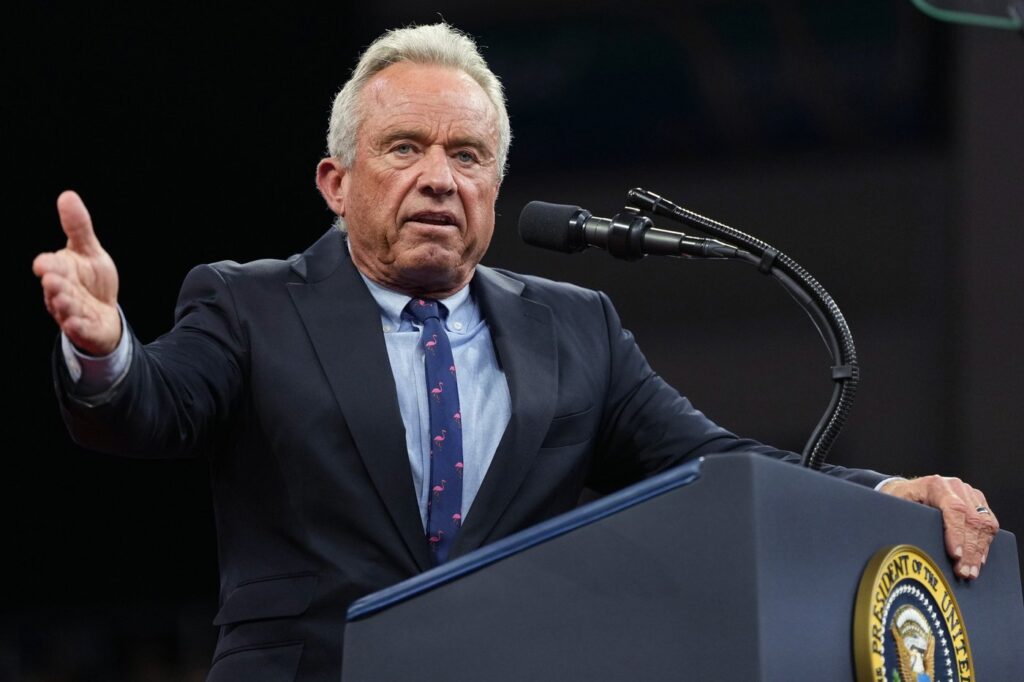
The Trump administration's mixed messaging around vaccination has fueled skepticism. Health Secretary Robert F. Kennedy Jr., known for questioning vaccine safety, has propagated unfounded claims linking vaccines to autism, a relationship debunked extensively by scientific research. His statements often oscillate between endorsing the measles, mumps, and rubella (MMR) vaccine as effective, yet simultaneously raising concerns about its safety. In an August interview with CNN, Kennedy affirmed that the MMR vaccine prevents measles but then questioned its safety.
Trump has also contributed to this confusion by promoting the idea of separating the MMR vaccine into individual shots, falsely suggesting that the combined vaccine was "quite lethal". However, medical professionals assert that the MMR vaccine is both safe and effective, and separate vaccines for each disease are not available in the U.S. The logistics of producing them poses further complications for drugmakers.
Experts like Josh Michaud from KFF note that past administrations have taken decisive action during measles outbreaks by reinforcing the significance of vaccination. Contrarily, the current administration's lack of strong public communication regarding vaccination imperatives is evident. Recent outbreaks saw Kennedy suggesting vitamin A as a possible treatment, raising alarms among health professionals who feel this detracted from promoting vaccinations.
Throughout the outbreak, Kennedy has cast doubt on reports of measles-related fatalities. In August, as Pennsylvania officials reported two deaths linked to the disease, Kennedy questioned their legitimacy, eventually acknowledging that one death was indeed caused by measles after initial pushback. Such comments detract from focusing on the escalating public health threat.
Under Kennedy's leadership as Health Secretary, a significant overhaul of the nation's vaccine policy has taken place. He dismissed all members of a crucial vaccine advisory committee to appoint vaccine critics, further fueling distrust in vaccination initiatives. Moreover, his personal direction for the CDC to alter its longstanding guidance on vaccines and autism has intensified unease. Critics argue that these changes undermine confidence in immunization efforts and increase vulnerability to preventable diseases.
Recent surveys hint at a growing public hesitance regarding the MMR vaccine, with only 82% of respondents in an August 2025 Annenberg survey expressing likelihood to recommend the vaccine compared to 90% the previous November. While Kennedy claims his policy changes aim to restore public trust in health agencies, many medical professionals argue that they instead spread misinformation, further jeopardizing public health.
Despite the loss of elimination status, officials assert that this designation will not alter the federal response to outbreaks. CDC Director Erica Schwartz underscored that the elimination designation itself does not protect citizens—vaccination does. She announced that the federal government has allocated $100 million to assist local health departments in managing outbreaks effectively.
As the U.S. faces this unprecedented health crisis, it remains clear that the nation is more vulnerable to infectious diseases than ever, emphasizing the necessity for robust vaccination efforts and public health strategies to respond to such threats.