

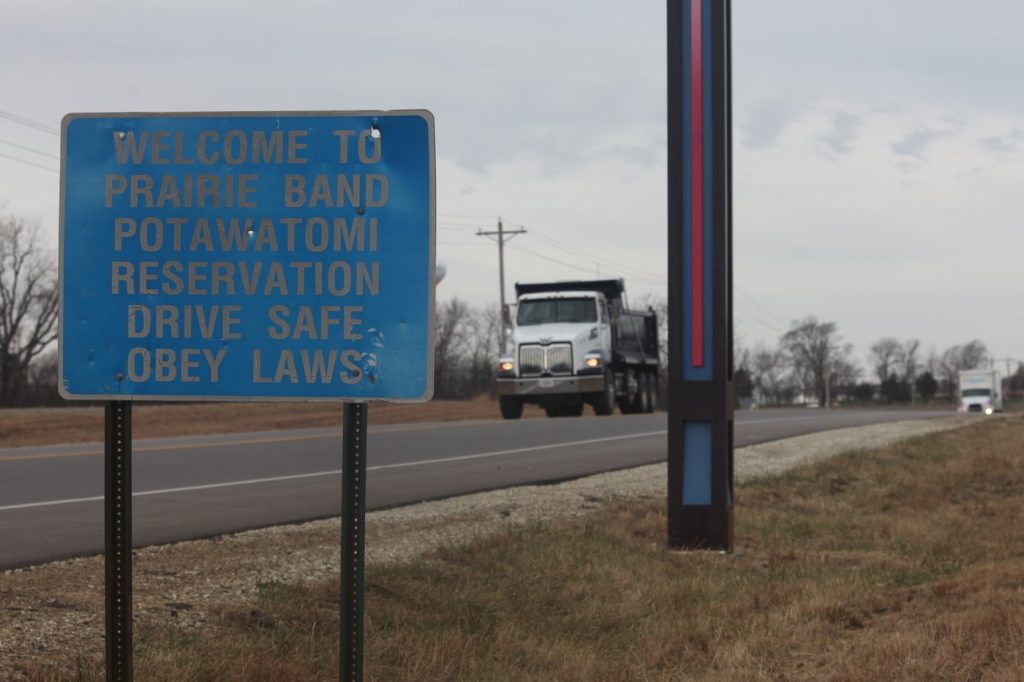
MAYETTA, Kan. (AP) — The Prairie Band Potawatomi Nation is facing significant backlash from its fellow Native Americans due to plans to profit from a federal contract associated with the Trump administration's mass deportation campaign. The tribe, whose ancestors were forcibly removed from the Great Lakes region in the 1830s, signed a nearly $30 million federal contract to design immigrant detention centers across the United States.
The contract was awarded to KPB Services LLC, a newly established tribal business entity, in October. Details about the selection process for this contract, which typically requires competitive bidding, remain unclear, as both tribal leaders and the Department of Homeland Security have not provided responses to inquiries. KPB Services was founded by a former naval officer who specializes in helping tribes secure federal contracts, leading to accusations of a lack of transparency surrounding the deal.
In response to the fierce criticism, the Prairie Band Potawatomi Nation stated that it intends to withdraw from the contract. The tribe's leaders acknowledged the extent of anger among tribal members, who feel blindsided by the decision and describe themselves as being viewed as "traitors" to a community that shares similar racial backgrounds with those targeted by the deportation plans.
During a video message to tribal members, Tribal Chairman Joseph "Zeke" Rupnick emphasized the tribe's commitment to transparency regarding the evolving situation. He recalled the historical context of the tribe's own forced relocation, suggesting that participating in contracts that facilitate the detainment of others echoes the trauma they experienced. Rupnick expressed the tribe's intent to consult legal counsel to find ways to end the agreement.
The tensions arise in a broader context where some Native Americans have been subject to immigration detentions, prompting heightened scrutiny of partnerships between U.S. Immigration and Customs Enforcement (ICE) and tribal nations. Other Native corporations, such as one owned by the Poarch Band of Creek Indians in Alabama, have similar contracts with ICE, further complicating the relationship between economic development and moral values within tribal communities.
Economic conditions, driven by reduced federal funding and increased inflation, have placed additional pressure on tribal businesses to generate revenue. Indigenous rights attorney Gabe Galanda noted that while economic opportunities may arise from federal contracts, they do not always align with the ethical values held by many tribes.
KPB Services LLC, specifically, is not prominently listed on the Prairie Band Potawatomi's official website and has no prior record of performing federal contract work. The division's contract with ICE began at $19 million before being increased to a ceiling of $29.9 million. This situation raises questions regarding compliance with federal contracting rules, particularly the guidelines around competition for such sizable contracts.
The backlash within the tribal community has been swift and severe, with members questioning the decisions taken by their leaders regarding the contract. The details surrounding the involvement of Ernest C. Woodward Jr., the retired naval officer and head of KPB Services, have also drawn concern, significantly as attempts to engage with him have been unsuccessful.
Activists like Carole Cadue-Blackwood, who has Native ancestry and works against ICE detention centers, voiced disbelief that a tribal nation would engage in such contracts. As the dialogue continues, many in the Prairie Band Potawatomi Nation hope for a resolution that aligns more closely with their values and historical experiences. The ongoing situation exemplifies the intersections of economic necessity, community values, and the legacy of systemic injustices faced by Native Americans in the United States.








