

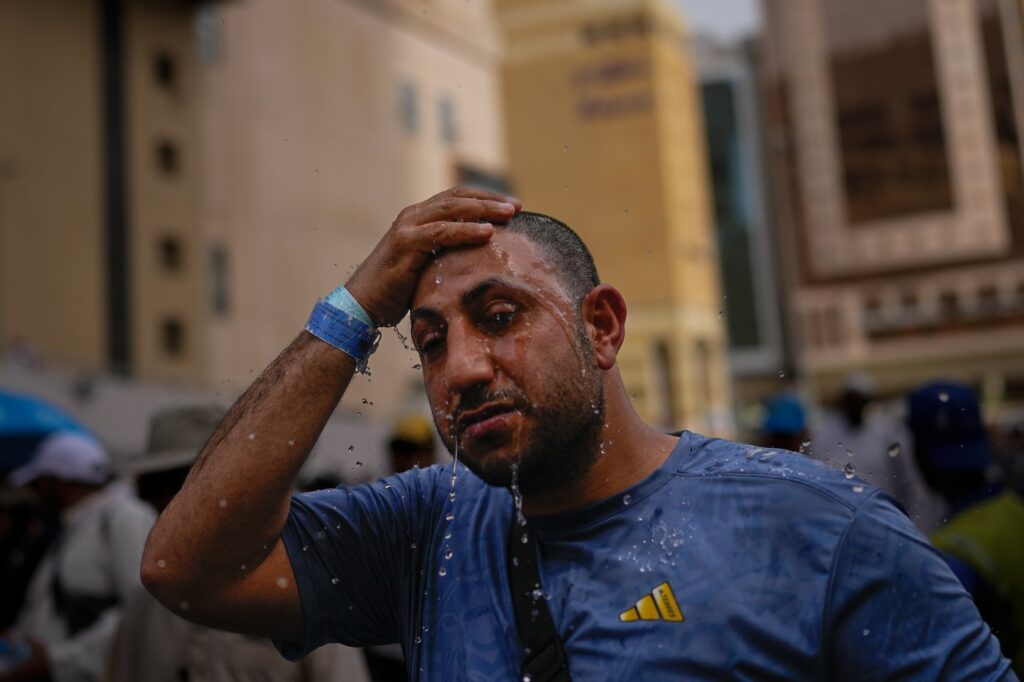
MECCA, Saudi Arabia (AP) - The annual Hajj pilgrimage, one of the Five Pillars of Islam, officially commenced on Monday. This year, more than 1.5 million pilgrims from outside Saudi Arabia have arrived to partake in this significant religious event, as confirmed by Saleh bin Saad Al-Murabba, commander of the Hajj passport forces.
The pilgrimage takes place amidst a fragile ceasefire in the Iran war and ongoing regional tensions, creating a backdrop of uncertainty for those making the pilgrimage. Egyptian pilgrim Samya Abdul Moneim expressed her gratitude for the opportunity to attend Hajj, noting, "I am in a state of blessing and happiness. It’s an indescribable feeling, truly."
On the inaugural day of the Hajj, many pilgrims gathered at a vast tent camp in the nearby desert. Prior to that, they performed the ritual circling of the cube-shaped Kaaba located in the Grand Mosque, enduring the sweltering heat. For many, Hajj is not just a religious obligation but also a powerful spiritual experience aimed at seeking God's forgiveness and cleansing past sins. The rituals span several days, requiring considerable preparation and commitment.
The intense heat of Mecca poses challenges to pilgrims who often utilize umbrellas for shade and handheld fans to cope with temperatures. Volunteers are actively distributing water bottles to keep the pilgrims hydrated, and large fans spray fine mists of water to provide relief from the heat. Many individuals spend years saving money and waiting for permits to embark on this sacred journey, underscoring the pilgrimage's significance in their lives.
In light of the ongoing regional conflicts, Hajj organizers in Indonesia, which boasts the world's largest Muslim population, have stressed the importance of contingency planning. They've also issued instructions to avoid passing additional travel costs onto Indonesian pilgrims. In India, where there is a large Muslim minority, preparations for pilgrimage have largely proceeded without disruption, though high fuel prices have raised travel costs for many pilgrims.
The potential reopening of the Strait of Hormuz could alleviate the global energy crisis triggered by U.S. and Israeli military actions against Iran earlier this year. Prices for oil and gas have surged in the wake of these developments, affecting economies worldwide. U.S. President Donald Trump mentioned on Saturday that a deal with Iran regarding the war, including discussions on the waterway, has been “largely negotiated,” while emphasizing that the blockade on Iranian ports would remain in effect until a formal agreement is reached.
As pilgrims continue their rituals around the Kaaba, they prepare to move to Mina, where they will camp in a significant tent city to pray and worship. On Tuesday, the highlight of the pilgrimage will occur as pilgrims gather on the plain of Arafat, where they will engage in worship and supplication, often with deep emotional expressions as they raise their hands in prayer.








