

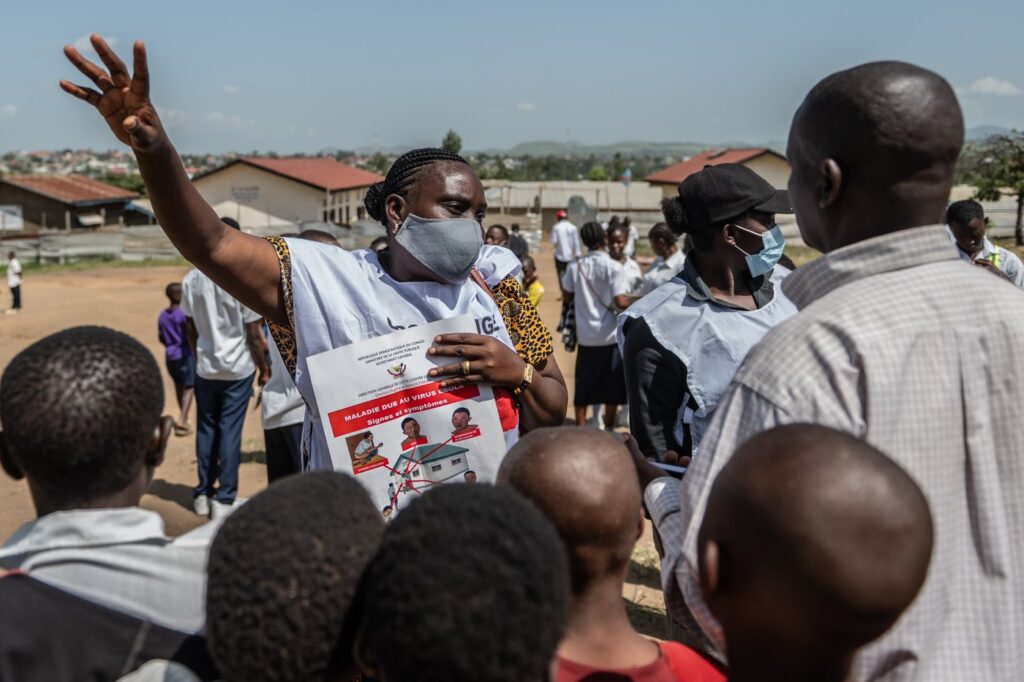
BUNIA, Congo (AP) – The ongoing Ebola outbreak in eastern Congo has seen suspected cases approaching 1,000, prompting intense efforts from local volunteers like Vanny Birungi of the Red Cross. However, Birungi faces a dual threat: the rare Bundibugyo type of Ebola, which lacks a vaccine or treatment, and growing resentment and suspicion from the local population. Residents have reacted violently, pelting her with stones and verbally abusing her while she works to educate them about the virus.
Birungi noted the challenge of spreading awareness in a climate of mistrust, stating, "We continue to tell them that the disease is out there. Some accept, and others don’t." The region is increasingly volatile, not only due to the outbreak but also because of the persistent threat posed by armed groups that have resulted in thousands of deaths and widespread displacement.
Distrust exacerbates the situation as many community members feel skeptical towards aid workers. The outbreak has also been complicated by delays in identifying the virus, with experts highlighting that surveillance has been severely undermined by reductions in U.S. and other international aid. Pierre Basola, a Bunia resident, expressed such distrust angrily, claiming, "Ebola is a white man’s invention," and demanded to be left alone.
Healthcare facilities have become targets for anger and frustration. In the past week, various incidents have occurred, including an attack on a hospital treating Ebola patients that required an evacuation amid gunfire. On another occasion, residents set fire to a tent run by Doctors Without Borders intended for Ebola patients, causing more than a dozen suspected cases to flee. Relatives of victims often feel powerless, as prevention measures prevent them from handling the bodies of their loved ones during traditional funeral rites, further fueling their anger.
The Ebola virus transmits through direct contact with the bodily fluids of infected individuals, putting both healthcare workers and caregivers at heightened risk. Heather Kerr, the country director for the International Rescue Committee, emphasized the significance of trust in public health, stating, "Trust is almost as important as the health response." With rising misinformation and fear in the communities, the risk of individuals avoiding health centers increases dramatically.
As the outbreak escalates, there are now more than 900 suspected cases and over 220 suspected deaths, according to Tedros Adhanom Ghebreyesus, the Director-General of the World Health Organization. The challenges of responding effectively include navigating armed conflict, as aid workers must traverse potentially dangerous regions, such as the unstable area over 1,000 kilometers from Kinshasa.
Meanwhile, many residents remain in severe denial about the outbreak. Mado Nditamba, a 70-year-old resident of Bunia, voiced concern that people are avoiding treatment, stating that they "leave everything to God" when faced with fear and lack of understanding. Despite having experience with 17 prior Ebola outbreaks, the WHO acknowledges that this particular outbreak has been challenging due to delays in identifying its origins and the strain of testing facilities.
Health workers are reportedly underprepared and have faced significant risks, with some contracting the virus themselves. Following a recent report, one Congolese doctor tragically lost their life while working in Rwampara. Infection rates among healthcare workers have also been documented in neighboring Uganda, which has seen a smaller outbreak of cases following travel from Congo.
Community skepticism remains a significant barrier to effective response efforts, as many view Ebola as a myth. Action Aid reported strong disbelief among residents surveyed shortly after the outbreak was announced. Yakubu Mohammed Saani, the country director for Action Aid in Congo, emphasized the need for better community engagement to combat misinformation and facilitate trust-building in the region. Such strategies are crucial if health authorities hope to effectively manage and contain this rapidly spreading outbreak.








