

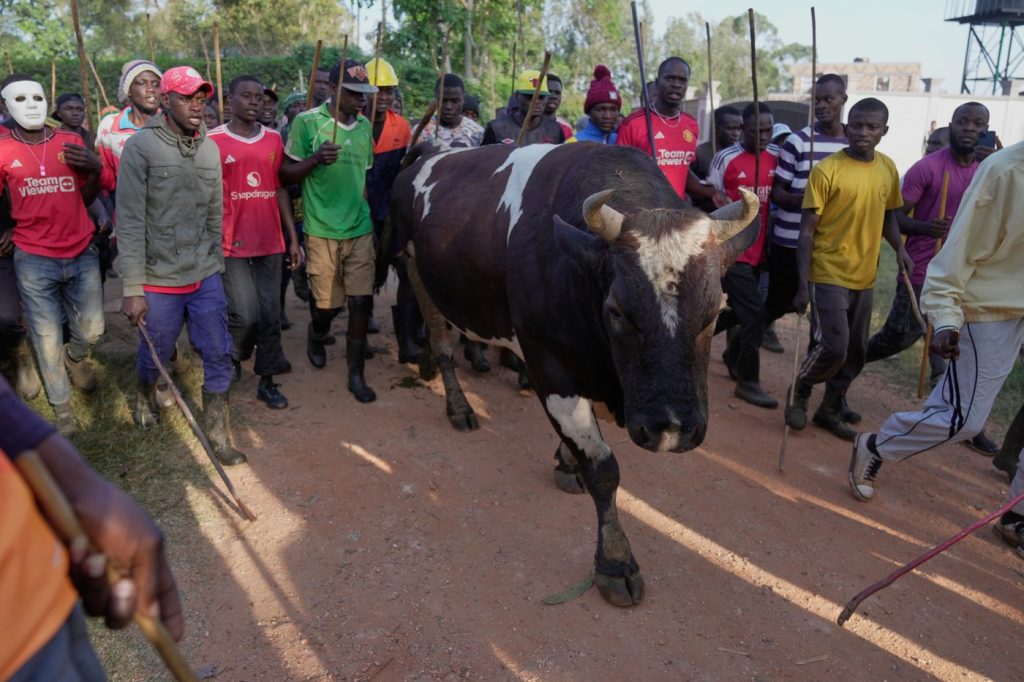
KAKAMEGA, Kenya (AP) - Bullfighting is a longstanding tradition in the Luhya community, particularly in Kakamega County, Kenya. Initially rooted in cultural celebrations and entertainment following harvests, this practice has transformed into a competitive sport that draws in large crowds, especially young people. The community engages in betting on the bulls, adding an element of excitement to the matches.
On November 29, 2025, an electrifying bullfight took place where newcomers and long-standing competitors faced off in an organized arena. The main event featured a debutant bull named Shakahola competing against Promise, a seasoned champion with only a few losses over the course of more than a decade. The atmosphere was tense as locals crowded around the arena, vocally supporting their favorite bulls.
The match began with Shakahola and Promise locking horns, creating a whirl of dust that obscured the view for many spectators close to the action. In a dramatic turn of events, the match concluded in just three minutes, with newcomer Shakahola emerging victorious. The crowd erupted in spontaneous song and dance, celebrating the new champion. Meanwhile, Promise, displaying evident signs of defeat, exited the arena marked by bloodstains on his hide.
Throughout the event, the engagement of the community was palpable. Spectators, many of whom were waving sticks and ululating, escorted Shakahola into the arena. The traditional dances, notably "Isukuti," were performed by jubilant crowds, who brought life to the celebration following the match. Photographers captured the vibrant scenes, including the moments where spectators danced, sang, and embraced the victory of the newcomer bull.
The bullfight not only serves as a local entertainment event but also embodies the cultural richness and communal spirit of the Luhya people. Even as bulls fight, the surrounding activities draw hundreds into a communal celebration, showcasing the importance of tradition and community in Kakamega. Onlookers included families, youth, and elders, all converging to witness the spectacle, which serves to strengthen community ties and celebrate local heritage.
This specific bullfighting event has become a spectacle that continues to evolve while maintaining its cultural significance. The contrast between Shakahola's first-time glory and Promise's long-standing reputation highlights the dynamic nature of this tradition. Each match presents new stories, rivalries, and triumphs, keeping the tradition alive and relevant to newer generations.
In summary, the bullfighting tradition in Kakamega County reflects a blend of cultural heritage and modern entertainment. The thrill of competition, the festive atmosphere, and the engagement of the local community contribute to a vibrant social tapestry that preserves the values and customs of the Luhya people while adapting to contemporary interests.








