

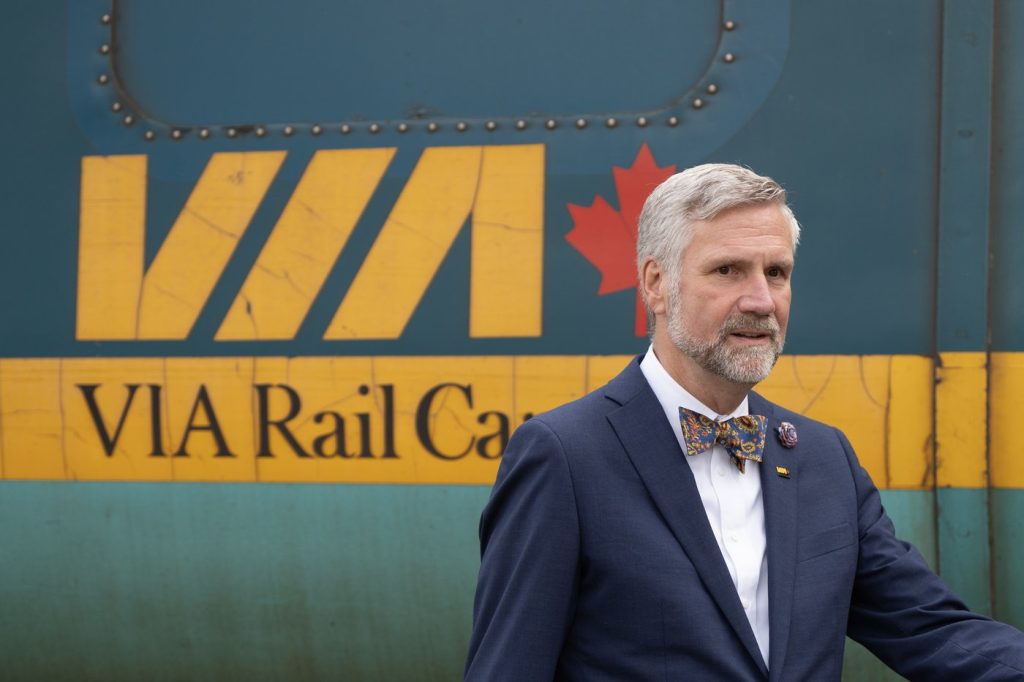
OTTAWA — Canada's transport minister, Steven MacKinnon, has announced that Mario Peloquin, the President and CEO of Via Rail, will step down from his position next month. This announcement coincides with the federal government’s plans to advance high-speed rail projects in the country.
MacKinnon has confirmed receiving a resignation letter from Peloquin, who is slated to officially retire in mid-January 2026. He expressed gratitude for Peloquin's nearly three years of service and 41 years in the rail industry, highlighting his dedication and commitment to Canada’s national passenger rail service. "I wish him continued success in his future endeavours," MacKinnon stated in a release on Tuesday.
Peloquin took over as the head of Via Rail in June 2023 and was expected to complete a five-year term. His prior experience includes positions as the Chief Operating Officer of New York's Metropolitan Transportation Authority and as Senior Vice-President at SNC-Lavalin Group Inc., a former engineering and construction firm.
His forthcoming retirement comes at a pivotal moment as the federal government unveils its plans for the first high-speed rail network in Canada, with construction anticipated to start in 2029. However, the government has yet to finalize decisions regarding the complete funding for this ambitious rail line project.
In addition to Pelquin’s impending resignation, Via Rail recently faced significant criticism after hundreds of passengers experienced lengthy delays due to a train breakdown near Brockville, Ontario. Addressing reporters in Gatineau, Quebec, MacKinnon expressed his dissatisfaction with the company’s handling of the incident. He emphasized the need for improvement in Via Rail’s operational responses during challenging weather conditions typical of a Canadian winter. "It's how you deal with those issues when they arise... and I want to make sure Via is on a path of continuous improvement," he remarked.
This situation highlights the ongoing challenges faced by Canada's national passenger rail service, as it endeavors to enhance its operational efficiency while expanding its infrastructure amidst criticism and operational hurdles. As the government moves forward with high-speed rail plans, the management transition at Via Rail may play a critical role in shaping the future of rail transport in Canada.








