

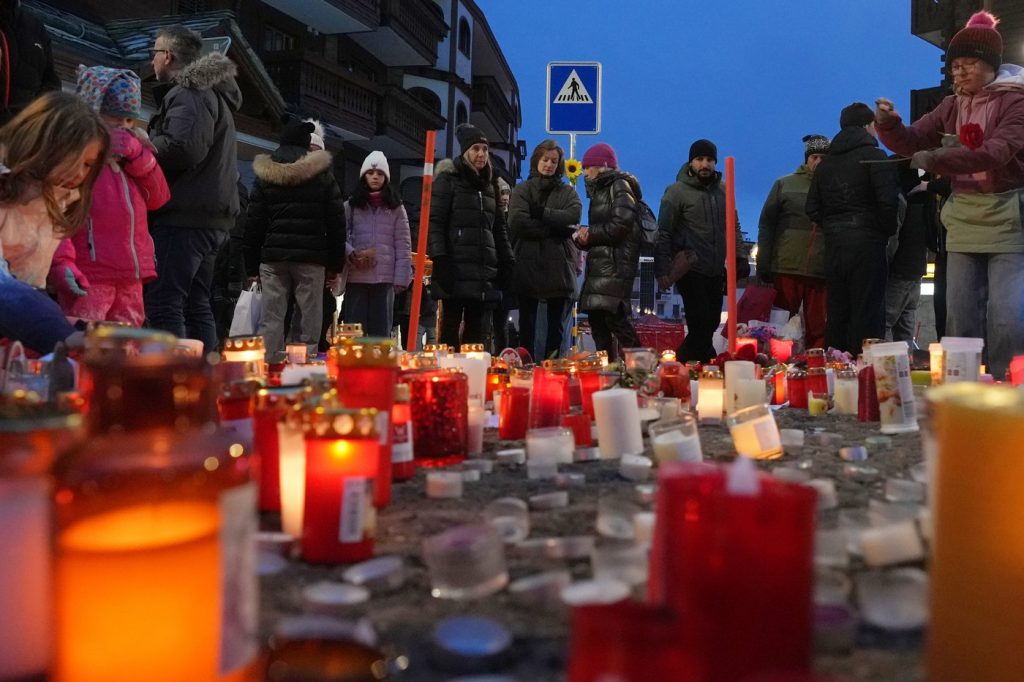
CRANS-MONTANA, Switzerland (AP) – In the aftermath of a deadly fire at a Swiss Alpine bar that claimed the lives of 40 people celebrating the New Year, a wave of grief and resolve has emerged from survivors, families of the victims, local authorities, and even higher figures such as Pope Leo. This diverse reaction was expressed in French, Italian, German, and English, showcasing the country's rich tradition of multilingualism.
The tragic blaze occurred early on Thursday at Le Constellation bar, located in the ski resort of Crans-Montana, injuring an additional 119 people. Officials have described this incident as one of the deadliest tragedies in Switzerland's history.
Authorities reported that the fire likely started when sparkling candles placed atop Champagne bottles ignited after coming too close to the bar's ceiling, setting off panic in the overcrowded establishment.
Amid the devastation, Laetitia Brodard shared her heart-wrenching search for her son, 16-year-old Arthur, stating, "I'm looking everywhere. The body of my son is somewhere. I want to know, where is my child, and be by his side. Wherever that may be, be it in the intensive care unit or the morgue." Her desperate plea captured the profound loss felt within the community.
Marc-Antoine Chavanon, a 14-year-old who rushed to the scene to assist the injured, recounted the chaotic moments, stating, "We were bringing people out; people were collapsing. We saw people screaming, running." He recalled witnessing a friend who was severely burned, emphasizing the traumatic impact of the experiences shared during the crisis.
Eric Bonvin, the general director of the regional hospital in Sion, expressed the emotional toll on families and friends, noting, "It was hard to live through for everyone. Also probably because everyone was asking themselves, 'Was my child, my cousin, someone from the region at this party?'" This sentiment resonated deeply throughout the region, especially as many had gathered to celebrate the New Year.
Gianni Campolo, a 19-year-old vacationer who aided first responders, conveyed the horror he witnessed, stating, "I have seen horror, and I don’t know what else would be worse than this." His poignant words reflect the severity of the situation and the toll it took on those present.
Beatrice Pilloud, attorney general for the Valais region, indicated that the primary focus in the immediate aftermath is on the identification of the victims, which is crucial for families to begin their mourning processes. In her address, she emphasized the necessity of ensuring that families receive the support they require during this difficult time.
Pope Leo conveyed his condolences through a telegram to the bishop of Sion, stating, "He wishes to express his compassion and concern to the relatives of the victims... and will sustain the courage of those who suffer in their hearts or in their bodies." His message highlighted the need for compassion and solidarity in the face of such a tragedy.
Mathias Reynard, the Cantonal head of government, noted numerous instances of "heroic actions" and "strong solidarity," particularly from young citizens who acted swiftly to save lives in the midst of chaos. His reflections on the community's courage emphasize a spirit of unity that emerged from the disaster.
Swiss President Guy Parmelin, speaking on his first day in office, remarked, "Switzerland is a strong country not because it is sheltered from drama, but because it knows how to face them with courage and a spirit of mutual help." His comments encapsulate a national identity marked by resilience and collective strength in times of hardship.








