

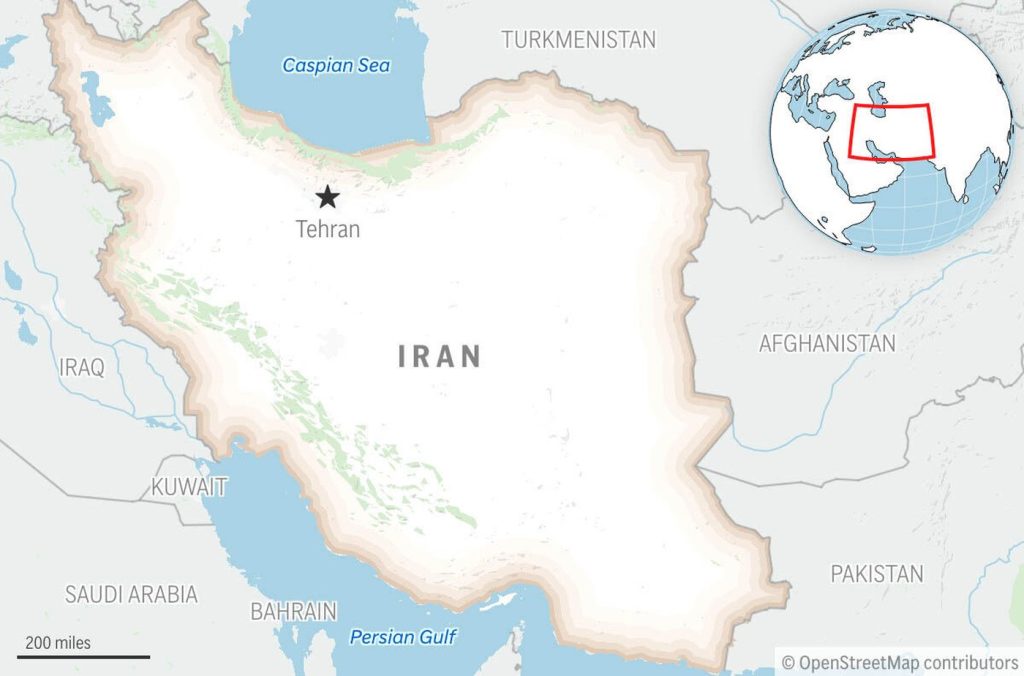
In Dubai, United Arab Emirates, recent protests in Iran sparked by the nation's struggling economy have led to increased violence, resulting in at least two additional fatalities, bringing the total death toll to at least 10 as demonstrations continue unabated. The protests, now ongoing for over a week, have gained momentum, becoming the most significant unrest since 2022 when the death of 22-year-old Mahsa Amini while in police custody ignited nationwide demonstrations.
The latest violence unfolded in the holy city of Qom, home to major Shiite seminaries, where a grenade explosion resulted in the death of a man. According to the state-owned IRAN newspaper, security officials have claimed that the deceased was armed with the grenade intending to target individuals in the area. Additionally, a second fatality occurred in the town of Harsin, situated approximately 370 kilometers southwest of Tehran, where a member of the Basij, Iran's paramilitary volunteer force, lost his life in a violent encounter involving both firearms and knives.
Protests have reached over 100 locations spanning 22 of Iran's 31 provinces, according to reports from the U.S.-based Human Rights Activists News Agency. The demonstrators have voiced discontent not only regarding economic conditions but also against Iran's ruling theocracy. Amidst ongoing protests, there have been signs of the government attempting to engage in dialogue. President Masoud Pezeshkian has indicated a willingness to negotiate with protesters but has acknowledged the limitations of his position due to the rapid depreciation of Iran's currency, the rial, which has fallen to approximately 1.4 million rials per U.S. dollar, thus igniting initial public outrage and protests.
These demonstrations stem from significant economic grievances, with citizens expressing anger over widespread corruption and the government's inability to stabilize the economy since the June war with Israel, during which the United States conducted aerial strikes on Iranian nuclear sites. Tensions escalated as U.S. President Donald Trump issued a warning on Friday, suggesting that if Iran continues to "violently kill peaceful protesters," the United States would intervene. This statement prompted an intense backlash from Iranian officials, who threatened retaliation against American military personnel stationed in the region.
In an attempt to signal openness to negotiations regarding its nuclear program and alleviate international sanctions, Iran recently declared that it is no longer enriching uranium at any of its sites. However, ongoing diplomatic talks remain elusive, with both Trump and Israeli Prime Minister Benjamin Netanyahu cautioning Iran against resuming its nuclear activities. The delicate state of Iran's economy is now a significant factor in the political climate, complicating the government's ability to address the multifaceted grievances of its citizens and maintain stability amidst growing unrest.








