

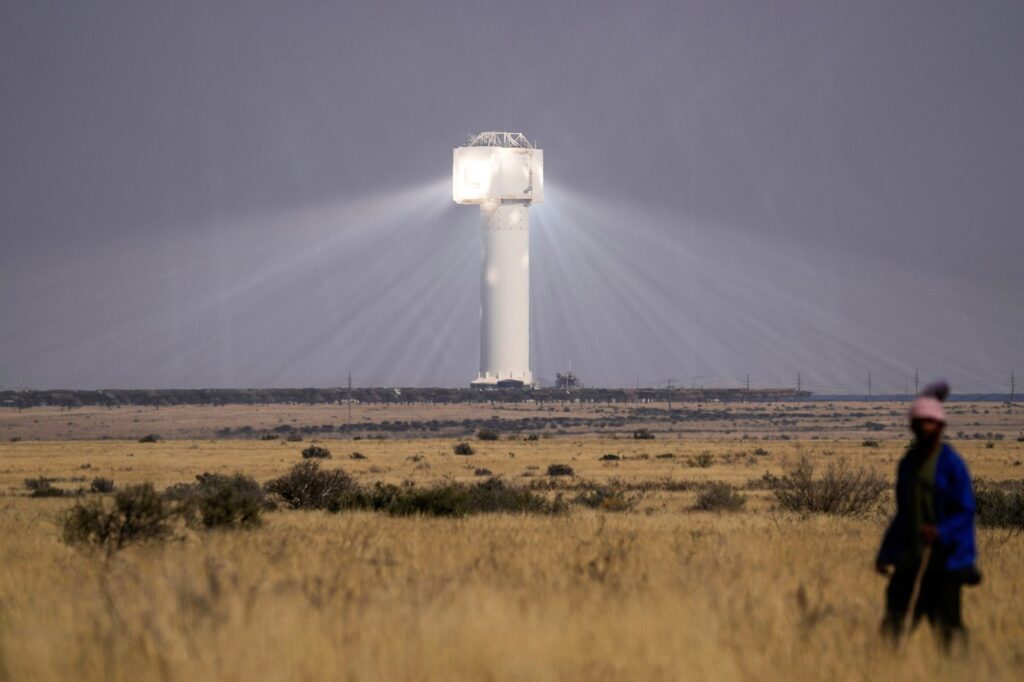
NAIROBI, Kenya (AP) - Africa is witnessing a significant transformation in its energy sector, with a notable shift towards renewable sources such as solar and wind power, accompanied by battery storage solutions. This transition stems from both government initiatives and investor priorities that move away from coal and large hydropower plants in favor of cheaper, faster, and more reliable alternatives.
The recent $1.5 billion energy agreement between China and Zambia, announced in early May, exemplifies this trend. The deal consists of three separate projects, each with a capacity of 300 megawatts, incorporating solar, wind, and coal-fired power. While coal remains essential for stable baseload electricity, many African countries are increasingly turning to renewable energy due to rising fuel import costs amid global instabilities like the Iran war, along with unreliable electricity grids and increasing industrial demands.
In 2025, a total of 322 energy projects were announced across Africa, with solar projects leading the way at 173, followed by 46 hydropower projects, 34 wind projects, 22 gas projects, and 14 hybrid energy initiatives, according to Electron Intelligence, a market research firm. Mugwe Manga, climate finance lead at FSD Kenya, emphasized Africa's pivotal role in the global energy transition, noting that the continent possesses some of the world’s most favorable renewable resources, making clean energy economically attractive.
Olamide Niyi-Afuye, CEO of the Africa Minigrid Developers Association (AMDA), highlighted a broader strategic shift in energy infrastructure development across the continent, emphasizing the deployment of systems that can be installed rapidly and expanded gradually through flexible financing options. The rapid growth of solar power within mini-grid systems is a significant part of this strategic transformation.
According to the International Renewable Energy Agency, Africa added a record 11.3 gigawatts of renewable energy capacity in 2025, marking a threefold increase from the previous year. The most substantial contributions came from South Africa, Egypt, and Ethiopia. The staggering reduction in costs associated with renewable technologies has played a crucial role in this growth; utility-scale solar power costs have decreased nearly 90% globally since 2010, while onshore wind costs have fallen around 70%. Consequently, renewables have emerged as the cheapest new electricity generation source across many African markets.
Matt Tilleard, CEO of CrossBoundary Energy, remarked, "Renewable energy is now unequivocally the fastest, cheapest, and most bankable way to connect people, companies, and economies to the megawatts they need to grow." Much of this expansion is attributed to distributed solar and battery systems installed directly in various sectors, including mining, factories, telecom towers, and residential homes. Tilleard further stated that current statistics still emphasize traditional metrics, such as megawatts connected to national grids, while solar and batteries often bypass central utilities.
Data from the Africa Solar Industry Association revealed that by the end of 2025, approximately 23.4 gigawatts of operational solar projects had been established across Africa. However, Chinese export figures suggest that 58.1 gigawatts of solar panels have been shipped to African nations since 2017. This discrepancy indicates that solar adoption may be accelerating faster than official statistics reflect.
Renewable energy projects are becoming increasingly attractive to investors because they offer quicker returns and are less vulnerable to fluctuations in global fuel prices. Niyi-Afuye noted that solar and wind projects are particularly appealing due to their strong commercial fundamentals combined with relatively lower investment risks. For instance, the Kamoa-Kakula copper complex in the Democratic Republic of Congo is developing a 233-megawatt solar and battery project intended to supply one of Africa’s largest copper mines. This project experienced swift progress, moving from the signing phase to over 80% completion in just one year, compared to the lengthy timelines of up to 12 years for coal-fired plants and a decade or more for major hydropower projects.
The renewable energy push across Africa is being bolstered by policy changes, such as Ethiopia's ban on internal combustion engine vehicle imports, promoting the adoption of electric vehicles. In South Africa, changes in regulations concerning private power generation have led to a surge in renewable energy projects within the industrial sector. Nonetheless, significant challenges remain. Many African utilities are financially unstable, making lenders cautious about long-term power purchase agreements. Financing costs for renewable projects in Africa can be triple those in more advanced economies, mainly due to perceived country risks, according to the International Energy Agency.
To mitigate these challenges, development finance institutions like the African Development Bank and the International Finance Corporation are providing assistance through concessional loans, guarantees, and risk-sharing structures. The continued evolution of Africa’s energy landscape hinges not on technological advancements or cost reductions, but rather on financial mechanisms, political commitment, and the development of bankable projects that can stimulate demand for power throughout the continent.








