

LONDON (AP) — In a stark warning, a U.K. spy chief has urged that Britain and its allies face a rising threat in cyberspace, particularly from adversaries like Russia. Anne Keast-Butler, the director of the communications intelligence agency GCHQ, is set to emphasize that unless citizens, corporations, and governments regard cybersecurity with the urgency it demands, the risk of losing critical battles in this domain increases significantly.
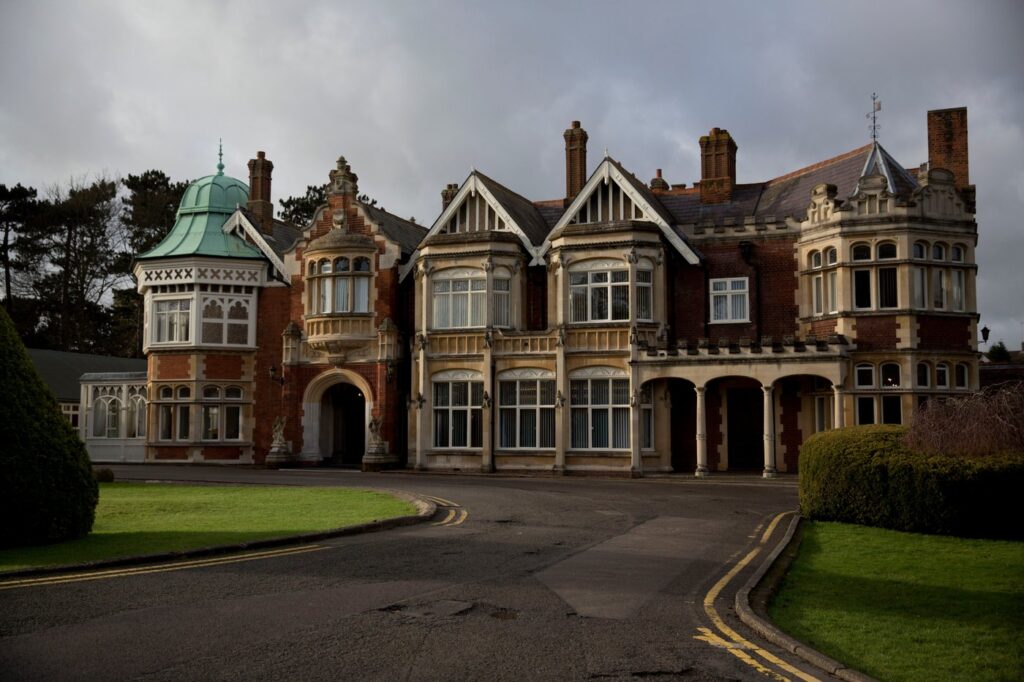
In her upcoming speech at Bletchley Park, a historic World War II code-breaking center located 45 miles northwest of London, Keast-Butler will highlight that Russia is "relentlessly targeting critical infrastructure, democratic processes, supply chains, and public trust" within the U.K. and across Europe. She will accuse Russia of engaging in activities such as stealing technology, plotting sabotage, and even assassination attempts.
Furthermore, Keast-Butler plans to discuss the implications of rapid advancements in artificial intelligence (AI), stating that “the ground beneath our feet is shifting” and articulating the "narrowing window" for the U.K. and its allies to remain competitive with nations like China, which she describes as a science and technology "superpower." Her forthcoming remarks underscore the pressing need for a concerted effort on cybersecurity that extends "from boardrooms to living rooms," increasing its urgency to tenfold.
This speech is part of a broader series of alarms sounded by Western intelligence experts regarding escalating hostile activities by Russia, which are taking place in a "gray zone" beneath the threshold of conventional warfare. Recent reports indicate that Russian-linked hackers have targeted vital infrastructure in several countries, including Sweden, Poland, Denmark, and Norway, focusing on critical resources such as power plants and dams.
Richard Horne, head of the U.K.'s National Cyber Security Centre, echoed these sentiments last month, warning that hostile states, particularly Russia, China, and Iran, are behind many of the most serious cyberattacks threatening the nation. He cautioned that such aggressive cyber activities could intensify if the U.K. becomes embroiled in any international conflict.
Keast-Butler will also stress the essential nature of international partnerships, especially in light of U.S. President Donald Trump's "America First" foreign policy, which has tested the long-standing relationship between London and Washington. The emphasis on collaborative efforts in cybersecurity comes at a time when geopolitical stability is fragile.
This significant address marks the annual GCHQ director's lecture and serves as a poignant reminder of the imperative to adapt to emerging threats in the digital landscape. Bletchley Park, the venue for the speech, holds historical significance as the site where many brilliant minds—ranging from mathematicians and cryptographers to chess enthusiasts—worked tirelessly to decipher the complex codes used by Nazi Germany, ultimately shortening the war and laying the groundwork for modern computing.








