

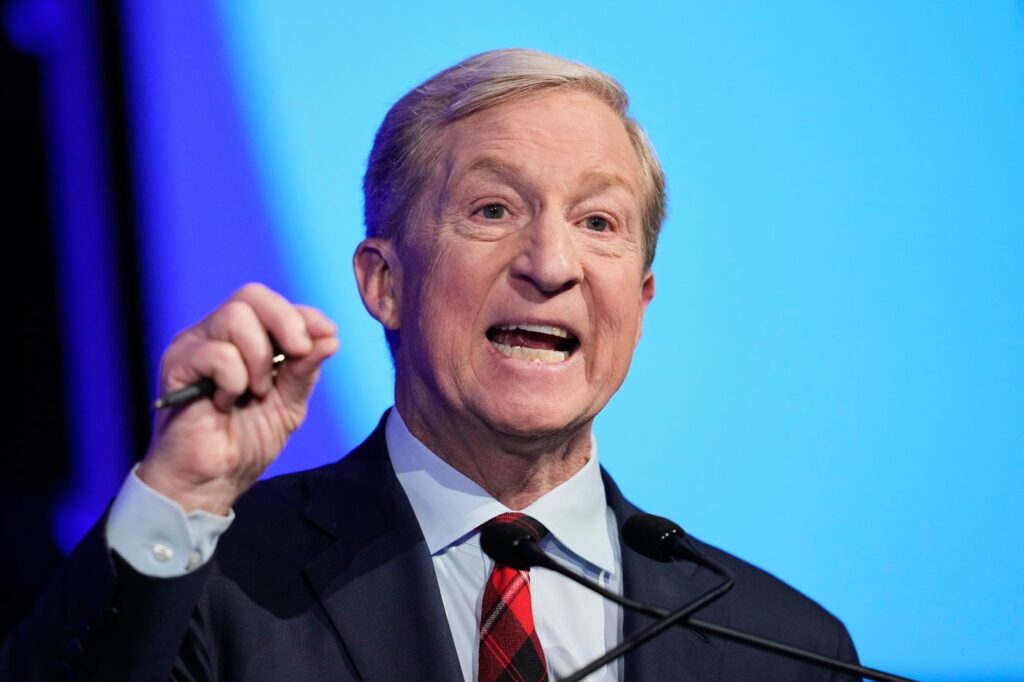
LOS ANGELES (AP) - Billionaire Democrat Tom Steyer is making headlines in his bid for California’s governorship with an unprecedented political advertising campaign, which has become the most expensive in the country this year. Having spent or booked more than $195 million in advertisements across various media platforms, including broadcast TV, cable, and radio, Steyer's campaign is still on the rise, according to advertising tracker AdImpact.
The former hedge fund manager and liberal activist is facing criticism for his wealth-fueled campaign, with detractors arguing he is attempting to purchase the governor’s position. His advertising expenditure is over 20 times greater than his closest competitor, Democrat Xavier Becerra, as both candidates prepare for the upcoming November election.
On a national scale, no competitor is even close to matching Steyer's spending. In Georgia, Republican Rick Jackson has spent approximately $83 million on his primary race for governor, putting him in second place. Following him is Lt. Gov. Burt Jones, who has spent nearly $31 million and has the support of President Donald Trump.
Critics of Steyer include former U.S. House member Katie Porter, who has accused him of trying to buy the governorship while noting that she isn’t using personal wealth for the campaign. Steyer’s ad spending has surpassed the previous record held by Republican Meg Whitman, who spent $178.5 million in her unsuccessful 2010 gubernatorial campaign, although Steyer’s total is for the primary election only.
Despite his record spending, Steyer has not distanced himself from a crowded group of candidates, which includes Becerra and Republican Steve Hilton, as the campaign approaches the primary on June 2. Although voting by mail started earlier this month, Steyer continues to maintain a financial advantage that helps him gain substantial visibility and influence over the narrative surrounding the election.
One of Becerra's ads attempts to counter Steyer's overwhelming presence by featuring serene images of California's landscape, encouraging voters to "stop the endless Tom Steyer ads" by voting for him instead.
Steyer’s financial muscle allows for a unique strategy encompassing beyond traditional advertising; he has leveraged social media platforms like YouTube and Instagram, even employing a progressive influencer in Texas for $100,000 to help sway voters. This modern approach mirrors trends in digital marketing, showcasing how high-profile campaigns adapt to changing media consumption habits.
Despite the considerable resources at his disposal, voters seem hesitant in a race marked by no standout leader, with over 50 candidates anticipated on the ballot. California’s "top-two" primary system will ensure that the two candidates with the most votes advance to November, irrespective of party affiliation.
Historical precedents show that substantial financial investment does not guarantee electoral success. For instance, billionaire Rick Caruso spent over $100 million for the mayoralty of Los Angeles in 2022, only to be defeated by Karen Bass, who spent far less. Similarly, former New York City Mayor Michael Bloomberg's billion-dollar investment in his 2020 presidential bid ultimately fell short.
Steyer, who has never held elected office, addressed concerns about his wealth influencing his political ambitions in a past interview, stating he wouldn't apologize for his business success. The current governor's race unfolds amid significant challenges in California, including a prolonged homelessness crisis, wildfire insurance difficulties, and rising living costs impacting many residents.
Overall, as competing narratives arise within this politically charged environment, the effectiveness of Steyer's extensive ad spending remains to be seen as the primary nears, with analysis focusing on whether money can indeed sway voters in a field where many candidates have substantial backing.








