

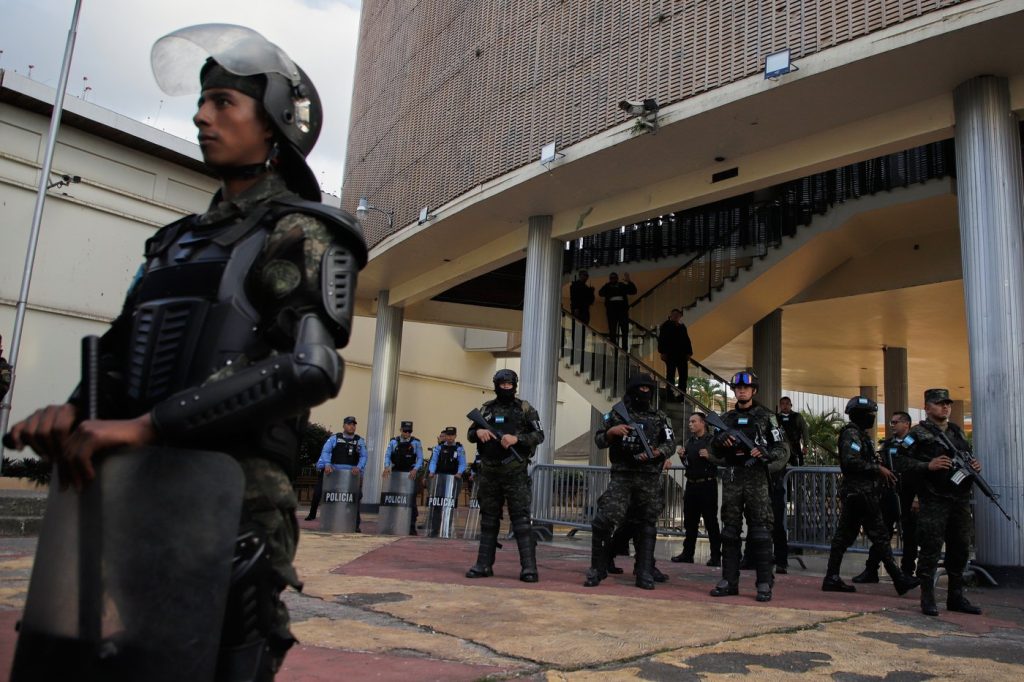
On Thursday, a significant incident occurred in Tegucigalpa, Honduras, when a homemade explosive device was thrown into the country's Congress, injuring lawmaker Gladis Aurora López from the conservative National Party, which supports President-elect Nasry Asfura. The explosion took place during a convened session where lawmakers were discussing sensitive issues related to the recent elections.
Deputy López was in a hallway of the legislative building when she was struck in the back by the device. The explosion caused her jacket to be shredded, and she fell to the floor. Witnesses quickly provided her with medical assistance, and fortunately, her injuries were not deemed life-threatening. This incident raises concerns regarding the safety of political figures in a tense post-election atmosphere.
In response to the attack, Tomás Zambrano, who heads the National Party’s delegation in Congress, pointed a finger at the outgoing ruling party, Liberty and Refoundation Party (LIBRE). According to Zambrano, the attack was a direct assault on the National Party and suggested that the political tensions stemming from the recent electoral process were escalating dangerously.
The context of the incident is crucial, as lawmakers were convened to deliberate on a proposal put forward by the LIBRE party calling for an election recount. This comes despite the fact that electoral authorities had already announced Nasry Asfura as the winner of the November 30 election. The National Electoral Council concluded that Asfura won by a narrow margin, yet LIBRE has been resistant to acknowledge the election results.
Visual evidence collected from security cameras revealed that the explosive device was thrown from the street outside the Congress building. The footage showed the individual responsible appeared to be in the company of another man. In the aftermath of the incident, police authorities are actively pursuing the suspects and conducting investigations to identify those responsible for this act of violence.
This notable act of aggression highlights the increasing volatility and division within Honduran politics, especially surrounding the aftermath of the recent elections. With protests occurring from supporters of the LIBRE party against the declared electoral results, the situation is fraught with tension, raising questions about political stability and security moving forward.
The atmosphere in Tegucigalpa remains charged as the country navigates the aftermath of the election and the implications of such dramatic incidents on its political landscape. As investigations continue, it will be critical to monitor how this situation unfolds and its potential impact on the governing process and public safety in Honduras.








