

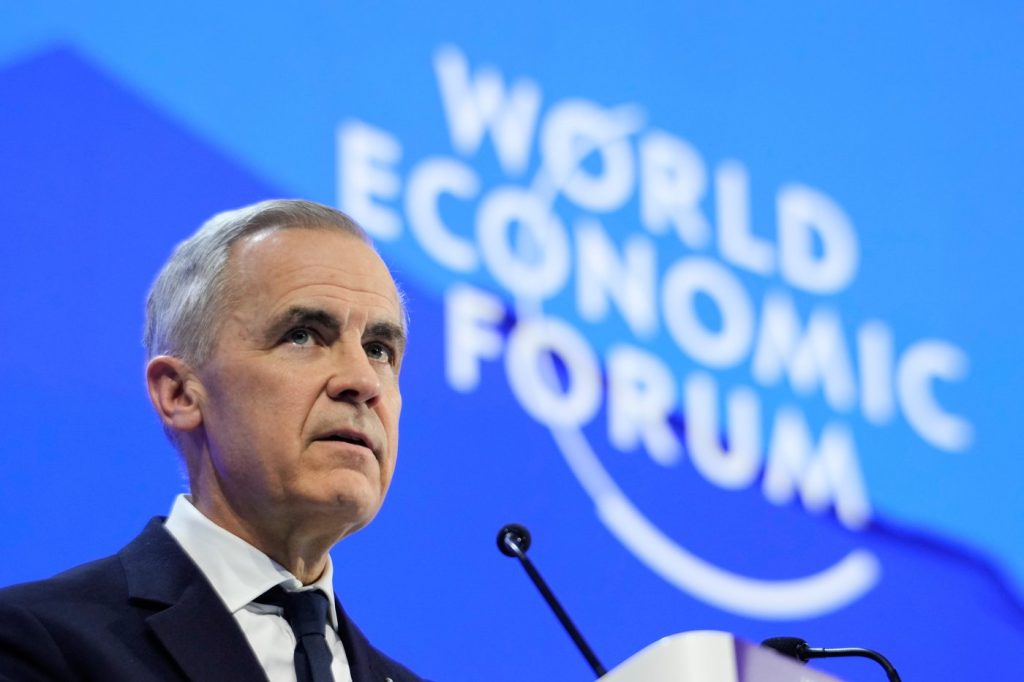
Experts emphasize that Canada’s participation in the World Economic Forum (WEF) carries increased significance this year, particularly with Prime Minister Mark Carney advocating for the expansion of global trade relationships. This urgency arises against the backdrop of tensions spurred by rhetoric from U.S. President Donald Trump, which threatens to overshadow the annual meeting held in Davos, Switzerland. The WEF annually draws politicians and affluent corporate leaders to engage in discussions surrounding global issues and economic development, making this year’s forum especially critical.
Mahmood Nanji, a fellow at Ivey Business School, indicates that the current edition of the forum carries "a different kind of meaning" owing to the prevailing global conflicts and economic challenges. The WEF serves as a vital platform for Carney to potentially forge new trade partnerships, especially given the uncertainty surrounding the renegotiation of the Canada-United States-Mexico Agreement (CUSMA). This strategic opportunity comes at a time when the international trade landscape is fraught with unpredictability.
During his address at the conference on January 20, 2026, Carney underscored the necessity for middle powers like Canada to adapt to a transforming global landscape characterized by economic coercion, where dominant nations prioritize their own agendas. The remarks reflect a growing awareness of the shifting dynamics in international relations, particularly in relation to trade and economic policy.
Trump’s attendance at the forum adds another layer of complexity. He has made headlines with continued remarks about acquiring Greenland, signaling a willingness to impose tariffs on European nations that oppose the U.S. claim over the territory. These threats create apprehension that Trump's agenda could overshadow the organizers' intent to foster "a spirit of dialogue" during the forum.
According to Nanji, the potential distraction created by Trump’s provocations amplifies the importance of Canada’s proactive engagement with its allies. With dialogue being the central theme this year, there is a pressing need for Canada to actively participate in discussions that may lead to strengthening ties with other nations, especially in light of the shifting geopolitical landscape.
The World Economic Forum continues to represent a critical junction for future global trade dynamics, and Canada's presence, under the leadership of Prime Minister Carney, is positioned to influence not only its bilateral relationships but also broader international economic policies. As discussions unfold in Davos, the reactions and strategies employed may well shape the foundation for Canada's international relations moving forward.
As the global economy faces potential upheaval, the WEF stands as a pivotal gathering for addressing existing challenges and forging paths ahead, making Canada’s role and contributions especially significant amid the evolving political context.
Prime Minister Mark Carney's participation in WEF is thus not merely a formality; it represents an essential diplomatic effort that may yield substantial benefits for Canada in the face of rising uncertainties within global trade frameworks.








