

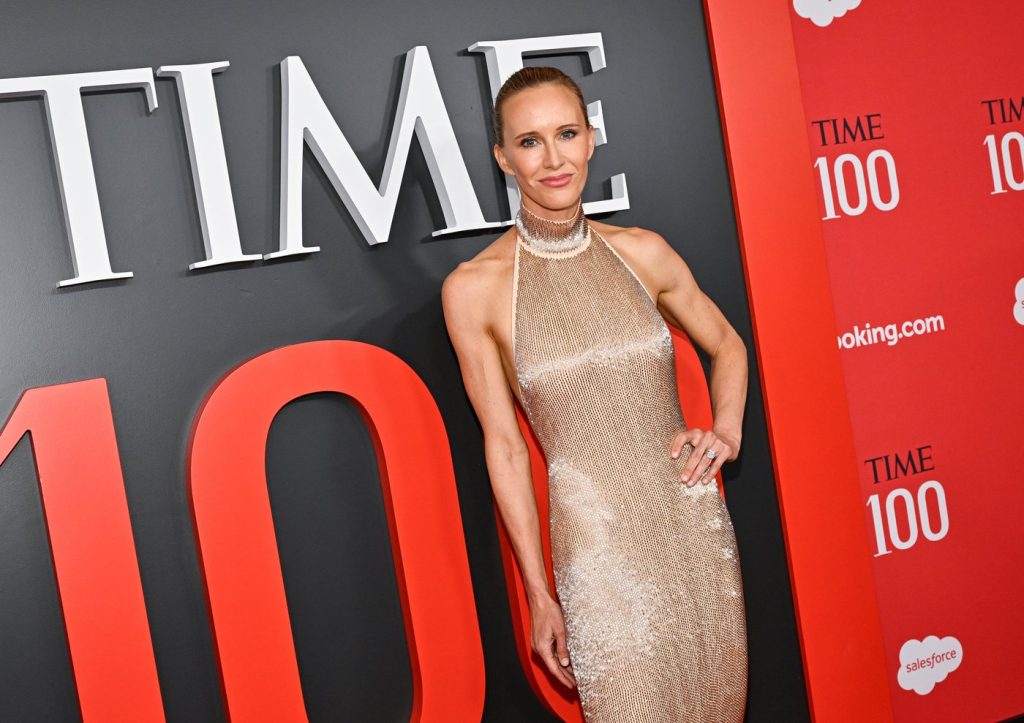
A woman, referred to as Jane Doe in a lawsuit, is suing author and venture capitalist Amy Griffin over allegations that Griffin's bestselling 2025 memoir, "The Tell," contains descriptions of childhood sexual abuse that mirror her own personal experiences. The lawsuit was filed on Wednesday in Los Angeles Superior Court, where Doe claims that Griffin lifted details from her past without consent.
In "The Tell," released a year ago, Griffin recounts her experiences of childhood trauma, including the resurfacing of repressed memories of sexual abuse by a teacher at her middle school in Amarillo, Texas, during the 1980s. In the memoir, Griffin states, "I knew that these memories were real. My body knew what had happened to me." The book, which has achieved acclaim as an Oprah’s Book Club selection, has received endorsements from high-profile figures such as Reese Witherspoon and Gwyneth Paltrow.
According to the lawsuit, the plaintiff asserts that the horrific incidents described by Griffin parallel her own traumatic experiences involving a different teacher during a school dance and in a school restroom. The lawsuit claims that Griffin had the opportunity to be aware of Doe's abuse and alleges that "The Tell" does not constitute a truthful memoir, categorizing it instead as a case of intrusion, invasion of privacy, and emotional distress. Damages are sought, with the amount to be determined at trial.
The lawsuit identifies Griffin's publishers and ghostwriter as additional defendants. A report published by The New York Times in September raised questions about the authenticity of Griffin’s memories and indicated potential financial connections between her and notable celebrities who promoted the book. Notably, the plaintiff learned about Griffin's memoir after being contacted by the Times for its article.
Doe claims to have recognized herself in the character of Claudia in "The Tell," asserting that several stories attributed to Griffin's therapy-induced memories were actually her own lived experiences. Griffin's attorney, Thomas A. Clare, has dismissed the lawsuit as "absurd" and "meritless," and expressed eagerness to refute the claims in court. Clare accused the Times of fabricating a narrative that contributed to the lawsuit, stating, "After two New York Times reporters instigated this whole situation by bringing the book to her attention, the Plaintiff made her own choice to publicize her narrative to a global audience."
In response to Clare's accusations, a spokeswoman from The New York Times maintained confidence in their reporting's accuracy. The lawsuit provides chilling details about Doe's assault during a school dance, revealing that she wore a borrowed dress from Griffin, which allegedly bore bodily fluids from the incident when returned. Additionally, Doe mentioned attending a church youth group meeting with Griffin, where she prayed for forgiveness regarding her assault.
The plaintiff recounted a meeting with Griffin in 2019 at a California coffee shop, during which no discussion of the sexual assaults took place. However, she indicated that she shared her abuse story in detail with a talent agent, who later ceased communication when she probed deeper into how he learned about her past. The suit posits that details from these conversations eventually found their way into "The Tell."








