

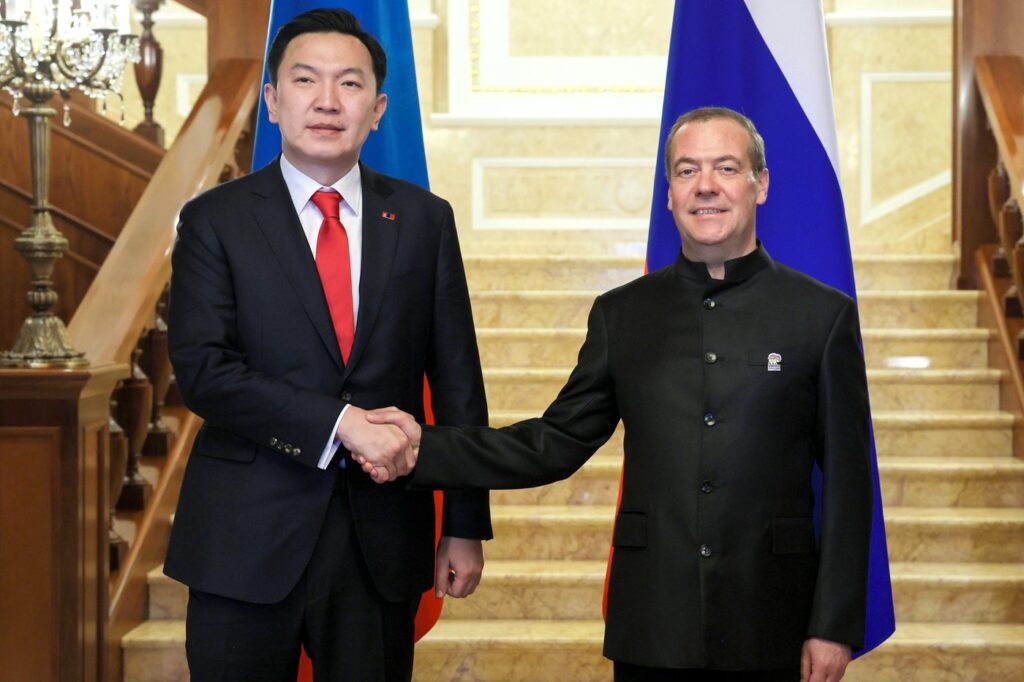
ULAANBAATAR, Mongolia (AP) – Mongolia's parliament has confirmed Uchral Nyam-Osor as the new prime minister, marking the third transition of leadership in a year. This decision aims to resolve a legislative deadlock while the nation faces increasing economic pressures. The landlocked and resource-dependent country has been navigating a challenging political landscape, and Uchral's appointment comes during a critical time for Mongolia.
In his inaugural address to lawmakers, Uchral Nyam-Osor emphasized the need for political unity, stating that ongoing internal disputes have exacerbated external challenges for the country. He urged the parliament, “As others unite to confront crises, we cannot afford political infighting that weakens our economy.” His call for cooperation highlights the urgency of addressing the economic difficulties facing Mongolia.
The confirmation process saw 107 out of 126 lawmakers participating in the vote, with 88 supporting Uchral, amounting to 82.2% in favor of his leadership. This strong backing indicates a parliamentary desire to stabilize the government and move forward amidst rising political instability. At just 39 years old, Uchral brings a fresh perspective to the political arena.
Before becoming prime minister, Uchral served as the minister of digital development and communications, where he championed transparency reforms and initiatives for digital governance. His transition into politics was preceded by a career as a hip-hop artist known by the stage name “Timon.” With a reputation as a reform-minded leader, Uchral aims to modernize Mongolia's regulatory framework, particularly addressing outdated permitting systems rooted in the nation's Soviet past. Mongolia's shift to democracy in 1990 ended decades of one-party Communist rule, paving the way for diverse political representation.
Despite his optimistic stance, Uchral assumes office amid growing concerns from foreign investors regarding Mongolia's political stability. Frequent changes in policy, allegations of corruption, and regulatory unpredictability have contributed to an environment of uncertainty. His selection as prime minister is viewed as a compromise between different factions within the ruling Mongolian People’s Party (MPP), reflecting the internal divisions that have hampered effective governance.
The political crisis preceding Uchral's confirmation included a boycott by the opposition Democratic Party, which further complicated the parliament's ability to function. Consequently, the legislature lacked the necessary number of members to conduct essential votes during the session that began about two weeks ago. The outgoing prime minister, Gombojav Zandanshatar, who had been in office for nine months, resigned after facing pressure linked to ongoing corruption allegations against a senior minister.
Zandanshatar's resignation made way for Uchral’s confirmation and was necessitated by the political deadlock that left the government in a vulnerable position. Zandanshatar, closely affiliated with the president, had succeeded Oyun-Erdene Luvsannamsrai, who resigned last June following a vote of no confidence in parliament after a tenure of four years. All three prime ministers have been representatives of the MPP, indicating a notable continuity yet significant upheaval in governance.
Uchral Nyam-Osor's leadership is seen as pivotal for Mongolia as it navigates a complex socio-political landscape. The expectations are high as he takes on the responsibilities of guiding a nation grappling with both internal strife and external economic challenges.








