

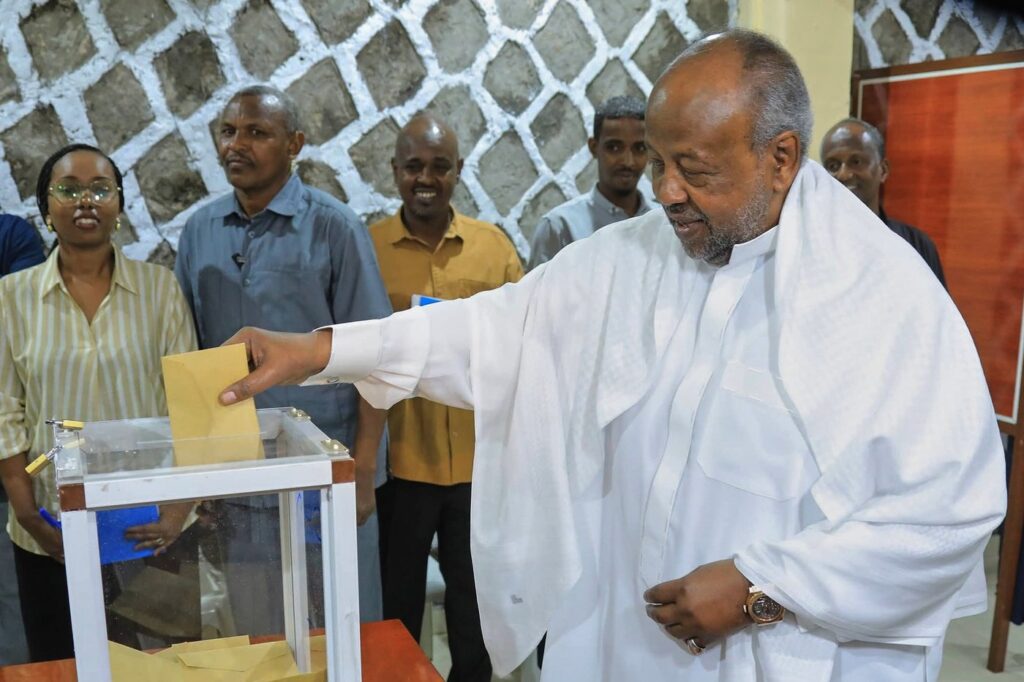
MOGADISHU, Somalia (AP) – Djibouti's President Ismaïl Omar Guelleh has been reelected for a sixth term in office after the official results from the election held on April 10, 2026, revealed he secured an overwhelming 97.81% of the votes. This election marks another milestone in Guelleh's long tenure, having ruled the strategic Horn of Africa nation for more than two decades.
At 78 years old, President Guelleh's leadership has been characterized by significant political control and influence over Djibouti's governance. In a controversial move last year, the country's lawmakers removed presidential age limits, effectively paving the way for Guelleh to extend his rule even further.
Election officials reported that the voting process was peaceful, with celebrations erupting at the presidential palace as supporters expressed their joy and offered their congratulations following the announcement of the results. However, Guelleh faced minimal competition in this election, challenged only by Mohamed Farah Samatar, a former member of the ruling party. Analysts contend that the electoral landscape offered little in the way of genuine political competition, as opposition groups often boycott elections due to ongoing restrictions on political freedoms within the country.
Since succeeding his uncle, the former President Hassan Gouled Aptidon, in 1999, Guelleh has maintained a political system heavily influenced by family ties that have significantly shaped Djibouti's governance over the years. The lack of robust opposition has led to questions about the democratic integrity of the election process in Djibouti, a nation that serves as a crucial hub for international military presence.
Djibouti's strategic location has made it a host to multiple foreign military bases, including those of the United States, China, France, and Japan. This international military presence underscores the country's significance along a vital shipping route that connects the Red Sea to the Gulf of Aden. The revenues generated from these military arrangements, coupled with port services that cater to neighboring Ethiopia, play a critical role in sustaining Djibouti's economy.
The recent election results reflect not only the consolidation of President Guelleh’s power but also highlight the broader implications for political freedoms and democratic practices in Djibouti. As the nation moves forward under Guelleh’s continued leadership, the interplay between governmental control and international partnerships will be closely watched by political analysts and neighboring countries alike.








