

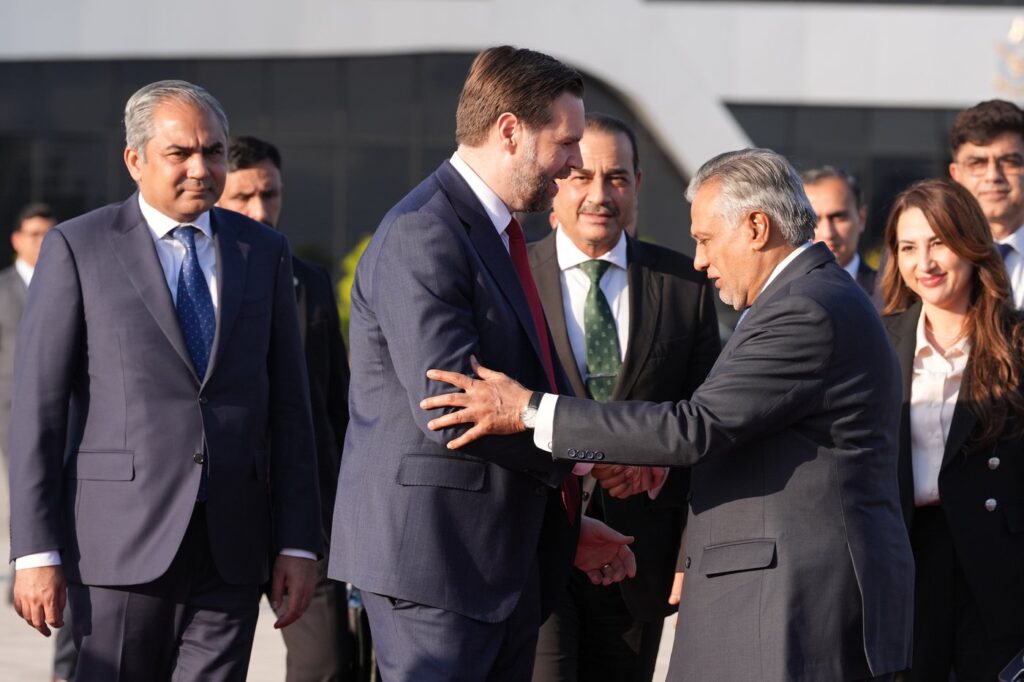
Vice President JD Vance announced the conclusion of negotiations between the United States and Iran early Sunday without a peace agreement. The talks, which lasted for 21 hours and were held in Pakistan, failed as the Iranian delegation refused to accept U.S. terms aimed at preventing Iran from developing nuclear weapons. Vance emphasized the necessity for Iran to provide a clear commitment against pursuing nuclear capabilities to achieve a breakthrough in discussions.
The high-stakes talks were marked by constant communication between Vice President Vance and U.S. President Donald Trump, as well as other officials from the administration. Vance stated to reporters, “But the simple fact is that we need to see an affirmative commitment that they will not seek a nuclear weapon, and they will not seek the tools that would enable them to quickly achieve a nuclear weapon.” The Vice President stressed that this commitment is pivotal to U.S. foreign policy and the core goal of Trump's administration.
This diplomatic event unfolded against the backdrop of an ongoing war that has been ongoing for seven weeks, causing significant casualties and destabilizing global markets. The Iranian and U.S. delegations, led respectively by Vance and Iranian Parliament Speaker Mohammad Bagher Qalibaf, attempted to negotiate a ceasefire amidst escalating tensions, including Israel's attacks on Iranian-backed Hezbollah in Lebanon.
In the aftermath of the failed talks, Pakistan's Foreign Minister Ishaq Dar urged both Iran and the United States to honor their commitment to the ceasefire. Dar highlighted the critical importance of maintaining peace and expressed Pakistan's intent to continue its mediatory role, facilitating dialogue between the two nations in the upcoming days. He stated, “It is imperative that the parties continue to uphold their commitment to ceasefire.”
Vice President Vance, who departed from Pakistan at 7:08 a.m. local time in Islamabad, made it clear that the negotiations ended without progress due to Iran's refusal to halt its nuclear ambitions. The U.S. and Iran previously agreed to a two-week ceasefire on April 7 to allow for these negotiations, but the current impasse in talks raises concerns about future stability in the region.
Vance reiterated his disappointment as he left Pakistan, noting the importance of preventing Iran from acquiring nuclear weapons as a primary focus of U.S. foreign policy. He conveyed that negotiations with Iran would need to resume under more favorable conditions to address the core issues that have impeded agreement.
As the situation remains tense between the U.S. and Iran, the calls for diplomacy and a reaffirmed commitment to peace underscore the complexities of international relations in the region, particularly in light of ongoing conflict and regional instability. The diplomatic landscape continues to evolve, reminding stakeholders on all sides of the delicate balance needed to maintain peace.








