

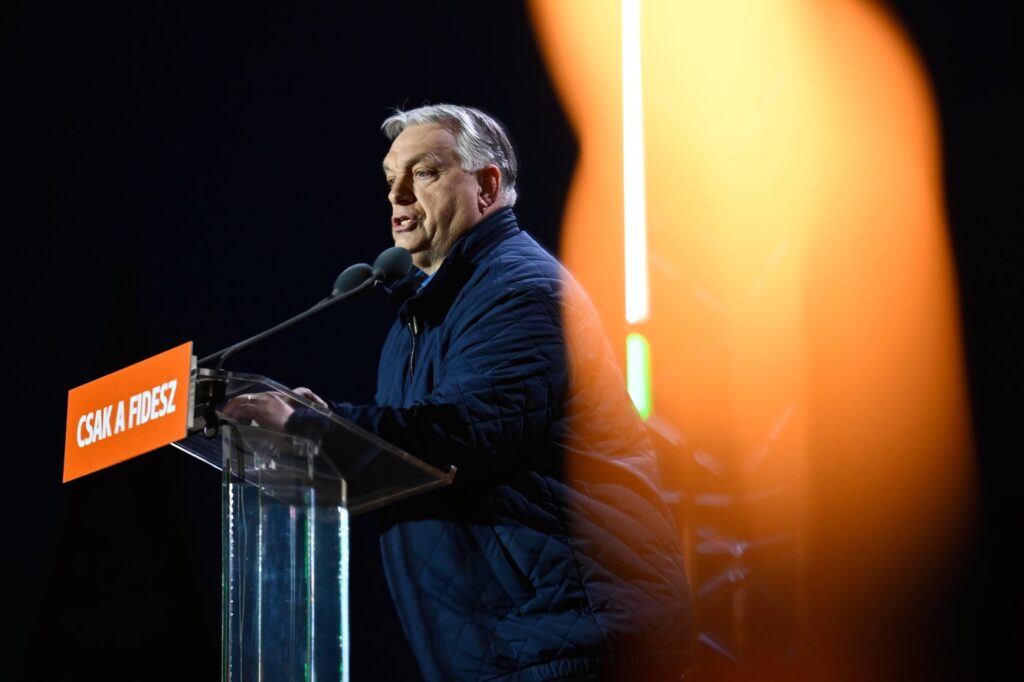
BUDAPEST, Hungary (AP) — On a significant Sunday, voters in Hungary were casting their ballots in an election that is widely regarded as one of the most consequential in Europe this year. The political landscape is poised for potential change as Prime Minister Viktor Orbán seeks reelection after 16 years in power. Orbán, a polarizing figure and ally of former U.S. President Donald Trump, has been a controversial leader, known for his strong nationalist views and friendly relationship with Russia.
The polls opened at 6 a.m. local time and were scheduled to close at 7 p.m. Throughout the day, Orbán and his main challenger, Péter Magyar, were expected to cast their votes. This election is being closely scrutinized not just in Hungary but across Europe and beyond, highlighting Orbán's influential role in the global far-right movement.
Orbán has transitioned from his early identity as a liberal, anti-Soviet advocate to a prominent nationalist leader, admired by many on the far-right. Over the years, his governance has involved significant crackdowns on minority rights and media freedoms, alongside allegations of corruption involving himself and his allies. His administration has strained Hungary's relations with the European Union (EU), eagerly utilizing his veto power to challenge the bloc's decisions. Most notably, he recently blocked a critical EU loan to Ukraine, causing considerable backlash.
However, signs are emerging that Orbán's once-unquestionable grip on power may be loosening. The entrance of Magyar, the 45-year-old leader of the center-right Tisza party, has introduced a formidable challenge. Rising quickly in popularity, Magyar's campaign has focused on pressing issues such as deteriorating public healthcare and transparent governance, resonating with voters disenchanted with Orbán's policies. Having formerly been a part of Orbán's administration, Magyar broke away in 2024 to establish the Tisza party.
Magyar has conducted a vigorous campaign, crisscrossing the country to hold rallies in various towns, bringing attention to the urgent concerns of ordinary Hungarians. In a recent interview, he characterized the election as a “referendum” on the nation’s future direction—whether Hungary will continue toward a more authoritarian regime under Orbán or seek to reclaim its place among democratic nations in Europe.
Nonetheless, the election does not come easy for Magyar and the Tisza party. Orbán's administration has transformed public media into a pro-government outlet, while also maintaining substantial influence over private media establishments. The electoral system, designed and gerrymandered by Orbán’s Fidesz party, means Tisza would require approximately 5% more votes than Fidesz to secure a simple majority in Parliament. Additionally, a significant number of ethnic Hungarians residing in neighboring countries are eligible to vote and tend to support Orbán’s party.
Concerns over potential external interference and internal fraud have surfaced in the lead-up to the election. Reports indicate that Russian secret services may plot to influence the election in Orbán’s favor. In response, Orbán has accused Ukraine and EU allies of attempting to interfere to install a more pro-Ukraine government in Hungary. Such accusations add to the narrative that many in the EU view Orbán as detrimental to the future of the bloc, expressing hope for a fresh government under Magyar.
Conversely, across the Atlantic, Trump and his “Make America Great Again” movement have expressed unwavering support for Orbán, with Trump endorsing his leadership repeatedly. U.S. Vice President JD Vance also made a recent two-day visit to Hungary, aimed at strengthening support for Orbán’s campaign as the election unfolds.








