

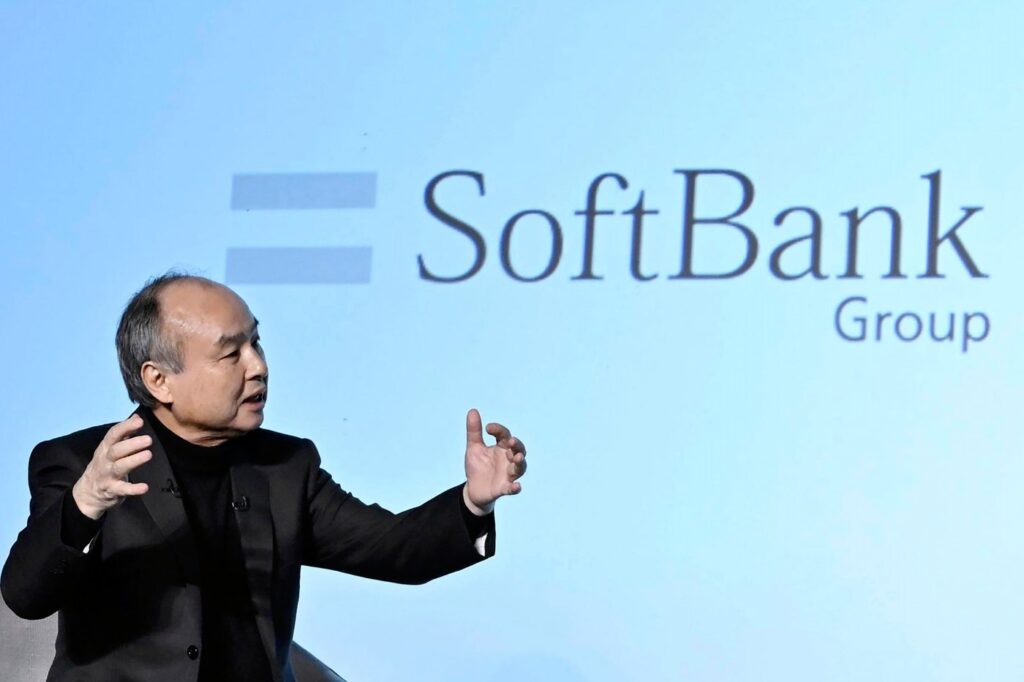
TOKYO (AP) - Softbank Group Corp., the renowned Japanese technology investor, announced an impressive increase in profits for the fiscal year ending in March. The company's profits surged nearly five-fold compared to the previous year, highlighting the substantial returns from its investments in artificial intelligence (AI).
Headquartered in Tokyo, Softbank recorded an astonishing annual profit of 5 trillion yen ($32 billion), a significant rise from the 1.15 trillion yen profit achieved the prior year. Moreover, the company reported an approximate 8% increase in sales, climbing to nearly 7.8 trillion yen ($50 billion) from 7.2 trillion yen in the previous fiscal year.
One of Softbank's standout investments has been in OpenAI, which attracted approximately $34.6 billion in funding. This investment has yielded substantial gains, adding approximately $45 billion to Softbank's earnings. In addition to OpenAI, Softbank also holds investments in prominent firms, including U.S. AI powerhouse Nvidia, German telecommunications provider Deutsche Telekom, and British semiconductor manufacturer Arm. Furthermore, the company is known for its development of the humanoid robot Pepper.
Another factor contributing to Softbank's recent financial uplift is the successful initial public offering of PayPay, a popular mobile-payment application in Japan. This app enables users to perform quick, cashless transactions via QR codes, further solidifying Softbank's role in the digital payment landscape.
Despite the overall profits, Softbank's financial picture remains mixed. The company recorded gains from its stakes in Intel Corp. but faced losses from its investment in the Chinese e-commerce giant Alibaba, showcasing the varied performance of its portfolio. This mixed outcome is relatively typical for Softbank, which has transitioned from a Japanese technology company to a vast conglomerate through its Vision Funds.
Softbank was established over four decades ago by Masayoshi Son, who currently serves as the company's chief executive and chairman. A graduate of the University of California, Son is regarded as a billionaire and a pioneer within Japan's technology sector, steering the company through various investment ventures.
Recently, Softbank has shown interest in diversifying its investments further by venturing into the battery industry in Japan. This initiative aims to develop next-generation electric power infrastructure, anticipating a surge in electricity demand driven by the increasing adoption of AI technologies.
Additionally, Softbank is collaborating with Toppan, a well-known Japanese printing, communications, security, and packaging company, to create lightweight and durable materials intended for aircraft wing applications. This innovative "skin" material is expected to be utilized for commercial services within the next three years, highlighting Softbank's commitment to pushing the boundaries of technology and infrastructure.
It is noteworthy that Softbank Group does not provide earnings forecasts, leaving investors and analysts to interpret the company's performance based on its reported results and investment decisions.
As Softbank continues to explore opportunities in emerging technologies and diverse sectors, its recent financial achievements illustrate its adaptability and strategic focus on investments that leverage the potential of AI and innovative technologies.








