

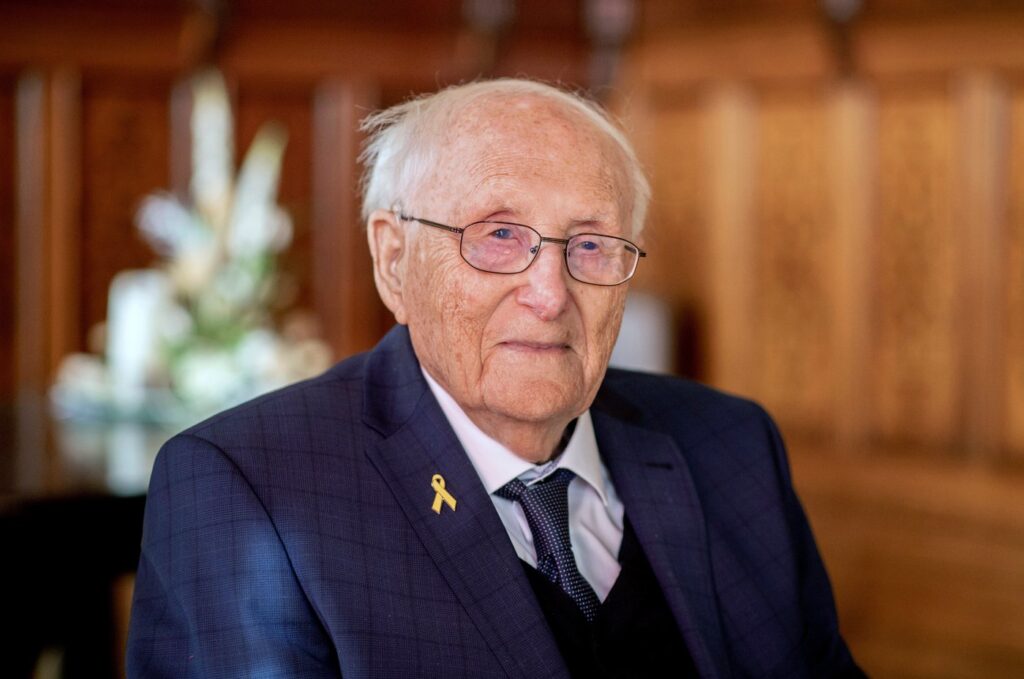
BERLIN (AP) — Albrecht Weinberg, a Holocaust survivor who endured several Nazi concentration and death camps, passed away at the age of 101 in Leer, northwestern Germany. His death was confirmed by local authorities on Tuesday and comes shortly after he celebrated his birthday and attended the premiere of a documentary film about his life titled "Es ist immer in meinem Kopf" ("It is always in my head"). The event was well-attended, drawing hundreds of guests.
Weinberg was born on March 7, 1925, in Rhauderfehn, near Leer. He lived through harrowing experiences during World War II, including incarceration at Auschwitz, Mittelbau-Dora, and Bergen-Belsen camps, as well as enduring three death marches. After the war, he spent years in New York before returning to his East Frisian home 14 years ago. Since then, he passionately dedicated himself to educating high school students and others about the atrocities he witnessed during the Nazi era.
Mayor Claus-Peter Horst praised Weinberg's commitment to remembrance, stating, “Since returning to Germany, Albrecht recounted tirelessly and with incredible energy his terrible experiences during the Nazi era and warned against forgetting.” Weinberg often reflected on the mental toll of his past, admitting that the memories of his time in the camps continued to haunt him. He remarked, “I sleep with it, I wake up with it, I sweat, I have nightmares; that is my present.”
In a poignant acknowledgment of his fears regarding the future, Weinberg expressed concern over the loss of firsthand witnesses to the Holocaust. He stated, “When my generation is not in this world anymore, when we disappear from the world, then the next generation can only read it out of the book.” His apprehension highlights the importance of sharing personal testimonies to ensure that history is preserved and understood.
In recognition of his contributions, Weinberg was awarded Germany's Order of Merit in 2017. However, he returned the distinction in 2022 as a form of protest against parliamentary actions that he found unacceptable, specifically a motion supported by Friedrich Merz, now Germany's Chancellor, which called for stricter migrant policies at the country’s borders with the support of a far-right party.
Tributes poured in following his passing, including a heartfelt message from Israel’s ambassador to Germany, Ron Prosor. He described Weinberg as “a bridge—between past and present, between pain and hope, between the dead he could never forget and the young people whom he encouraged to seek the truth.” This recognition underscores the significance of Weinberg’s legacy in fostering awareness and understanding of the Holocaust among younger generations.
Overall, Albrecht Weinberg's life serves as a powerful reminder of the importance of remembrance and education in combating anti-Semitism and ensuring that the horrors of the Holocaust are never forgotten. His commitment to sharing his story will resonate for years to come, as new generations discover the profound impact of his experiences.








