

In 1976's Rocky, heavyweight champion Apollo Creed makes a grand entrance to his title fight dressed as George Washington, emulating the crossing of the Delaware River. Accompanied by models dressed as the Statue of Liberty, he captures the patriotic spirit of the American bicentennial. After entering the ring, Apollo shifts into an Uncle Sam costume and boldly proclaims, "I want YOU!" while pointing at his opponent, Rocky Balboa. The matchup presents an explosive depiction of the bicentennial fervor, filled with fireworks but lacking in deeper reflections on the nation’s 200 years of independence.
As a 13-year-old during the bicentennial celebrations, I belonged to the tail end of the Baby Boom and the beginning of Generation X. My generation harbored a skepticism toward government due to the aftermath of the Vietnam War and the Watergate scandal, juxtaposed with occasional moments of national pride, such as the moon landing. This skepticism lingered amid the celebrations, particularly in Newport News, Virginia, near the Historic Triangle of Jamestown, Yorktown, and Williamsburg, where excitement for the bicentennial could be felt. President Gerald Ford and his wife, Betty, made appearances in Colonial Williamsburg, while foreign leaders visited, creating a festive atmosphere complete with reenactments that commemorated key events leading to the Declaration of Independence.
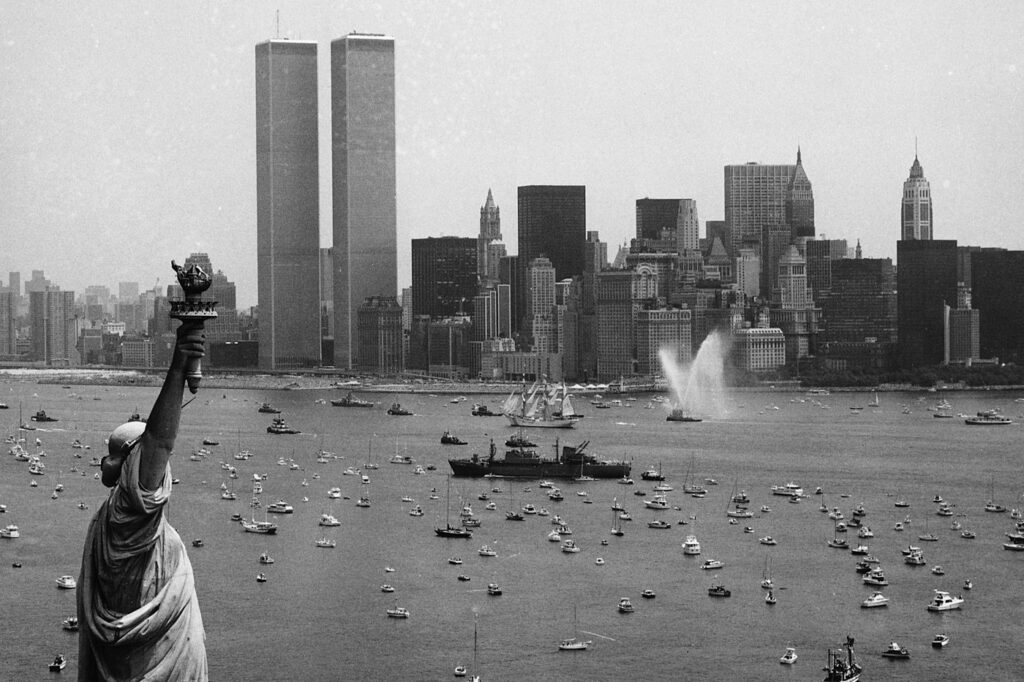
Ford described the New York celebrations as "the greatest Fourth of July any of us will ever see," which included "Operation Sail," a vibrant parade of tall ships and smaller vessels from around the globe. This event not only uplifted the city but also signified unity among New Yorkers during tough times, showcasing a sense of community amid challenges.
For history enthusiasts unable to attend in person, the American Freedom Train, a 26-car exhibition, traveled across all contiguous states, displaying significant artifacts such as George Washington's copy of the Constitution, the original Louisiana Purchase document, and even a moon rock. The Freedom Train became a nostalgic symbol for many, including the 3D poster I had on my bedroom wall, representing a bygone era filled with Americana memorabilia.
The bicentennial also sparked various collectibles aimed at celebrating the occasion, including special quarters, stamps, and dinnerware. Madison Avenue contributed by promoting bicentennial-themed products, ensuring that the festive spirit infused consumer culture. Interestingly, novelty items like the Bicentennial Pet Rock fell flat, while themed Pez dispensers featuring figures like Paul Revere gained popularity.
On the television front, ABC’s Schoolhouse Rock! expanded its educational reach with America Rock, while CBS News produced the "Bicentennial Minute," a nightly overview of historical events from 200 years prior. The coverage intensified on July 4, 1976, with extensive broadcasts, including CBS’s Walter Cronkite’s 16-hour marathon and NBC's variety show featuring stars like Bob Hope and Sammy Davis Jr. highlighting the bicentennial celebrations.
However, not everyone shared in the jubilance. Comedian Richard Pryor's album titled Bicentennial offered a raw commentary on the nation's darker history, featuring a track that resonated with many against the backdrop of celebrations. Additionally, popular music during this period seemed to lean away from overt patriotism, opting instead to embrace the disco era, with chart-toppers such as Johnnie Taylor’s Disco Lady and the Bee Gees’ You Should Be Dancing dominating the airwaves.
Notable films of 1976, despite their critical acclaim, often painted a less rosy picture of America. Oscar-nominated movies like All the President's Men and Taxi Driver addressed political corruption and societal issues, contrasting with the expectations surrounding a festive bicentennial spirit. Amid these narratives, the comical yet rebellious spirit of films like The Bad News Bears offered a more honest depiction of American culture, with characters challenging conventions while still engaging in grand adventures.
As July 4, 1976, approached, Hollywood found itself caught in a tug-of-war between nostalgic patriotism and the gritty realism of contemporary life. The film Rocky ultimately captured the Academy Award for Best Picture, symbolizing not just victory in the boxing ring but also a cultural moment where the complexities of American identity were neither ignored nor fully celebrated.








