

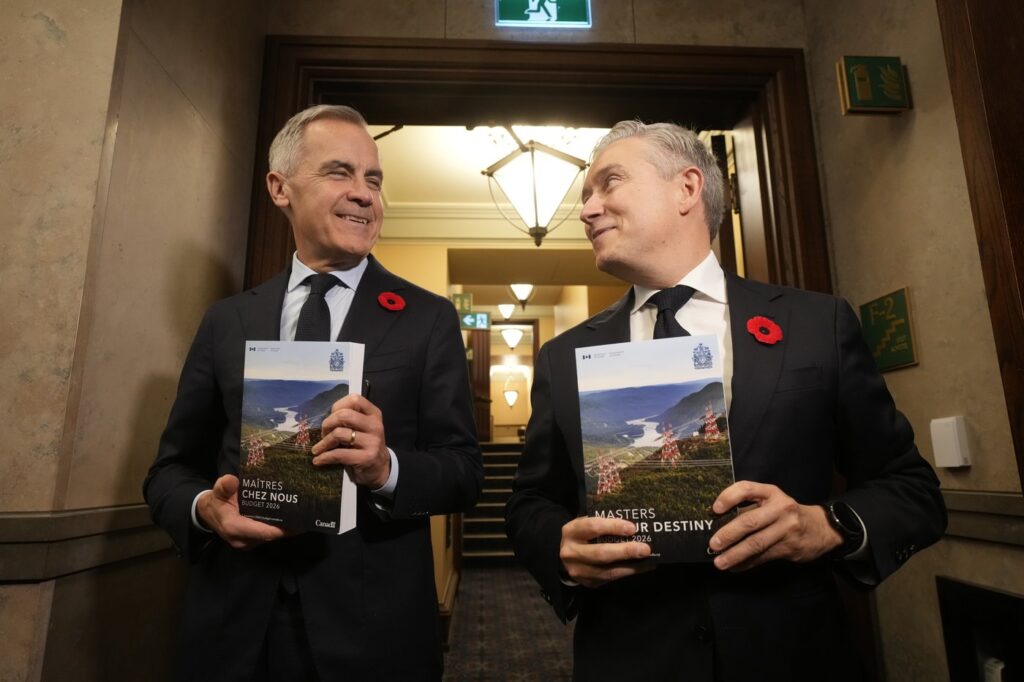
The federal Liberals are preparing for a significant vote in the House of Commons regarding their budget proposal for the year 2026. This budget was presented on November 5 and outlines plans for extensive new borrowing and various tax measures that primarily aim to stimulate infrastructure construction and support other capital projects across Canada.
Given that the Liberal Party currently holds a majority of seats in the House of Commons, they are positioned to advance much of their proposed agenda without requiring support from opposition parties. This majority enables them to potentially pass the budget without significant resistance, facilitating their plans for economic growth and infrastructure development.
However, the budget has drawn substantial criticism from opposition leaders. Conservative Party Leader Pierre Poilievre has vocally opposed the scale of borrowing that the budget proposes, arguing that it could lead to negative fiscal consequences for the economy. On the other hand, New Democratic Party (NDP) Leader Avi Lewis expresses concern over the budget's alignment with large corporate interests, asserting that the Liberal government's spending initiatives disproportionately favor big business rather than addressing the needs of everyday Canadians.
In defense of the budget, Finance Minister François-Philippe Champagne contends that the government is responding appropriately to the current economic uncertainties. He emphasizes Canada's relatively strong fiscal position, suggesting that the budget represents an investment in the country's future. Champagne's remarks indicate a belief that strategic borrowing now can pave the way for long-term benefits and resilience against economic challenges.
The budget's title is inspired by "Maîtres Chez Nous," or "Masters of Our Destiny," a phrase that harkens back to Quebec's Quiet Revolution era. However, this reference has not deterred criticism from Bloc Québécois Leader Yves-François Blanchet, who argues that the budget fails to grant Quebec more autonomy and control over its own governance. Blanchet's comments reflect ongoing tensions between provincial and federal priorities, particularly concerning Quebec's aspirations for greater self-determination.
As the vote approaches in the House of Commons, the political implications of this budget are considerable. It not only seeks to address immediate economic needs but also sets the stage for future political dynamics as the Liberals and opposition parties continue to clash over fiscal policies. The outcome of the vote will reveal not only the government's ability to execute its agenda but also the broader political sentiment within Parliament regarding economic management and the role of government in stimulating growth.
In summary, the 2026 budget proposed by the federal Liberals embodies ambitious plans for infrastructure investment while provoking strong responses from various opposition parties. The fiscal approach taken by the Liberals, characterized by increased borrowing, aims to leverage Canada's economic position, yet faces skepticism from critics who question its long-term efficacy and fairness. The ongoing discussions and the upcoming vote will be pivotal in shaping the political landscape and fiscal policy in Canada.








